

Open uping SEO: The Ultimate Guide to Search Engine Optimization
What is SEO? Search Engine Optimization (SEO) is the art and science of optimizing your website to rank higher in search engine results, like Google.
Why is SEO important?
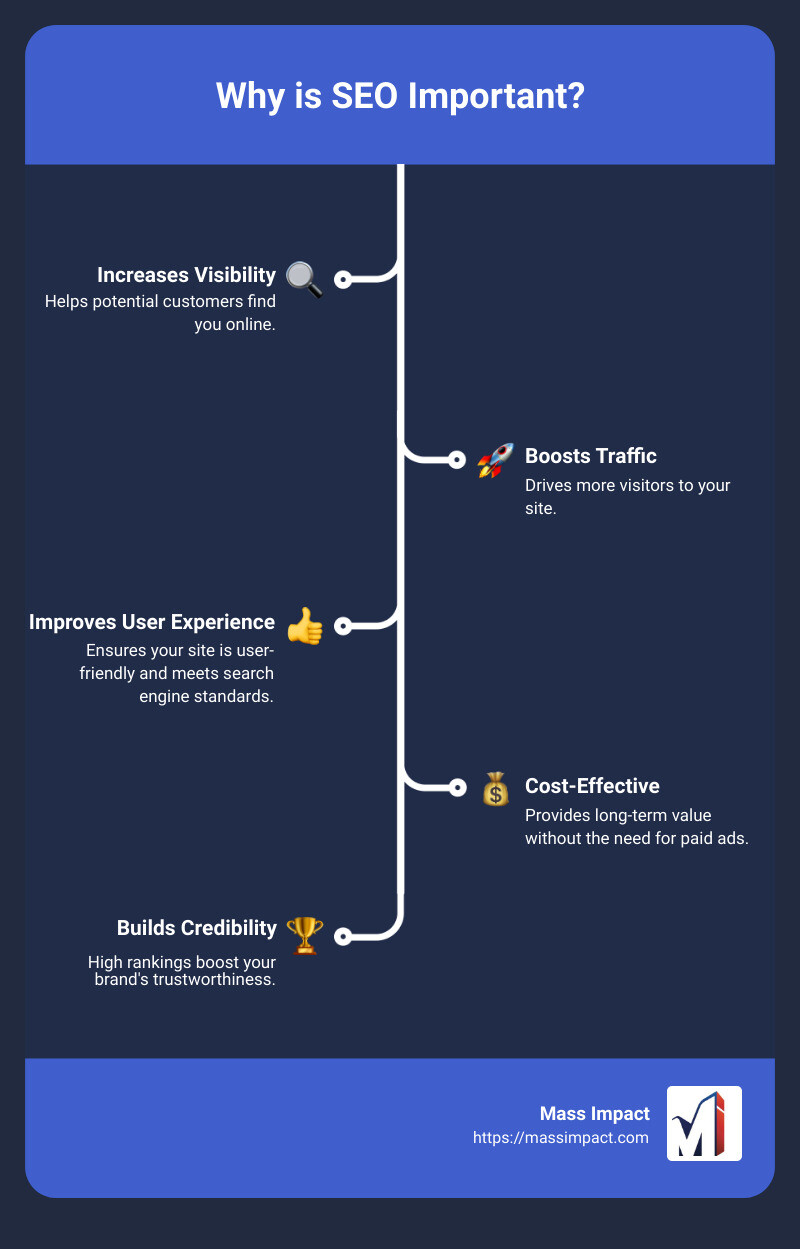
– Increases Visibility: Helps potential customers find you online.
– Boosts Traffic: Drives more visitors to your site.
– Improves User Experience: Ensures your site is user-friendly and meets search engine standards.
At Mass Impact, we understand how crucial it is to stand out in today’s digital world. SEO is no longer just an option; it’s a necessity for any business looking to succeed online. By optimizing websites, web pages, and various types of content such as videos and local listings, SEO ensures that businesses can be easily found by their target audiences.
My name is Haiko de Poel Jr, and I’ve been helping businesses steer the complex world of digital marketing for years as a Fractional Chief Marketing Officer. My expertise in SEO, branding, and eCommerce has helped numerous companies not only stay afloat but thrive in competitive markets.
Now, let’s dive into the various elements that make SEO a powerful tool for your business success.
What is SEO and How Does it Work?
The Basics of SEO
SEO, or Search Engine Optimization, is the art and science of getting your website to show up higher in search engine results. When people search for something on Google, Bing, or Yahoo, they usually click on one of the first few results. SEO helps you get your site to those top spots, increasing visibility and traffic.
Why is this important? Because organic traffic, which comes from these unpaid search results, is often high-quality. People are actively searching for information, products, or services, which makes them more likely to engage with your content.
For beginners: SEO can seem overwhelming, but it boils down to three main components:
- On-Page SEO: This involves optimizing the content on your website. Think keywords, meta descriptions, headers, and internal links.
- Off-Page SEO: This is about building your site’s reputation through backlinks, social media marketing, and public relations.
- Technical SEO: This ensures that your site is fast, mobile-friendly, and easy for search engines to crawl and index.
How Search Engines Work
To understand SEO, you need to know how search engines like Google work. Here’s a simple breakdown:
- Crawling: Search engines use bots, often called crawlers or spiders, to explore the web. These crawlers visit web pages and follow links to find new content.
- Indexing: Once a page is crawled, its content is stored in a massive database known as an index. This index is like a giant library that the search engine can quickly sift through.
- Ranking: When you type a query into a search engine, it uses complex algorithms to decide which pages from its index are the most relevant. It then ranks these pages based on various factors, including keyword relevance, page quality, and the number of backlinks.
Algorithms: These are the secret sauce of search engines. They consider hundreds of factors to determine the best results for a query. For example, Google’s algorithm looks at things like page speed, mobile-friendliness, and the quality of content.
Keyword Optimization: Keywords are the terms people type into search engines. Effective SEO involves researching and using these keywords strategically in your content. Tools like Google Keyword Planner can help you find the right keywords to target.
Real-World Example
Imagine you own a bakery in New York. You want your website to appear when someone searches for “best cupcakes in New York.” By optimizing your site with relevant keywords, creating high-quality content, and earning backlinks from reputable sites, you can improve your chances of ranking higher in search results.
Case Study: A small business owner in Jacksonville used SEO to boost their local visibility. By optimizing their site for local search terms and earning backlinks from local blogs, their organic traffic increased by 50% in just six months.
Statistics: According to HubSpot, companies that blog have 434% more indexed pages than those that don’t, significantly boosting their SEO efforts.
By understanding and implementing these basics, you can start to open up the power of SEO for your business. Next, let’s dig into the key components of SEO and how each one contributes to your overall strategy.
Key Components of SEO
On-Page SEO
On-page SEO is all about optimizing the content and elements on your website to make it more attractive to search engines and users. Think of it as setting up your home so guests (and search engines) can easily find what they need.
Keyword Research
Keyword research is the first step. It involves finding the terms people use to search for your products or services. Use tools like Google Keyword Planner to identify relevant keywords with good search volume and low competition.
Meta Descriptions
Meta descriptions are short summaries of your page content. They appear under your page title in search results. Although they don’t directly affect rankings, they can influence click-through rates. Keep them under 160 characters and include your main keyword.
Headers
Headers (H1, H2, H3) help organize your content. They make it easier for readers and search engines to understand your page structure. Use your primary keyword in the H1 tag and variations in subheadings.
Alt Text
Alt text is a description of images on your site. It helps search engines understand what the images are about and improves accessibility for visually impaired users. Always include a keyword in the alt text.
Internal Links
Internal links connect one page of your website to another. They help search engines crawl your site and spread link equity. Use descriptive anchor text that includes keywords when creating internal links.
Off-Page SEO
Off-page SEO refers to actions taken outside your website to improve its ranking. It’s like building your reputation in the community.
Backlinks
Backlinks are links from other websites to yours. They act as votes of confidence, telling search engines your content is valuable. Aim to get backlinks from high-authority sites.
Social Media Marketing
Social media platforms can drive traffic to your site and increase your online visibility. Share your content on platforms like Facebook, Twitter, and Instagram to attract more visitors.
PR
Public relations (PR) involves getting your business mentioned in news articles, blogs, and other media. This can lead to valuable backlinks and increased brand awareness.
Citations
Citations are mentions of your business name, address, and phone number on other websites. They’re crucial for local SEO. Ensure your citations are consistent across all platforms.
Technical SEO
Technical SEO focuses on the backend of your website. It’s like making sure the foundation of your house is solid.
Site Speed
A fast-loading site improves user experience and can boost your rankings. Use tools like Google PageSpeed Insights to identify and fix speed issues.
Mobile-Friendliness
With more people using mobile devices to browse the web, having a mobile-friendly site is essential. Google uses mobile-first indexing, meaning it primarily uses the mobile version of your site for ranking.
Structured Data
Structured data (or schema) helps search engines understand your content better. It can improve your appearance in search results with rich snippets. Use tools like Google’s Structured Data Markup Helper to add schema to your site.
Sitemaps
A sitemap is a file that lists all the pages on your website. It helps search engines find and index your content. Submit your sitemap to Google Search Console to ensure all your pages are crawled.
By focusing on these key components, you can build a strong SEO foundation that will help your website rank higher and attract more organic traffic. Next, we’ll explore why SEO is so important for your business.
Why is SEO Important?
Benefits of SEO
Visibility and Traffic
SEO helps your website show up higher in search results. This means more people will see your site when they search for things you offer. More visibility leads to more organic traffic—visitors who find your site through search engines like Google or Bing.
Conversions
When people find your site through SEO, they are often looking for something specific. This means they are more likely to become customers. High-quality organic traffic usually has a higher conversion rate than traffic from other sources.
User Experience
SEO isn’t just about search engines. It’s also about creating a good experience for users. Fast-loading pages, easy navigation, and mobile-friendliness all improve user experience. Happy visitors are more likely to stay on your site and convert.
Brand Awareness
Ranking high in search results also helps build your brand. People trust websites that appear at the top of search results. This trust can translate into more clicks, more traffic, and more conversions.
Cost-Effectiveness
Unlike paid ads, the traffic from SEO is free. Once your site is optimized, you don’t have to keep paying for clicks. This makes SEO a cost-effective way to get long-term traffic and conversions.
SEO vs. SEM
Organic vs. Paid Search
SEO focuses on getting traffic from organic search—the free listings on search engines. SEM (Search Engine Marketing) includes both SEO and paid search (PPC). PPC ads appear at the top of search results and you pay each time someone clicks on your ad.
ROI and Traffic Share
Both SEO and SEM have their benefits. SEO offers a higher ROI over time because you don’t pay for each click. According to research, organic search delivers 53% of all website traffic. This means SEO can bring in a lot of visitors without ongoing costs.
Quick Results vs. Long-Term Gains
PPC can get you quick results. Your ads show up immediately, and you can start getting traffic right away. However, this traffic stops as soon as you stop paying. SEO takes longer to show results, but the benefits last much longer. Once your site ranks high, it can stay there for months or even years.
Combining SEO and SEM
Using both SEO and SEM can give you the best of both worlds. You can get quick traffic from PPC while you work on improving your organic rankings. This balanced approach can maximize your visibility and traffic.
Next, we’ll look at the best practices for SEO to help you create quality content, improve user experience, and build valuable links.
Best Practices for SEO
To succeed with SEO, focus on three main areas: creating quality content, enhancing user experience, and building links.
Creating Quality Content
Creating quality content is the backbone of SEO. Here’s how you can ensure your content stands out:
Unique Content: Your content should be original and provide real value. Avoid copying from other sources. Google rewards unique content that offers new insights or information.
Readability: Write in a way that’s easy to understand. Use short sentences and simple words. Break up your text with subheadings, bullet points, and images to make it more readable.
Relevance: Make sure your content is relevant to your audience. Use keywords that people are likely to search for. But don’t overdo it. Keyword stuffing can harm your rankings.
Updates: Keep your content up-to-date. Information changes, and so should your content. Regularly updating your content helps maintain its relevance and accuracy.