

Why Marketing Strategy Examples are Important
When looking for marketing strategy examples, you’re likely seeking actionable insights to boost your business’s reach and engagement. Here’s a quick snapshot to save you some reading time:
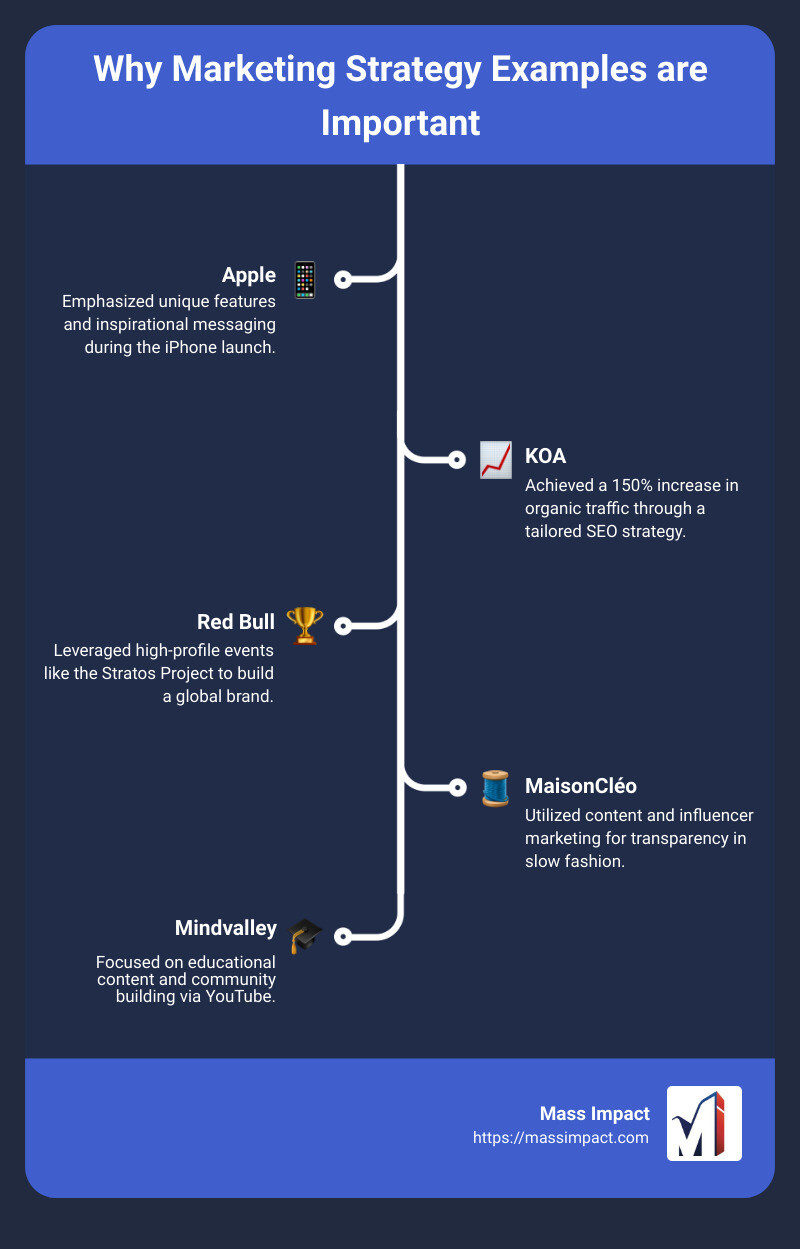
- Apple: Emphasized unique features and inspirational messaging during the iPhone launch.
- KOA: Achieved a 150% increase in organic traffic through a tailored SEO strategy.
- Red Bull: Leveraged high-profile events like the Stratos Project to build a global brand.
Marketing strategy examples serve as blueprints for business success. These strategies outline how companies reach their target audience and turn prospects into customers. Whether it’s through content marketing like MaisonCléo’s transparency in slow fashion or Red Bull’s extreme sports sponsorships, each example teaches us the importance of unique approaches and the goals they achieve.
My name is Haiko de Poel Jr, and I specialize in crafting and explaining effective marketing strategies. With years of experience in SEO, content marketing, and digital transformation, I’ve helped numerous businesses elevate their market presence by employing successful marketing strategies.
Understanding Marketing Strategy Examples
What is a Marketing Strategy?
A marketing strategy is a business’s overall game plan to reach potential customers and turn them into loyal ones. It includes the company’s value proposition, which tells customers what the business stands for and why they should choose it over competitors.
Key Components of Effective Marketing Strategies
To craft a successful marketing strategy, you need to focus on several key components:
-
Value Proposition: This is the unique value your product or service provides. It explains how you solve a problem better than others. For example, a company might offer “everyday low prices,” which resonates with cost-conscious consumers.
-
Target Audience: Knowing who your ideal customers are is crucial. This involves understanding their demographics, behaviors, and needs. For instance, a brand might target eco-conscious consumers who value transparency and handmade designs.
-
Brand Messaging: This is how you communicate your value proposition to your audience. It includes your mission, vision, and the tone of your communication. A tech company, for instance, might use inspirational messaging to highlight the unique features and user experience of its products.
Key Components of Effective Marketing Strategies
A solid marketing strategy also revolves around the four Ps of marketing: Product, Price, Place, and Promotion.
Product
Your product must meet the needs and wants of your target audience. For example, a company focuses on innovative and sustainable products, appealing to both niche and eco-conscious consumers.
Price
Pricing strategies can make or break your marketing efforts. Your pricing should reflect the value you provide and be competitive within your market. For instance, a premium tech brand might price its products higher than many competitors, emphasizing quality and innovation.
Place
This refers to how and where you sell your product. It includes distribution channels and locations. A sustainable brand, for example, uses both online and physical stores to reach a broader audience.
Promotion
Promotion involves all the ways you communicate your product’s value to the target audience. This includes advertising, public relations, social media, and more. A fashion brand effectively uses social media and influencer marketing to promote its brand.
Importance of Marketing Strategies
A well-thought-out marketing strategy helps you align your marketing efforts with your business goals. It guides you in understanding your target audience and crafting messages that resonate with them. It also provides a framework to measure performance and make necessary adjustments to improve ROI.
Using tools like market research can help you understand market dynamics and competitor strategies, allowing you to fine-tune your marketing approach. For example, the Market Explorer tool can provide insights into market strategies, helping you shape your own.
Real-World Examples of Successful Marketing Strategies
Let’s explore some real-world marketing strategy examples to see how different brands have effectively utilized various tactics to achieve success.
Brand A: Content & Influencer Marketing
Brand A is a shining example of a brand that values transparency and quality. They champion slow fashion and hand-made designs, sharing behind-the-scenes looks at their production process on social media. This approach builds trust and authenticity, strengthening the bond between the brand and its audience.
Key Strategies:
– Content Marketing: Sharing behind-the-scenes content on Instagram.
– Influencer Marketing: Popular influencers wear their clothing, boosting visibility and desirability.
– Exclusivity: Using “drop-style” campaigns to create an air of exclusivity.
Brand B: Multichannel Marketing
Brand B’s marketing strategy centers on innovation, sustainability, and a performance lifestyle. Their unique service, a fully recyclable product subscription, is a prime example of their commitment to sustainability.
Key Strategies:
– Sustainability: Fully recyclable products.
– Subscription Model: Engaging customers with a unique subscription service.
– Athlete Collaboration: Collaborating with athletes to showcase products.
Brand C: Content Marketing & Community
Brand C builds a strong community by creating engaging educational content that brings real value to their audience, focusing on personal transformations.
Key Strategies:
– Educational Content: Providing high-quality videos on self-improvement.
– Community Building: Addressing topics that offer real solutions, building trust and loyalty.
– SEO Optimization: Using SEO-optimized content to attract millions of subscribers.
Brand D: Personal Branding & Content Marketing
Brand D, a platform, uses a marketing approach that revolves around thought leadership and empowering users with actionable insights.
Key Strategies:
– Personal Branding: Founder shares personal insights on social platforms.
– Thought Leadership: Positioning as an industry expert through valuable content.
– User Engagement: Encouraging engagement to boost visibility on the platform.
Brand E: Immersive Experiences with Local Marketing
Brand E focuses on showcasing the unique and immersive experiences their region offers, using clever campaigns like “The Great Escape.”
Key Strategies:
– Out-of-Home Advertising: Using real-time technology to invite people on spontaneous trips.
– Local Attractions: Highlighting local experiences to attract tourists.
– Immersive Experiences: Merging real and digital worlds for a unique marketing approach.
Brand F: Affiliate Marketing & Digital Platforms
Brand F leverages affiliate marketing by partnering with bloggers and trusted brands to drive sales and commission earnings.
Key Strategies:
– Affiliate Marketing: Collaborating with bloggers to promote their platform.
– Commission Earnings: Offering attractive commissions to affiliates.
– Trusted Brands: Partnering with well-known brands to build trust.
Brand G: Storytelling
Brand G uses storytelling to build its brand identity, sharing its journey and engaging with audiences on social platforms.
Key Strategies:
– Storytelling: Sharing the journey to create a relatable brand identity.
– Social Media Strategy: Engaging with audiences through social media posts.
– Brand Identity: Focusing on a strong, relatable brand story.
Brand H: Sponsorships & High-Profile Events
Brand H is known for its sponsorships and high-profile events, such as extreme sports and innovative projects.
Key Strategies:
– Sponsorships: Partnering with events to boost brand visibility.
– High-Profile Events: Organizing global events to create buzz.
– Global Reach: Leveraging global events to reach a wide audience.
Leveraging Different Types of Marketing Strategies
Content Marketing Strategy
Content marketing involves creating, sharing, and managing valuable content to engage your audience. A great example is Nike’s Breaking2 campaign. Nike aimed to break the two-hour marathon barrier, using various content formats like live streaming and documentaries. This multi-format content showcased their brand ethos and product innovation.
Implementation Tips:
– Use tools like Semrush’s Topic Research to find trending topics.
– Create diverse content like blog posts, videos, and infographics.
– Focus on building trust and long-term relationships with your audience.
Local Marketing Strategy
A local marketing strategy targets consumers in specific geographic areas. Starbucks Reserve Roastery in Seattle is a prime example. They created an immersive coffee experience that capitalized on Seattle’s coffee culture.
Implementation Tips:
– Host local events and participate in community activities.
– Use tools like the Listing Management tool to manage local business data.
– Tailor messages to local audiences for higher engagement.
Affiliate Marketing Strategy
Affiliate marketing involves partnering with marketers who promote your products for a commission. Amazon Associates is a successful example, where affiliates earn commissions by driving sales through referral links.
Implementation Tips:
– Collaborate with influencers and bloggers to reach new audiences.
– Use affiliate platforms to track performance and manage payouts.
– Offer competitive commissions to attract top affiliates.
Social Media Marketing Strategy
Social media marketing uses platforms to promote products and engage with audiences. Take Airbnb, for example. They use storytelling on Instagram to showcase user experiences and unique rentals, connecting with their audience on a personal level.
Implementation Tips:
– Leverage storytelling to make your brand relatable.
– Use interactive posts and user-generated content to engage followers.
– Focus on platforms where your target audience is most active.
SEO Strategy
SEO focuses on improving your website’s visibility in search engine results. HubSpot excels in this area by creating valuable, searchable content that ranks high in search results.
Implementation Tips:
– Use tools like the Semrush Keyword Magic Tool to find relevant keywords.
– Optimize your website’s content, user experience, and technical aspects.
– Regularly update your content to maintain high search rankings.
Influencer Marketing Strategy
Influencer marketing involves collaborating with individuals who have a significant social media following. McDonald’s Travis Scott Meal campaign is a notable example. The collaboration created a buzz and connected the brand with younger audiences.
Implementation Tips:
– Choose influencers whose personas match your brand values.
– Use dedicated tools to compare performance metrics and outreach tactics.
– Offer incentives like financial rewards or free products to attract influencers.
By leveraging these different types of marketing strategies, you can find the best ways to reach your target audience and achieve your business goals. Next, we’ll answer some frequently asked q