
Website design and search engine optimization: Top 5 Secrets
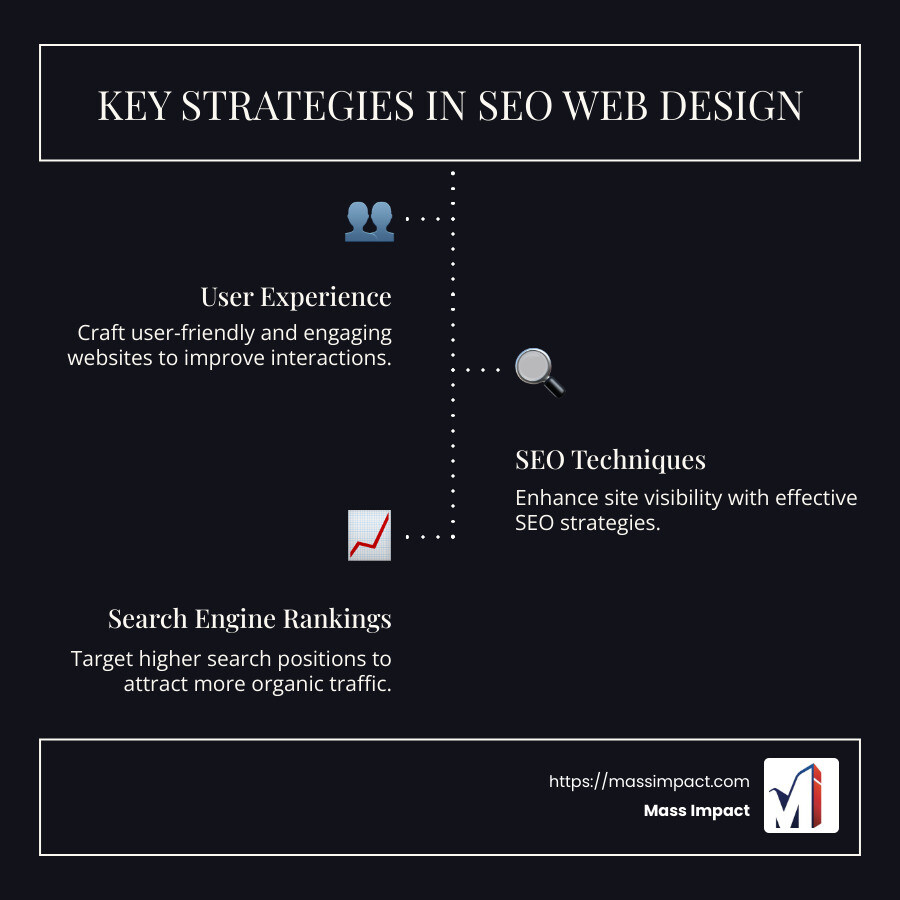
Website design and search engine optimization (SEO) are essential in today’s digital landscape. To help your business succeed online, combine both elements effectively:
- User Experience: Design websites to be user-friendly and engaging.
- SEO Techniques: Increase your site’s visibility on search engines.
- Search Engine Rankings: Aim for higher search positions to attract more traffic.
Creating a site that’s both user-friendly and optimized for search engines is key to achieving better visibility and engagement. By integrating web design and SEO, you offer visitors an enjoyable experience while ensuring your content is easily findable by search engines. This approach can boost your brand’s online presence and lift search engine rankings, making your business more competitive.
I’m Haiko de Poel Jr, a creative marketing strategist with a wealth of experience in website design and search engine optimization. My expertise helps brands carve unique identities and achieve remarkable growth.
What is SEO Web Design?
Importance of SEO in Web Design
SEO website design is crucial for making your site visible to search engines and users. This blend of search engine optimization and web design ensures your website ranks well and attracts visitors.
Here’s why it’s important:
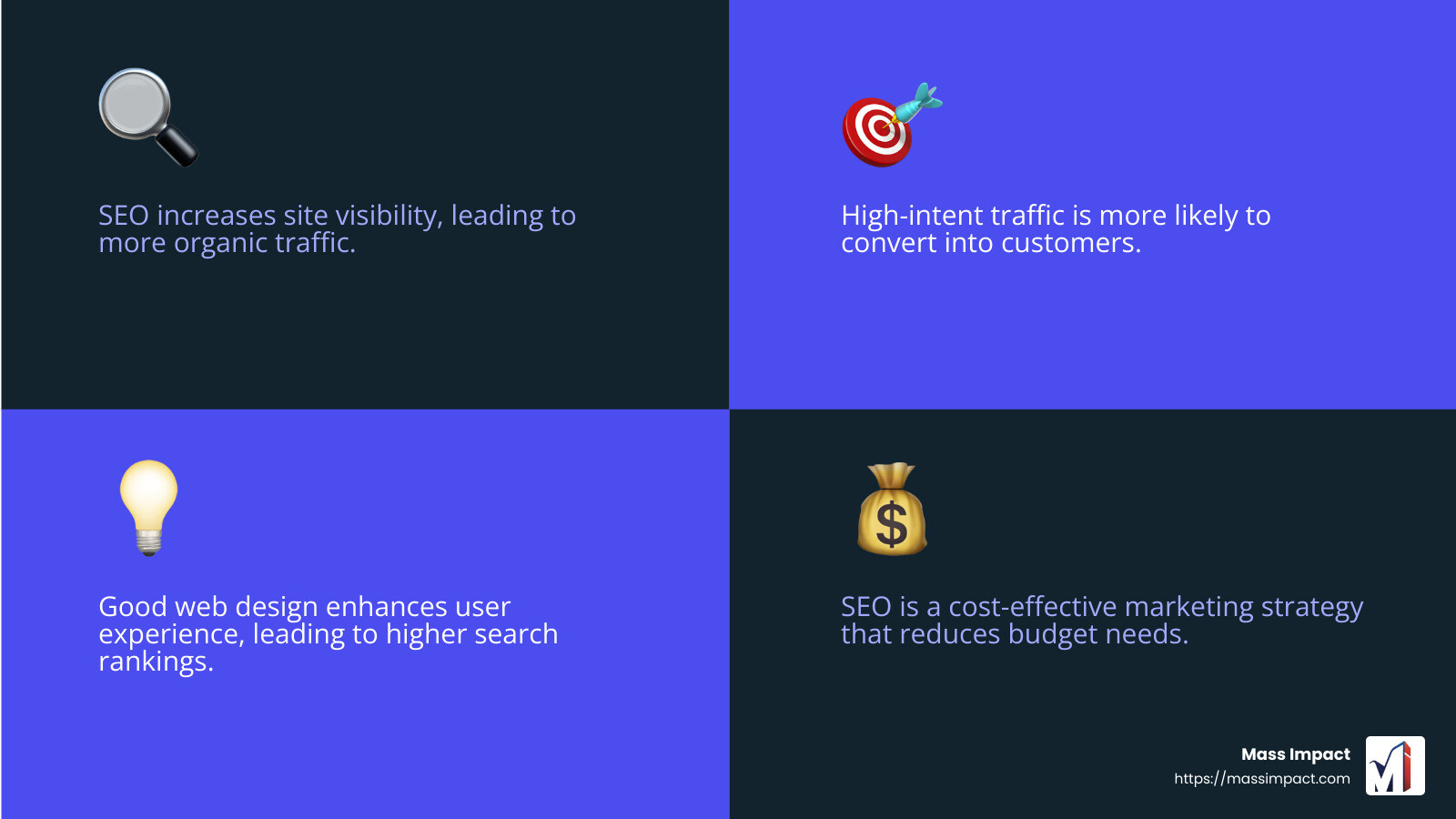
- Visibility and Organic Traffic:
- SEO helps your site appear in search results, increasing visibility.
-
Better visibility leads to more organic traffic, which is free and often more valuable than paid traffic.
-
High-Intent Traffic:
- When people search for specific terms, they have intent. If your site matches their intent, they are more likely to visit.
-
This targeted traffic is more likely to convert into customers.
- Good web design improves user experience, making it easy for visitors to steer and find information.
-
Search engines like Google reward sites that offer great user experiences with higher rankings.
-
Cost-Effective Marketing:
- Investing in SEO is cost-effective compared to other marketing strategies.
-
It reduces the need for a large marketing budget by driving organic traffic.
-
Improved Search Engine Rankings:
- By combining web design with SEO, your site can achieve higher search engine rankings.
- Higher rankings mean more visibility and traffic, leading to increased brand awareness and sales.
Incorporating SEO into your web design strategy is not just about pleasing search engines. It’s about creating a site that users love and search engines can easily understand. This dual focus can significantly boost your online presence and competitiveness.
Fundamentals of Website Design with SEO
Creating a website that is both user-friendly and search engine-friendly is essential for online success. Let’s explore the key elements of website design and search engine optimization that can help your site perform well in search results and provide a great experience for users.
Technical SEO and Site Structure
Technical SEO is all about making your website easy for search engines to crawl and index. A well-organized site structure is crucial for both search engines and users.
- Indexable and Crawlable Content: Ensure your site’s content is in HTML format, making it easy for search engines to read and understand.
- Internal Links and XML Sitemaps: Use internal links to connect related content and create an XML sitemap to help search engines steer your site.
- Breadcrumb Navigation: Implement breadcrumb navigation to improve user experience by showing users their location within your site.
Good URL Practices
Readable URLs are important for both users and search engines. A clean, descriptive URL can improve user experience and contribute to a better SERP rank.
- Keep URLs short and include relevant keywords.
- Avoid using long strings of numbers or dates, as they can appear spammy.
Usability and User Experience
Usability is a broad yet essential aspect of web design. It focuses on how easy and enjoyable it is for users to interact with your site.
- Page Layout: Important elements should be prominent and easy to find.
- Site Search: Offer a search feature to help users quickly find what they need.
- Visual Hierarchy: Use size and color to indicate the importance of elements.
- Mobile Responsiveness: Ensure your site works well on all devices, as mobile-friendliness is key for user satisfaction.
Content Marketing Strategies
Effective content marketing involves creating valuable and relevant content that resonates with your audience.
- Follow brand guidelines to maintain a consistent voice and style.
- Develop a solid keyword strategy to ensure your content aligns with what users are searching for.
- Focus on customer-focused content that addresses the needs and interests of your audience.
Accessibility Best Practices
Accessibility ensures that your website is usable by everyone, including people with disabilities.
- Adhere to the Web Content Accessibility Guidelines (WCAG) to create an inclusive site.
- Use captions and alt-text for images and videos to aid those using screen readers.
- Allow resizable text and ensure high-contrast text for readability.
By integrating these fundamentals of website design with SEO, you can create a site that not only ranks well in search engines but also provides a seamless and enjoyable experience for all users.
Key Elements of SEO-Friendly Web Design
Creating a website that performs well in search engines and delights users involves a few key elements. Let’s break them down.
Mobile-Friendliness
Ensuring your website is mobile-friendly is non-negotiable. With mobile-first indexing, Google primarily uses the mobile version of your site for ranking and indexing. A responsive design ensures your site looks great on all devices, from smartphones to tablets.
Use the Google Mobile-Friendly tool to check your site’s performance on mobile. This tool provides insights into how well your pages adapt to different screen sizes, highlighting areas for improvement.
Website Speed
Fast websites provide a better user experience and rank higher in search results. Page load times are crucial, with slow sites often suffering from higher bounce rates.
To improve speed:
– Optimize images by compressing them without losing quality.
– Reduce HTTP requests by minimizing the number of elements on a page.
– Enable browser caching to store static files in the user’s browser, speeding up future visits.
Tools like Google PageSpeed Insights can help you evaluate and improve your site’s speed.
Sitemaps
A well-structured sitemap is essential for crawlability and indexability. It acts as a roadmap for search engines, guiding them through your site’s content.
Submit your sitemap through Google Search Console to ensure all your key pages are indexed. A clear file structure helps both search engines and users steer your site more efficiently.
Readability
Your website’s readability affects how easily users can consume your content. Focus on:
- Font size: Use a minimum of 16px for body text.
- Text alignment: Left-align text to improve readability.
- White space: Use plenty of white space to make content easy to scan and understand.
These elements improve user comprehension and make your content more accessible.
Image Optimization
Image optimization is vital for both speed and accessibility. Follow these best practices:
- Use descriptive file names (e.g., “black-ford-bronco.jpg” instead of “image123.jpg”).
- Include alt tags to describe images for screen readers and improve SEO.
- Choose appropriate image formats like JPEG or WebP to balance quality and speed.
Metadata
Metadata plays a crucial role in how search engines understand your content. Optimize:
- Title tags: Include primary keywords and keep them under 60 characters.
- Header tags: Use H1 for main headings and H2-H6 for subheadings to structure your content.
- Meta descriptions: Craft concise summaries of your page content, including relevant keywords, to entice clicks from search results.
By focusing on these key elements of SEO-friendly web design, you can build a site that not only ranks well but also offers a fantastic user experience.
Best Practices for Combining Website Design and Search Engine Optimization
Creating a website that excels in both design and search engine performance requires a thoughtful approach. Let’s explore some best practices to achieve this balance.
Limit Flash and JavaScript
While Flash and JavaScript can add dynamic elements to your site, they often pose challenges for search engine crawlers. These technologies can hide critical content from search engines, impacting your SEO benefits. Limit their use and ensure that essential content is always accessible in HTML format. This approach ensures that search engines can easily read and index your site content.
Design a Simple, Clean Navigation
A user-friendly and straightforward navigation system is crucial for both users and search engines. Simplified URLs and a clean navigation structure improve the SEO score of your site. Make sure users can find what they need easily, without having to dig through complex menus. This not only improves user experience but also makes it easier for search engines to crawl and understand your site structure.
Prioritize Readability
Readability is key to keeping users engaged with your content. Use an appropriate font size and maintain color contrast to ensure text is easy to read. Conduct user testing to identify any areas where readability might be compromised. Your website should reflect your brand messaging clearly, without overwhelming visitors with jarring design elements.
Use Responsive Design
In a world with diverse screen sizes, responsive design is essential. It ensures your site is mobile-friendly and adapts to different devices seamlessly. Google rewards responsive sites with better rankings, so it’s crucial to incorporate this into your design strategy. Use tools like the Google Mobile-Friendly tool to assess and improve your site’s performance on mobile devices.
Focus on Content and Images
High-quality content is the backbone of any successful website. Ensure your content is relevant and valuable to your audience. Alongside content, image optimization plays a significant role in site performance. Use lazy load techniques to delay loading images until they’re needed, and always include alt text for accessibility and SEO purposes.
Speed Things Up
Conversion rates can plummet with slow load times. Users expect fast-loading pages, and search engines consider site speed as a ranking factor. Optimize your site to improve load times and improve the overall user experience. This not only boosts your SEO ranking but also keeps visitors on your site longer, increasing the likelihood of conversions.
By implementing these best practices, you can create a website that is both visually appealing and optimized for search engines, ensuring your online presence is strong and effective.
Frequently Asked Questions about Website Design and Search Engine Optimization
What is search engine optimization website design?
SEO-friendly web design is all about creating websites that are easy for both users and search engines to understand. Think of it as setting up your website so search engine crawlers can easily “read” and index your pages. This involves using clean code, clear navigation, and relevant content. When a website is designed with SEO in mind, it not only improves search engine rankings but also improves the overall user experience.
Can web designers do SEO?
Absolutely! While web designers primarily focus on the visual and functional aspects of a site, they can and should integrate SEO practices into their work. This means using techniques like content optimization, keyword placement, and ensuring that the site structure is search engine-friendly. By doing so, web designers help ensure that the websites they create are not only beautiful but also effective in attracting organic traffic. It’s a team effort where designers and SEO experts work hand-in-hand to create a seamless experience for users and search engines alike.
What is the impact of bad website design on SEO?
A poorly designed website can have a significant negative impact on search engine rankings and user experience. When a site is difficult to steer or slow to load, users get frustrated and leave quickly. This increases bounce rates, which search engines interpret as a sign that the site isn’t providing valuable content. Furthermore, if a website doesn’t meet accessibility standards, it may alienate users with disabilities, further reducing traffic and engagement.
In short, bad design can hurt both user experience and conversion optimization, leading to fewer visitors and lost opportunities. A well-designed site, on the other hand, keeps users engaged and encourages them to explore, which can boost your site’s performance in search engine results.
Conclusion
At Mass Impact, we understand that SEO-focused web design is the cornerstone of building a strong online presence. By integrating search engine optimization into the web design process, we ensure that your website not only ranks well in search engine results but also provides a seamless user experience.
A well-designed website acts as a powerful marketing tool. It attracts organic traffic, engages visitors, and converts them into loyal customers. Our approach combines clean navigation, fast loading times, and mobile responsiveness to create a user-friendly environment that search engines love.
User experience is at the heart of everything we do. We prioritize readability, intuitive design, and accessibility to make sure every visitor finds what they’re looking for quickly and easily. This focus not only improves satisfaction but also boosts search engine rankings, as search engines reward sites that provide value to users.
By choosing Mass Impact for your SEO web design needs, you are investing in a website that will set you apart from the competition. Our expertise in digital marketing ensures that your site is optimized from the ground up, giving you a competitive edge in today’s digital landscape.
Ready to lift your online presence? Learn more about our services here and find how we can help your business thrive.