
Web Design and Advertising: 6 Key Benefits in 2024
Web design and advertising play a critical role in the digital world, shaping how brands engage with their audiences online. In an era where first impressions often occur through a screen, having a website that reflects your brand’s values and supports advertising efforts is essential. Here’s a quick look at why they matter:
- Brand Visibility: Well-designed websites improve your brand’s visibility, helping potential customers find you easily.
- User Engagement: Effective web design keeps users engaged, which is crucial for converting visits into actions.
- Revenue Opportunities: Integrating advertising into web design can create additional revenue streams while maintaining a visually appealing design.
Haiko de Poel Jr, a leader in digital marketing and branding, brings years of experience in web design and advertising, making him adept at creating strategic solutions that resonate with audiences. Leveraging the latest trends, he ensures that your brand stands out in a crowded marketplace, seamlessly transitioning from design to digital success.
Web design and advertising terminology:
– Jacksonville social media marketing
– digital ads agency
– ecommerce agency near me
What is Web Design in Advertising?
In web design and advertising, your website serves as the primary interface between your brand and the world. It’s akin to a digital storefront, and just like a physical store, it needs to be inviting, easy to navigate, and reflective of your brand’s identity.
Brand Perception
Your website acts as a visual representation of your brand. The choices of colors, fonts, and images contribute significantly to how people perceive your business. A clean, professional design can make your brand appear trustworthy and reliable, whereas a cluttered or outdated website might lead visitors to question your credibility.
Creating a positive brand perception through web design involves understanding your audience and what appeals to them. If your brand is playful and youthful, bright colors and fun graphics might be appropriate. For more serious or professional brands, a minimalist design with muted colors might be better.
Visual Marketing Strategy
A strong visual marketing strategy is key in web design for advertising. This involves using design elements strategically to guide visitors’ attention where you want it. For example, using contrasting colors to highlight call-to-action buttons can increase conversion rates.
Audience Attraction
Your website should be designed to attract your target audience. This means understanding their needs and preferences and designing your site to meet them. Tools like Google Analytics can help you learn more about who is visiting your site and what they are looking for.
Once you understand your audience, you can tailor your design to attract them. This might mean using certain colors, fonts, or imagery that resonate with them.
Conversion
The goal of web design in advertising is to convert visitors into customers. This means making it easy for them to take the next step, whether that’s making a purchase, signing up for a newsletter, or contacting you for more information.
A well-designed website guides visitors through a journey, from learning about your brand to taking action. This requires a clear layout, intuitive navigation, and strategically placed calls to action.
By focusing on brand perception, visual marketing strategy, audience attraction, and conversion, your website can become a powerful tool in your advertising arsenal.
The Role of Web Design in Digital Marketing
A well-crafted website is crucial for any business aiming to succeed online. Web design and advertising are intertwined, playing a significant role in boosting your digital marketing efforts.
Online Presence
Your website is your online headquarters. It’s where potential customers learn about your brand, products, and services. A strong online presence begins with a website that is visually appealing and easy to navigate. It should reflect your brand’s identity and values, making visitors feel welcome and engaged.
SEO
Search Engine Optimization (SEO) is a vital component of digital marketing. Your website’s design can significantly impact your SEO efforts. A well-structured site with clear navigation helps search engines like Google understand your content better. This improves your chances of ranking higher in search results.
Incorporating relevant keywords, optimizing page load speeds, and ensuring mobile-friendliness are essential SEO practices. These elements can improve your site’s visibility, driving more organic traffic.
PPC Advertising
Pay-Per-Click (PPC) advertising involves creating targeted ads that appear in search engine results or on social media platforms. Your website design plays a role in PPC success. A landing page that’s custom to your ad can increase conversion rates.
For instance, if you’re running a Facebook ad campaign, make sure the landing page is consistent with the ad’s message. This creates a seamless user experience, encouraging visitors to take the desired action.
Content Creation
Content is king in digital marketing. Your website should feature high-quality, original content that provides value to your audience. This includes blog posts, videos, infographics, and more.
A well-designed website makes it easy for visitors to find and consume your content. It should also support different content formats, ensuring a rich and engaging user experience. The right content can establish your brand as an authority in your industry.
Social Media Management
Social media platforms are powerful tools for connecting with your audience. Your website design should integrate seamlessly with your social media strategy. This means including social media buttons, sharing options, and even embedding social feeds.
By aligning your web design with your social media efforts, you create a cohesive brand experience. This encourages visitors to engage with your brand across different platforms, increasing your reach and influence.
In summary, web design is a cornerstone of effective digital marketing. By focusing on online presence, SEO, PPC advertising, content creation, and social media management, you can build a robust digital strategy that drives results.
Benefits of Good Website Design
A well-designed website is more than just aesthetics. It plays a crucial role in your business’s success by enhancing SEO strategy, improving customer service impressions, building trust, and providing a seamless user experience.
SEO Strategy
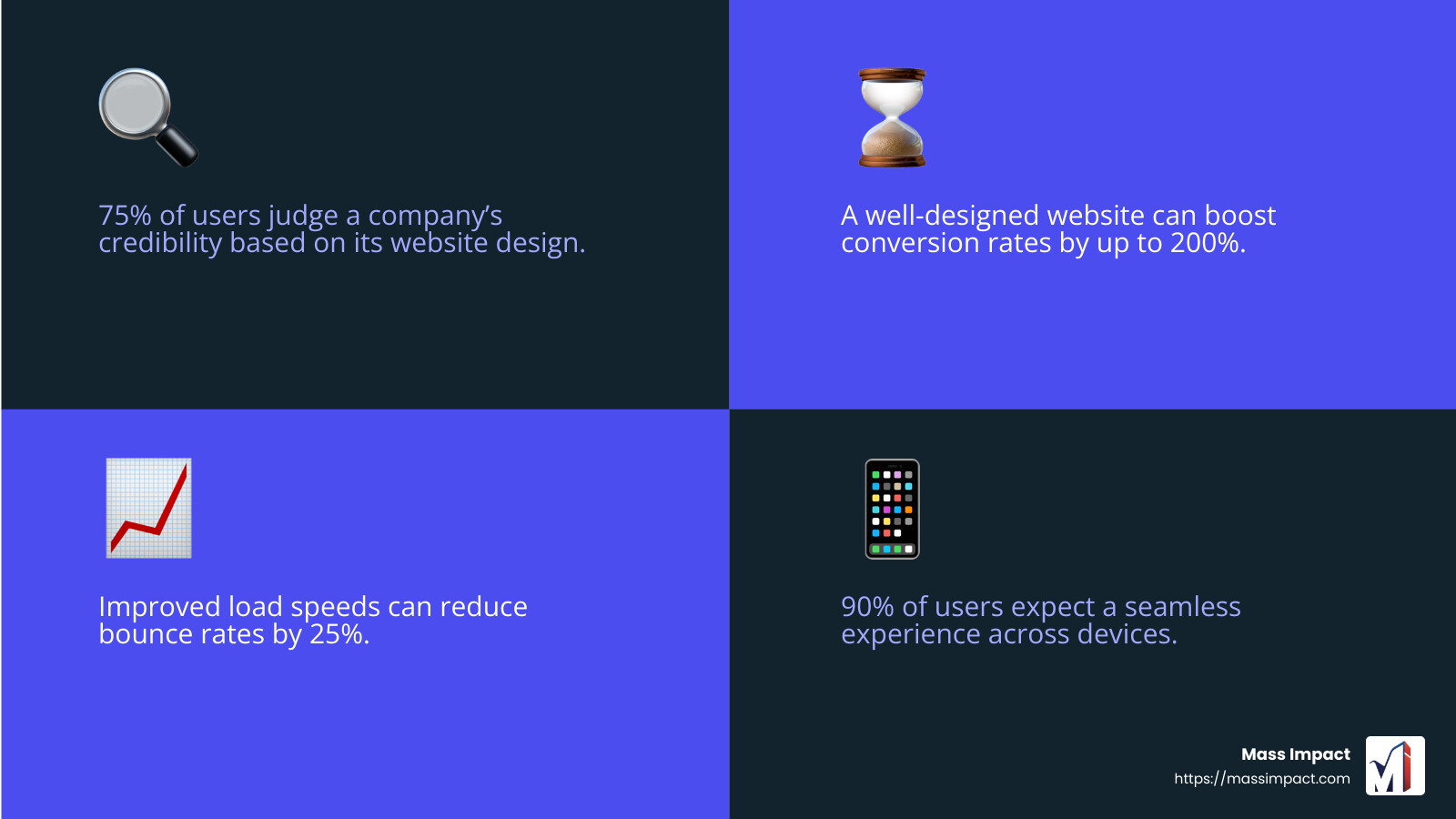
Good website design is the backbone of an effective SEO strategy. A site that’s easy to steer helps search engines like Google understand your content, which can lead to higher rankings. Incorporate relevant keywords into your site’s structure and ensure it loads quickly. This not only improves your search engine rankings but also keeps visitors from leaving due to slow pages. Speed matters.
Customer Service Impression
Your website is often the first point of contact between your business and potential customers. A professional and user-friendly design sets a positive first impression. It reflects your commitment to quality and customer service. Think of your website as a digital storefront. If it’s clean, organized, and welcoming, visitors are more likely to stay and explore.
Trust Building
Trust is key in any business relationship, and your website can help build it. A well-designed site with clear branding and easy-to-find contact information reassures visitors that your business is legitimate. Including customer testimonials and offsite reviews can further improve credibility. When people see that others trust your brand, they’re more likely to trust you too.
“A great website builds trust with your audience,” as highlighted by Red Website Design’s infographic on the benefits of web design.
User Experience
User experience (UX) is all about making it easy for visitors to interact with your site. Clear menus, logical layouts, and mobile responsiveness are essential. A good UX keeps visitors engaged and encourages them to take action, like signing up for a newsletter or making a purchase. The easier it is for users to steer your site, the more likely they are to stay and convert.
Incorporating these elements into your web design not only improves your brand’s online presence but also contributes to a more effective digital marketing strategy. A great website design is an investment that pays off by driving traffic, building trust, and increasing conversions.
Next, we’ll explore effective strategies for web design and advertising to maximize your site’s potential.
Effective Strategies for Web Design and Advertising
When it comes to web design and advertising, the devil is in the details. The way you place ads, organize your layout, choose color schemes, and manage the flow of content can make or break your website’s effectiveness. Let’s explore these strategies.
Ad Placement
Ad placement is a balancing act. You want ads to be visible but not intrusive. Placing ads in strategic spots, like the sidebar or header, can help them blend with your content. According to the research, many blogs use the sidebar for ad placement, keeping the main content area free for readers. This method ensures ads are seen without disrupting the user experience.
Layout Considerations
A well-thought-out layout is crucial. It helps users find what they need quickly. Websites like news outlets often spread ads throughout the site, while blogs might concentrate them in one area. Think about your audience and the type of content you offer. For instance, if you’re a news site, spreading ads can keep them visible without overwhelming any single page.
Color Schemes
Choosing the right color scheme is vital. Ads are often colorful, aiming to catch the eye. If your website is also colorful, it might clash with the ads. A muted color scheme can help ads stand out without overwhelming the user. Consider the psychology of colors too. Different colors evoke different emotions. Make sure your color choices align with your brand identity and the message you want to convey.
Flow of Content
The flow of content should guide the user’s eye naturally through the page. Ads can disrupt this flow if not carefully placed. To minimize negative impact, keep ads away from critical content areas. For example, placing ads above or below article titles can draw attention without interrupting the reading experience. The New York Times, for instance, keeps its main content area free of ads, focusing them in the sidebar.
By focusing on these strategies, you can create a website that not only looks good but also functions effectively. Ads can coexist with content without disrupting the user experience, and a well-designed layout can improve both user engagement and ad revenue.
Next, we’ll dig into the key benefits of good website design and how it can boost your overall business performance.
6 Key Benefits of Good Website Design
A well-designed website does more than just look pretty. It plays a crucial role in your business’s success. Here are six key benefits of good website design that can improve your business performance.
1. SEO
Search Engine Optimization (SEO) is vital for getting your website noticed. A well-designed site is easier for search engines to crawl. This means bet