
SEO Web Design: 9 Powerful Steps to Success 2025
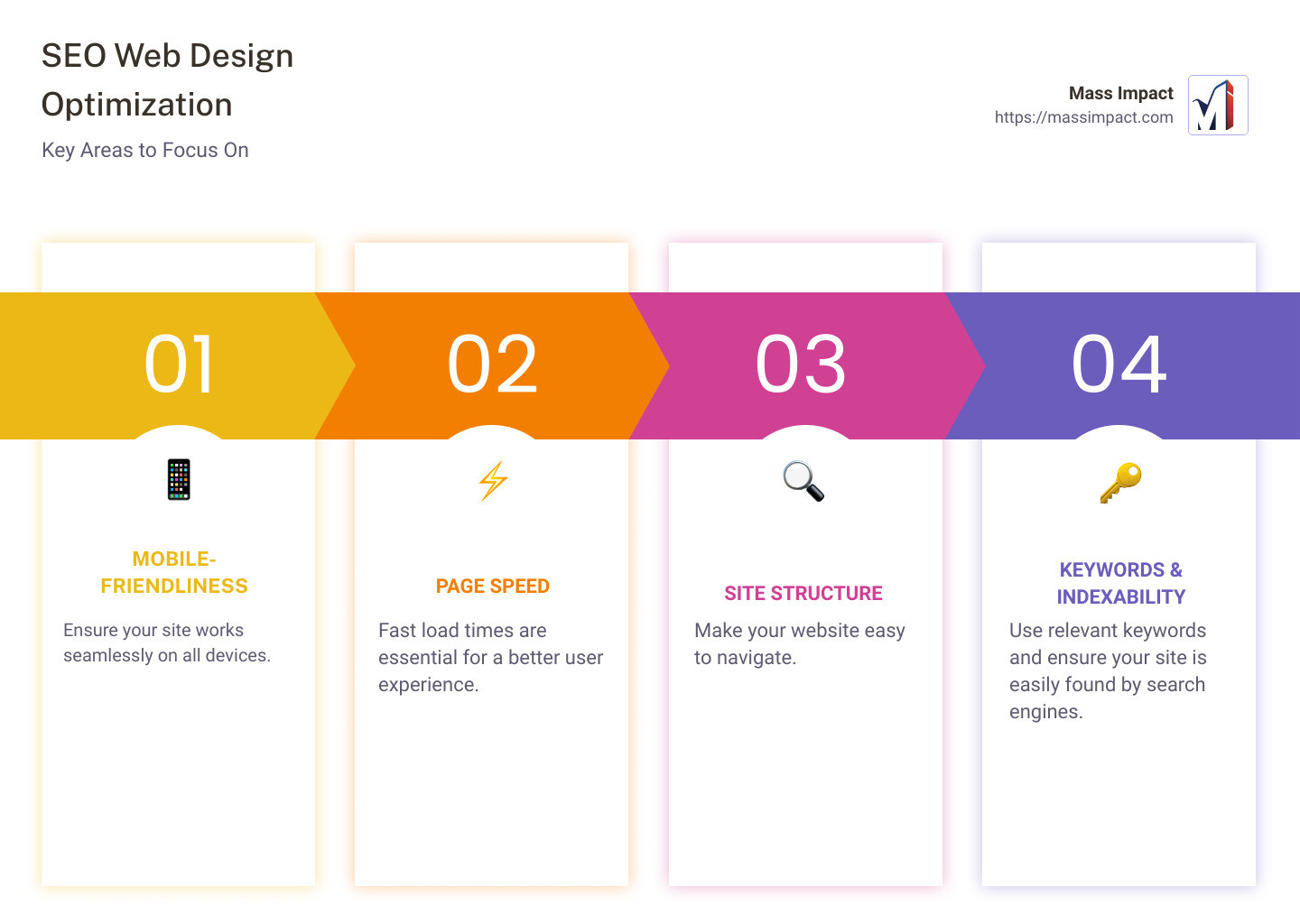
SEO web design is crucial for creating a website that not only attracts visitors but also provides an exceptional user experience. For those looking to quickly optimize their site for search engines, focus on the following main areas:
- Ensure mobile-friendliness: Your site should work seamlessly on all devices.
- Improve page speed: Fast load times are essential for better user experience and higher rankings.
- Optimize site structure: Make your website easy to steer.
- Use relevant keywords strategically: This helps search engines understand your content.
- Ensure indexability: Your site should be easily found by search engines.
Bringing SEO and web design together helps create a site that is not only aesthetically pleasing but also functional. This fusion ensures your website stands out in search engine results while offering users a positive experience.
I am Haiko de Poel Jr. With years of experience in SEO web design, I’ve helped numerous businesses create digital strategies that lift their brand. I strive to simplify complex concepts and craft designs that resonate with audiences, ensuring strong online presence and lasting impressions.
Simple guide to seo web design:
– search engine friendly websites
– website design and search engine optimization
– why responsive web design is good for seo
Understanding SEO Web Design
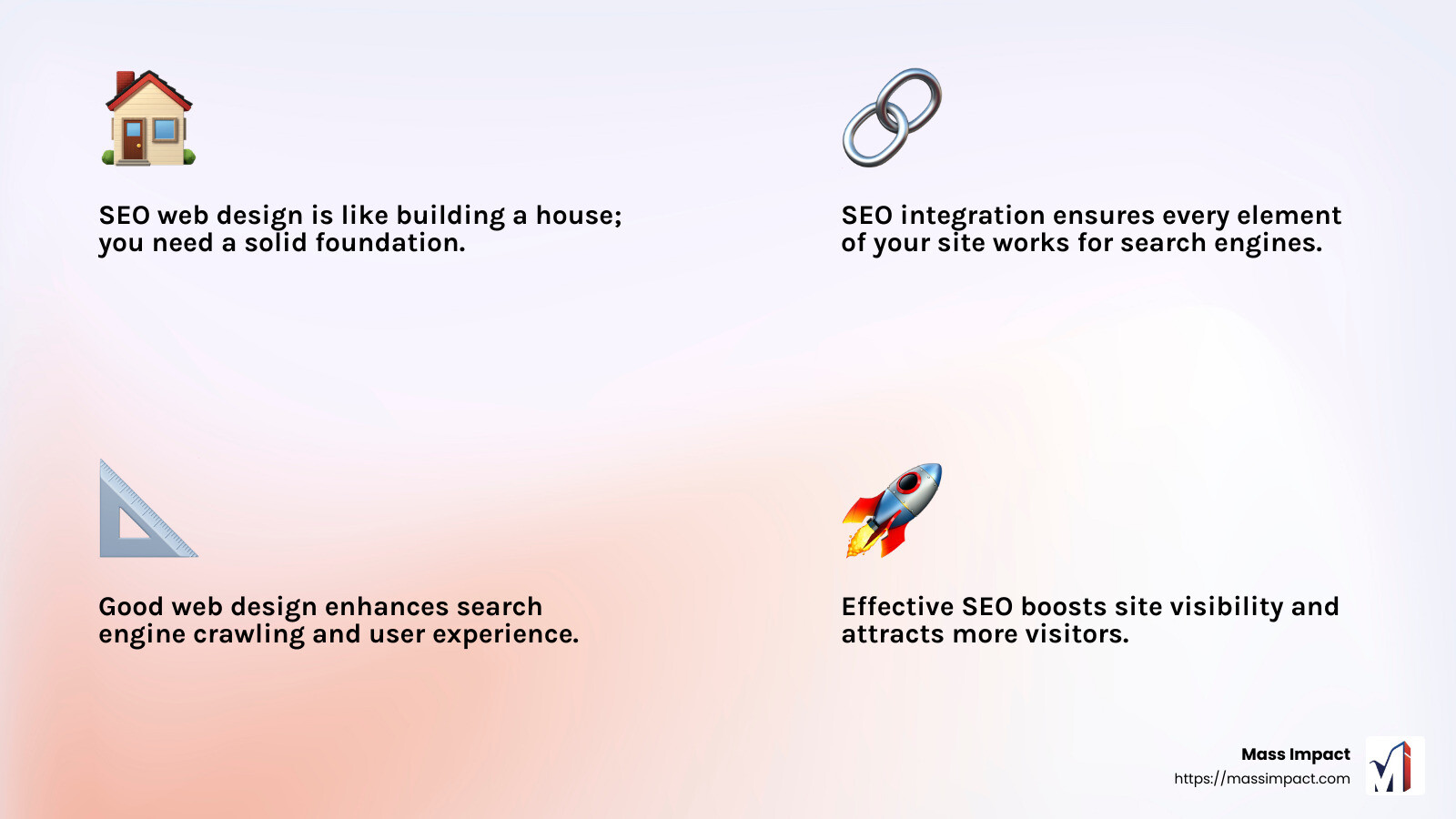
When it comes to SEO web design, think of it as building a house. You need a solid foundation and a clear blueprint. Let’s break it down.
SEO Integration
SEO integration means weaving search engine optimization into every part of your website. It’s not just about sprinkling keywords here and there. It’s about making sure every element of your site—from the code to the content—works together seamlessly to help search engines find and rank your site.
Imagine you’re designing an e-commerce site. If your product descriptions are hard to find or poorly written, search engines might skip over them. By integrating SEO, you ensure that these descriptions are easy to find and relevant to what users are searching for.
Web Design Fundamentals
Web design fundamentals are the building blocks of a successful site. These include layout, color scheme, typography, and overall user experience. But in SEO web design, these elements need to do double duty.
For example, a clean and simple layout not only looks good but also helps search engines crawl your site more efficiently. A well-thought-out color scheme can guide users’ eyes to important information, improving engagement.
Search Engine Optimization
Search engine optimization is the art and science of making your site attractive to search engines. It’s about understanding what people are searching for and ensuring your site provides the answers.
SEO involves a mix of on-page elements like title tags and meta descriptions, as well as technical aspects like site speed and mobile-friendliness. By focusing on these areas, you can boost your site’s visibility and attract more visitors.
In summary, SEO web design is all about blending the technical aspects of SEO with the visual and functional elements of web design. This ensures that your site not only ranks well in search engines but also provides a great experience for users. We’ll dive deeper into the key elements of SEO web design that can take your website to the next level.
Key Elements of SEO Web Design
To succeed in SEO web design, you need to focus on several key elements that ensure both search engines and users love your site. Let’s explore these crucial components.
Mobile-Friendliness
With over 60% of all searches now happening on mobile devices, it’s clear that a mobile-friendly design is no longer optional—it’s essential. Google even uses mobile-first indexing, meaning it primarily looks at the mobile version of your site when determining rankings.
Responsive design is the gold standard here. It ensures your site looks great and functions well on all devices, from smartphones to desktops. This means using flexible layouts, images, and CSS that adapt to different screen sizes.
Website Speed
Fast websites keep visitors happy and improve your search rankings. Google uses page speed as a ranking factor, so it’s crucial to keep load times short. Faster sites also tend to have lower bounce rates, meaning users are more likely to stick around and explore.
To boost your site speed, consider:
- Optimizing images: Use formats like WebP and compress them without losing quality.
- Reducing HTTP requests: Minimize the number of elements that need loading.
- Enabling browser caching: This helps returning visitors load your site faster.
Site Structure
A well-organized site structure is like a roadmap for both users and search engines. It helps search engines crawl your site efficiently and ensures users can find what they need without getting lost.
Use a clear hierarchy with categories and subcategories. Think of it like a tree, with your homepage as the trunk and subpages as branches. This organization makes navigation intuitive and helps distribute link equity throughout your site.
Navigation
Navigation is all about guiding users smoothly from one part of your site to another. It should be intuitive, requiring minimal thought from your visitors.
Use clean, simple menus and consider adding breadcrumb trails. These help users understand where they are on your site and easily backtrack if needed.
Indexability
For your site to rank, search engines need to index its content. This means they can find, understand, and store your pages in their database. To ensure your site is indexable, focus on:
- HTML text for main content: It’s easier for search engines to read than JavaScript-heavy pages.
- XML sitemaps: These help search engines find all your pages.
- Avoiding duplicate content: Each page should be unique to prevent confusion.
By focusing on these key elements, you can create a website that’s not only visually appealing but also optimized for search engines. This blend of design and SEO ensures your site ranks well and provides a seamless user experience.
Next, we’ll dive into the steps you can take to optimize your website for SEO, even if you’ve hit roadblocks in the past.
9 Steps to Optimize Your Website for SEO
Optimizing your website for SEO can seem overwhelming, but breaking it down into manageable steps makes it achievable. Let’s explore nine key steps that will set your site up for success.
1. Mobile-First Design
Most searches happen on mobile devices. Google prioritizes mobile-first indexing, which means it primarily uses the mobile version of your site for ranking and indexing. Start with a responsive design that adapts to any screen size. This ensures your content is accessible and engaging on smartphones, tablets, and desktops alike.
2. Website Speed
Page speed is a critical factor in SEO and user satisfaction. A slow site can lead to higher bounce rates and lower search rankings. To improve your site speed:
- Optimize images by using formats like WebP and compressing files.
- Reduce HTTP requests by minimizing the number of elements on each page.
- Enable browser caching to speed up load times for returning visitors.
3. Sitemaps
An XML sitemap acts like a guidebook for search engines, helping them find and index your site’s pages. Regularly update your sitemap to include new content and submit it to search engines to ensure they can find all your pages.
4. Readability
Your content should be easy to read and understand. Use short paragraphs, bullet points, and clear headings to break up text. This not only improves user experience but also helps search engines understand your content better.
5. Image Optimization
Images are vital for engaging content, but they can also slow down your site if not optimized. Use descriptive file names and alt tags to help search engines understand your images. Compress images to reduce load times without sacrificing quality.
6. Alt Tags
Alt tags provide text descriptions for images, making them accessible to screen readers and improving SEO. They help search engines understand what your images are about, which can boost your image search rankings.
7. URL Structure
A clean, descriptive URL structure is essential for SEO. Use hyphens to separate words and include focus keywords. For example, use /seo-web-design-tips instead of /page123. This makes your URLs more user-friendly and easier for search engines to understand.
8. Metadata
Metadata includes title tags and meta descriptions, which appear in search results. They should be concise and include focus keywords. Aim for a title tag under 60 characters and a meta description under 160 characters to ensure they display correctly in search results.
9. Indexable Content
Ensure your content is easily crawlable by search engines. Use HTML text for main content, as it’s easier for search engines to read than JavaScript-heavy pages. Avoid duplicate content, which can confuse search engines and harm your rankings.
By following these steps, you can optimize your website for SEO, making it more visible to search engines and more engaging for users. Next, we’ll explore common mistakes to avoid in SEO web design, ensuring your efforts yield the best results.
Common Mistakes in SEO Web Design
Creating a successful SEO web design involves avoiding common pitfalls that can hinder your site’s performance. Let’s look at some frequent mistakes and how to steer clear of them.
Neglecting Mobile Optimization
In 2022, mobile devices accounted for nearly 59% of global website traffic. If your site isn’t optimized for mobile, you risk losing a significant number of visitors. Google uses mobile-first indexing, meaning it looks at your site’s mobile version first when ranking. So, a lack of mobile optimization can drastically affect your search rankings.
Solution: Use responsive or adaptive design to ensure your site looks great on all devices. Consider a mobile-first design approach, which prioritizes the mobile experience from the start.
Slow Page Load Times
A slow website can frustrate users and lead to high bounce rates. According to Unbounce, 70% of consumers say page speed affects their willingness to buy from an online retailer. Search engines also penalize slow sites, which can hurt your SEO efforts.
Solution: Compress images and use efficient coding practices to improve load times. Enable browser caching and choose a reliable hosting provider to ensure fast server response times.
Poor Site Structure
A confusing site structure can deter users and make it difficult for search engines to crawl your site. If visitors can’t easily find what they’re looking for, they may leave quickly, signaling to search engines that your site isn’t valuable.
Solution: Keep your site’s structure logical and straightforward. Use a clear hierarchy with well-organized categories and subcategories. Breadcrumb navigation can also help users find their way around your site.
Lack of Quality Content
Content is king in SEO. Without quality content, your site may struggle to rank well. Google favors sites that provide valuable, original content that answers users’ questions.
Solution: Focus on creating content that adheres to Google’s E-E-A-T guidelines: Experience, Expertise, Authoritativeness, and Trustworthiness. Regularly update your site with fresh, relevant content to keep users engaged and improve your rankings.
By avoiding these common mistakes, you can create a more effective SEO web design that attracts and retains visitors. Next, we’ll explore how to measure success in your SEO efforts using analytics and other key metrics.
Measuring Success in SEO Web Design
To ensure your SEO web design efforts are paying off, it’s crucial to measure success using the right metrics. This involves analyzing user engagement, conversion rates, and leveraging analytics tools to gather insights.
User Engagement
User engagement tells you how effectively your site captures and holds visitors’ attention. High engagement typically means users find your content valuable and easy to steer. Key metrics to track include:
- Time on Page: How long users stay on a specific page.
- Bounce Rate: The percentage of visitors who leave after viewing only one page.
A high bounce rate might indicate that your content isn’t meeting users’ expectations or that your site’s navigation is confusing. To improve engagement, ensure your content is relevant and well-organized, and use clear calls-to-action (CTAs).
Conversion Rates
Conversion rates show how many visitors take desired actions, such as making a purchase or signing up for a newsletter. Improving conversion rates can directly impact your bottom line.
- Example: Domino’s saw a 14.3% increase in sales after revamping their recipe and promoting it on social media.
To boost conversions, focus on optimizing the “above the fold” section of your website. Use compelling CTAs, engaging visuals, and ensure your site loads quickly to prevent user frustration.
Analytics
Analytics tools like Google Analytics and Google Search Console are invaluable for tracking and analyzing your website’s performance. They provide insights into:
- Traffic Sources: Understand where your visitors are coming from.
- Keyword Performance: Identify which keywords drive traffic and conversions.
- User Behavior: Analyze how users interact with your site.
Using these insights, you can make data-driven decisions to optimize your SEO web design further. For example, if a particular page has a high bounce rate, consider revising its content or improving its load time.
By focusing on these metrics, you can continuously refine your SEO strategy and improve your website’s performance. Next, we’ll address some frequently asked questions about SEO web design.
Frequently Asked Questions about SEO Web Design
What is the difference between design and SEO?
Design is all about how your website looks and feels. It includes colors, layout, fonts, and how users interact with your site. A well-designed site is visually appealing and easy to steer, enhancing user experience.
SEO (Search Engine Optimization) is about making your site visible to search engines. It focuses on optimizing your site’s content and structure so it ranks higher in search engine results. This includes using the right keywords, ensuring fast load times, and making your site mobile-friendly.
Together, design and SEO work to provide a seamless experience for users while ensuring your site is easily found online. A beautiful design attracts visitors, but good SEO brings them to your site in the first place.
How do I choose the right keywords for my website?
Choosing the right keywords is crucial for your SEO web design. Here’s how you can do it:
-
Understand Your Audience: Know what your potential visitors are searching for. This involves understanding their needs and the language they use.
-
Use Keyword Tools: Tools like Google Keyword Planner or SEMRush can help you find relevant keywords. Look for keywords with high search volume but low competition.
-
Focus on Long-Tail Keywords: These are longer and more specific phrases. They may have lower search volumes but often lead to higher conversion rates because they target users who are further along in the buying process.
-
Analyze Competitors: Check which keywords your competitors rank for. This can provide insights into potential keywords you might have missed.
By integrating these keywords naturally into your content, you can improve your site’s visibility and attract the right audience.
How do I create a website to maximize SEO performance?
Creating a website that maximizes SEO performance involves several key steps:
-
Mobile-First Design: Ensure your site is mobile-friendly. With more users browsing on mobile devices, a responsive design is crucial.
-
Optimize Page Speed: Fast loading times are essential. Compress images, minify code, and use a Content Delivery Network (CDN) to improve speed.
-
Structure Your Site Well: Use a logical site structure with clear navigation. This helps users and search engines find and index your pages easily.
-
Use Sitemaps: Submit XML sitemaps to search engines to ensure all your pages are indexed.
-
Optimize Metadata: Include relevant keywords in your page titles, meta descriptions, and headings. This helps search engines understand your content.
-
Create Quality Content: Follow Google’s E-E-A-T guidelines by providing content that showcases Experience, Expertise, Authoritativeness, and Trustworthiness.
By focusing on these elements, you can ensure your website is well-optimized for search engines, improving your chances of ranking higher and attracting more visitors.
Next, we’ll wrap up our insights with a conclusion on how Mass Impact can support your digital marketing journey.
Conclusion
At Mass Impact, we understand that succeeding in the digital world requires more than just a pretty website. It demands a strategic blend of design and SEO web design expertise to create a site that not only looks good but also performs well in search engine rankings.
Our team in Jacksonville, Florida, is dedicated to crafting creative solutions that set your business apart. We don’t just design; we ensure your site is optimized from the ground up. This means focusing on mobile-first design, fast loading times, and user-friendly navigation—all crucial elements in today’s competitive online landscape.
But our expertise doesn’t stop there. We also help you develop quality content that aligns with Google’s E-E-A-T guidelines, ensuring your brand is seen as an authority in your field. We integrate SEO best practices into every aspect of your site, from using the right keywords to optimizing images and metadata.
By partnering with Mass Impact, you’re not just getting a service; you’re gaining a team of experts committed to helping your business thrive online. Our custom solutions ensure your digital marketing efforts translate into real-world success, driving traffic, engagement, and conversions.
Ready to lift your digital presence? Let us help you create something amazing. Visit our website to learn more about how our expertise can transform your online strategy.