

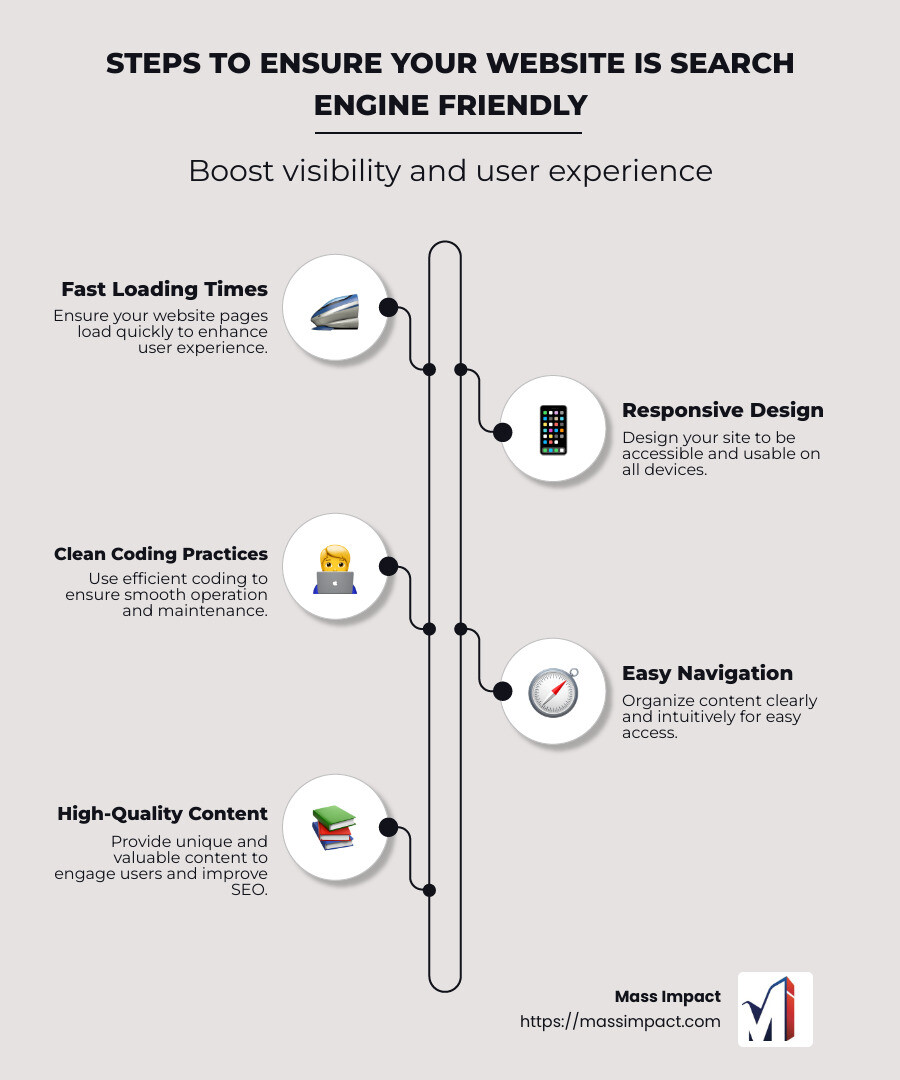
Search engine friendly websites are crucial in today’s digital world. They not only improve user experience but also drive organic traffic, which can boost your site’s visibility and credibility. If you’re looking for a quick answer on how to ensure your website is search engine friendly, here’s what to focus on:
- Ensure fast loading times and responsive design.
- Use clean coding practices.
- Provide easy navigation and unique, high-quality content.
- Leverage tools like XML sitemaps and Google Analytics.
Building a website that meets these criteria can save costs on paid advertising by tapping into the vast world of organic search traffic. According to recent research, 68% of all online experiences start with a search engine query, underscoring just how vital search engine optimization (SEO) is.
I’m Haiko de Poel Jr. With expertise in crafting search engine friendly websites, I specialize in branding, rebranding, and digital innovation to help businesses shine in crowded markets. My work has been pivotal in guiding companies through digital changes that emphasize SEO web design for enduring growth.
Simple search engine friendly websites glossary:
– best website builder for seo
– website design and search engine optimization
What Makes a Website Search Engine Friendly?
Creating a search engine friendly website involves several key elements. These elements ensure your site is easily accessible to search engines and provides a great user experience. Let’s dive into what makes a website truly search engine friendly.
Fast Loading
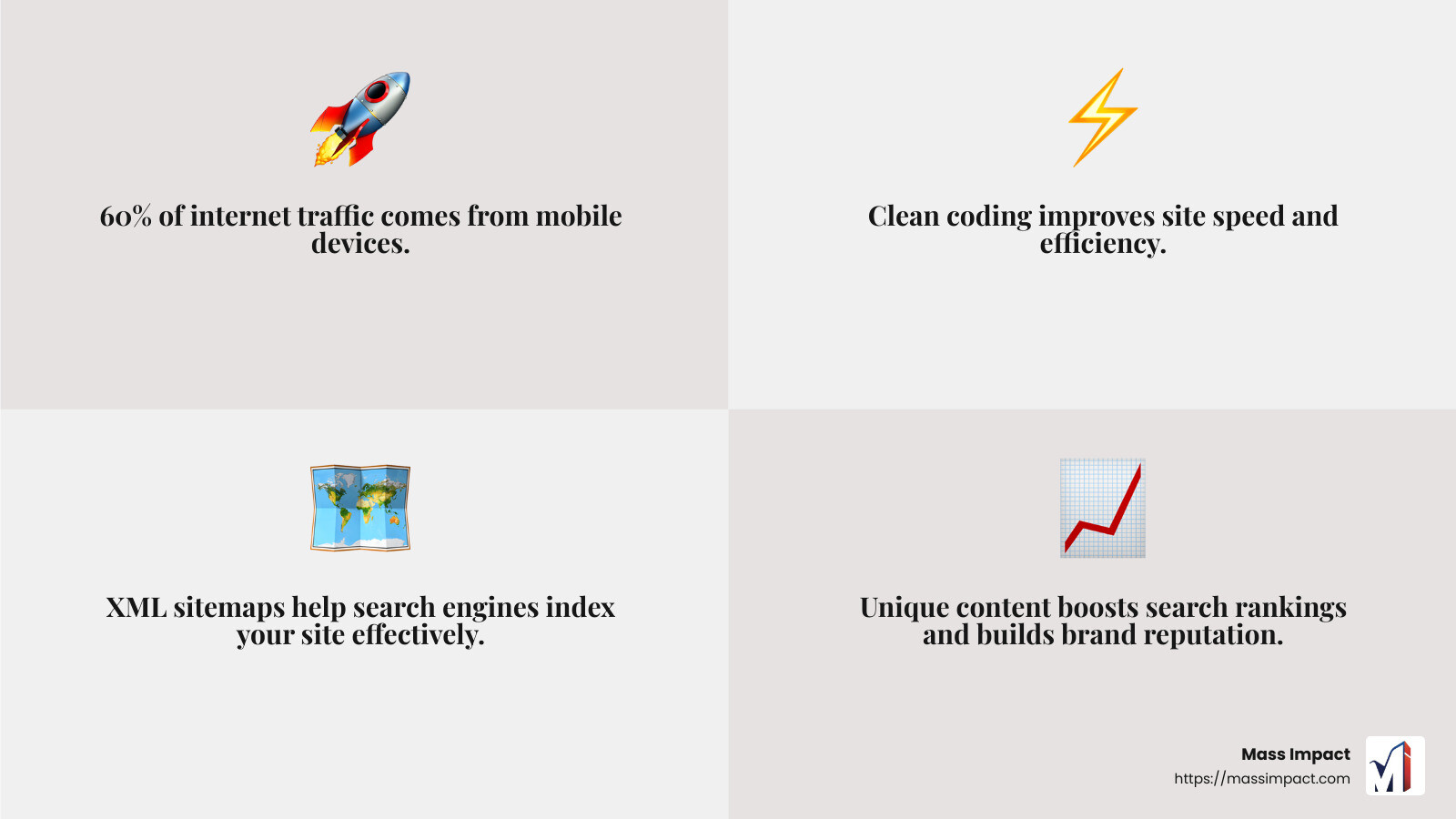
Fast loading times are crucial. A study by Digital.com found that 50% of online shoppers leave a website if it doesn’t load in six seconds or less. Speed not only keeps visitors happy but also helps with search rankings. Google may rank faster pages higher when all other factors are equal. Use tools like Google’s PageSpeed Insights to check and improve your site’s speed.
Clean Coding
Clean coding is the backbone of a well-functioning website. It ensures that search engines can easily read and index your site. Avoid unnecessary code bloat and focus on simplicity. This makes your site faster and more efficient, benefiting both users and search engines.
Responsive Design
With 60% of internet traffic coming from mobile devices, having a responsive design is essential. Your site should look great and function well on any device, whether it’s a phone, tablet, or desktop. This adaptability improves user experience and is a factor in search engine rankings.
Easy Navigation
Easy navigation helps users find what they’re looking for quickly. Clear menus, logical page layouts, and intuitive design make for happy visitors. Search engines also favor sites that are easy to steer, as they can crawl them more effectively.
XML Sitemaps
An XML sitemap is like a roadmap for search engines. It lists your site’s important pages, helping search engines crawl and index them efficiently. Regularly update your sitemap to reflect any changes on your site. This ensures search engines always have the most accurate view of your content.
Google Analytics
Using Google Analytics provides insights into how visitors interact with your site. This data helps you understand what’s working and what needs improvement. By analyzing user behavior, you can make informed decisions to improve your site’s performance and search engine friendliness.
Unique Content
Unique, high-quality content is a cornerstone of SEO. Search engines love fresh, engaging, and informative content that answers users’ queries better than other pages. Avoid duplicate content, and focus on providing value to your audience. This not only boosts your rankings but also builds your brand’s reputation.
Blogging Capability
A blog is a fantastic way to keep your content fresh and relevant. Regularly updating your blog with new posts keeps visitors coming back and attracts new ones. It also signals to search engines that your site is active, which can improve your search rankings. Plus, blogging allows you to target specific keywords and topics, boosting your SEO efforts.
By focusing on these elements, you can create a website that is not only user-friendly but also optimized for search engines. This balance will help you attract more visitors and achieve better visibility in search results.
SEF vs. SEO: Understanding the Difference
When it comes to building a website, understanding the difference between Search Engine Friendly (SEF) and Search Engine Optimization (SEO) is crucial. These two concepts, while related, serve different purposes and require distinct approaches.
One-Time Process vs. Ongoing Process
SEF is a one-time process. It focuses on the initial setup and design of a website to ensure that search engines can easily crawl and index it. Think of it as laying the groundwork. Once a site is search engine friendly, there’s little need for continuous changes unless major updates or platform shifts occur.
In contrast, SEO is ongoing. It involves continuously optimizing content, structure, and links to improve rankings and drive traffic. SEO is never truly “finished” because search engine algorithms and user behaviors are always evolving.
Site Construction vs. Site Messaging
Site construction is at the heart of SEF. This involves the technical aspects, like clean coding and responsive design. Developers focus on removing barriers that might prevent search engines from accessing site content.
Site messaging, on the other hand, is where SEO shines. It’s all about ensuring the content is engaging and relevant to the user’s search intent. This involves using keywords strategically and crafting messages that resonate with visitors, encouraging them to take action.
Unique Content vs. Optimized Content
A search engine friendly website ensures each page has unique content, preventing issues with duplicate content that can confuse search engines.
SEO takes it a step further by optimizing content for better rankings and conversions. This means tailoring content not just to be unique, but also to include relevant keywords and provide value to the audience, enhancing both visibility and user engagement.
Title Tags and Description Tags
In SEF, each page should have unique title and description tags that accurately describe its content. These tags help search engines understand what each page is about.
SEO optimizes these tags further by making them compelling and keyword-rich. This not only helps with rankings but also improves click-through rates by enticing users to choose your site over others in search results.
Readable URLs and Canonical Tags
Readable URLs are a key part of SEF. They should be simple and descriptive, giving users and search engines a clear idea of the page’s content.
For SEO, URLs need to follow navigation paths and may incorporate canonical tags to address duplicate content issues. Canonical tags guide search engines to the preferred version of a page, ensuring the right content is indexed.
Algorithmic Guidelines
Both SEF and SEO must adhere to algorithmic guidelines set by search engines. These guidelines dictate how sites should be structured and optimized to avoid penalties and achieve better rankings. Staying updated with these guidelines is essential for maintaining a strong online presence.
By understanding these differences, you can effectively balance SEF and SEO to create a website that not only attracts search engines but also delivers a great user experience. This sets the stage for ongoing success in the digital landscape.
14 Tips for Creating an SEO-Friendly Website
Crafting a search engine friendly website can seem daunting, but with the right approach, you can make your site both appealing to users and easy for search engines to understand. Here are 14 essential tips to guide you.
1. Use Keywords Strategically
Keywords are the backbone of SEO. Conduct thorough keyword research to identify terms your audience is searching for. Tools like Google Keyword Planner can help. Incorporate these keywords naturally throughout your content, titles, and meta descriptions. Avoid keyword stuffing, which can harm your rankings.
2. Optimize Header Tags
Header tags, such as
and
, structure your content and make it easier for search engines to understand. Use them to highlight important points and include relevant keywords to improve SEO.
3. Maintain a Clean URL Structure
A clear and concise URL structure is vital. URLs should be readable and descriptive, reflecting the page’s content. This helps search engines and users understand what to expect. Avoid long, complex URLs with unnecessary parameters.
4. Use Keyword-Rich Anchor Text
Anchor text refers to the clickable text in a hyperlink. Use descriptive, keyword-rich anchor text that clearly indicates what the linked page is about. This not only helps search engines but also improves user experience.
5. Ensure Your Site Is Mobile-Friendly
With over 60% of internet traffic coming from mobile devices, a mobile-friendly design is crucial. Use responsive design to ensure your site adapts to various screen sizes, enhancing usability and SEO.
6. Optimize Images
Images can slow down your site if not optimized. Use descriptive file names and include alt text with relevant keywords. Compress images to reduce load times without sacrificing quality.
7. Improve Page Loading Speed
Fast-loading pages are essential for both user experience and SEO. Use tools like Google PageSpeed Insights to identify and fix speed issues. Compress files, enable browser caching, and minimize JavaScript to improve performance.
8. Leverage Social Media
Social media platforms can drive traffic and increase your site’s visibility. Share your content on social media to reach a broader audience and encourage sharing, which can indirectly boost SEO.
9. Use Google Tools
Tools like Google Analytics and Google Search Console provide valuable insights into your website’s performance. Use them to monitor traffic, identify issues, and optimize your site for better results.
10. Keep Code Clean
Clean, organized code ensures your site runs smoothly and is easily crawled by search engines. Use tools like HTML Cleaner to maintain your site’s code quality and improve load times.
11. Add Internal Links
Internal links connect different pages on your site, helping search engines understand your content’s structure. Use them to guide users to related content, improving navigation and time spent on your site.
12. Optimize Title Tags and Meta Descriptions
Title tags and meta descriptions are crucial for SEO. Ensure they are unique, compelling, and include relevant keywords. They should accurately reflect the page’s content to improve click-through rates.
13. Incorporate Visual Content
Images, videos, and infographics can make your content more engaging. They also provide additional opportunities to optimize for search engines. Use descriptive titles and captions to improve SEO.
14. Regularly Update Content
Search engines favor fresh content. Regularly update your website with new posts or by refreshing existing content. This keeps your site relevant and can improve its ranking over time.
By integrating these tips, you can create a website that is not only search engine friendly but also provides a great user experience. This sets the foundation for ongoing success in the digital landscape.
Next, let’s explore how to make your website crawl-friendly, ensuring search engines can access and index your content efficiently.
How to Make Your Website Crawl-Friendly
Creating a search engine friendly website starts with ensuring that search engines can easily crawl and index your content. Here’s how to make your website crawl-friendly:
1. Identify and Fix Crawl Errors
Crawl errors occur when search engine bots can’t reach a page on your site. These errors can prevent your content from being indexed, affecting your search visibility. Use tools like Google Search Console to identify and fix these errors promptly.
2. Address Broken Links
Broken links can disrupt the crawling process and lead to a poor user experience. They occur when a linked page no longer exists or the URL has changed. Use a Broken Link Checker Tool to scan your website and identify any broken links. Once identified, either update the link or remove it to ensure smooth navigation.
3. Create an XML Sitemap
An XML Sitemap acts as a roadmap for search engines, guiding them to your most important pages. It lists all the URLs on your website, helping search engines find and crawl your content more efficiently. Submitting your sitemap to tools like Google Search Console and Bing Webmaster Tools can improve your site’s crawlability.
4. Provide High-Quality Content
High-quality content is key to attracting both users and search engine bots. Ensure your content is unique, engaging, and valuable to your audience. This not only improves your site’s credibility but also encourages search engines to crawl your pages more frequently.
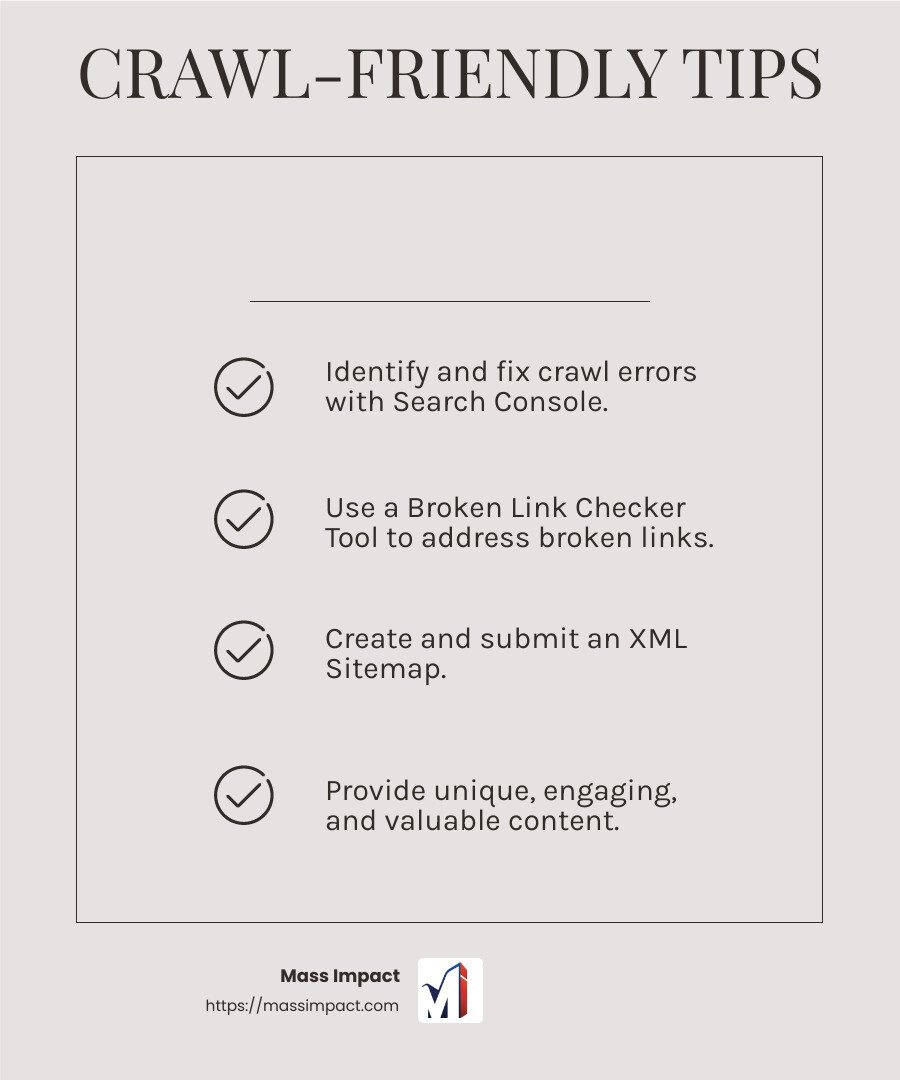
By addressing crawl errors, fixing broken links, creating an XML Sitemap, and providing high-quality content, you can make your website more accessible to search engines. This not only boosts your site’s visibility but also improves the overall user experience.
Next, we’ll dive into optimizing user experience for better SEO, ensuring visitors have a positive interaction with your site.
Optimizing User Experience for Better SEO
Ensuring a positive user experience is crucial for a search engine friendly website. It’s not just about getting visitors to your site—it’s about keeping them there. Here’s how you can optimize user experience to improve your SEO:
User Satisfaction
User satisfaction is a significant factor in SEO. When visitors find your site useful and engaging, they’re more likely to stay longer, reducing the bounce rate and increasing the average number of pages visited.
-
Bounce Rate: This metric indicates the percentage of visitors who leave your site after viewing just one page. A high bounce rate can signal to search engines that users aren’t finding what they need. To lower it, ensure your content is relevant and engaging.
-
Average Pages Visited: Encourage users to explore more pages by using clear navigation and internal links. This not only improves user satisfaction but also signals to search engines that your site provides valuable content.
Readability
Readability is key to keeping visitors engaged. If your content is easy to read, users are more likely to stay and absorb the information.
-
Flesch-Kincaid Readability Test: This test helps you measure how easy your text is to read. Aim for a score that suits your target audience. For a general audience, a score of 60-70 (eighth-grade reading level) is ideal.
-
Structured Content: Use short sentences, simple words, and break up text with subheadings and bullet points. This makes your content more digestible and engaging.
Featured Snippets
Featured snippets are a great way to boost visibility and user engagement. These are the short excerpts from a webpage that appear at the top of Google’s search results.
- How to Appear in Featured Snippets: To increase your chances, provide clear and concise answers to common questions. Use lists, tables, or straightforward paragraphs to structure your content.
By focusing on user satisfaction, improving readability, and aiming for featured snippets, you can create a more engaging and search engine friendly website. This not only helps in attracting visitors but also keeps them coming back for more. Next, let’s explore how to create SEO-friendly content that resonates with your audience.
Creating SEO-Friendly Content
Creating content that is both engaging and search engine friendly is crucial for any website. Here’s how you can ensure your content stands out:
Unique and Engaging Content
Your content should be original and captivating. Imagine a visitor landing on your page—what makes them stay? Unique content is key. Avoid copying from other sources. Instead, offer fresh insights or information that adds value.
Engagement is another critical factor. Use stories or relatable examples to draw readers in. The more engaged your audience is, the longer they’ll stay on your page, which can positively impact your search rankings.
Informative and Well-Organized Content
Informative content answers the questions your audience is asking. It should be detailed yet concise, providing the information they need without overwhelming them.
Organization is vital. Use headings, subheadings, and bullet points to break up text. This makes your content easier to read and helps search engines understand the structure of your page.
Keyword Density
Keywords are essential in making your content findable. However, keyword stuffing can harm your site’s SEO. Aim for a natural keyword density—about 1-2% of your content. This means if your article is 1,000 words, include your main keyword 10 to 20 times.
SEO-Friendly Images
Images can improve your content and make it more engaging. But they need to be optimized for SEO:
-
ALT Attributes: Always include descriptive alt text for your images. This helps search engines understand what the image is about, and it also improves accessibility for users with visual impairments.
-
Responsive Images: Ensure your images are responsive, meaning they adjust to different screen sizes. This is crucial for mobile users and can improve your site’s loading speed.
By focusing on these elements, you can create content that not only appeals to your audience but also improves your site’s visibility in search engines. Next, we’ll dive into frequently asked questions about creating a search engine friendly website.
Frequently Asked Questions about Search Engine Friendly Websites
What Is an SEO-Friendly Website?
An SEO-friendly website is designed to help search engines understand and index its content effectively. It’s built with clean code, fast loading times, and a responsive design that works well on all devices. Easy navigation and clear structure also play a big role. This kind of website ensures that both users and search engines can find and understand the information easily.
How Do I Check If My Website Is SEO Friendly?
Checking if your website is SEO friendly involves several steps:
-
Page Speed: Use tools like Google’s PageSpeed Insights to test your site’s loading speed. Faster pages are favored by search engines.
-
Mobile Responsiveness: Ensure your site looks good on all devices. Google’s Mobile-Friendly Test can help you with this.
-
Content Quality: Analyze if your content is unique, informative, and well-organized. Tools like Grammarly can assist with readability checks.
-
Crawlability: Use Google Search Console to identify crawl errors and ensure your site is easy for search engines to steer. Fix any broken links using a Broken Link Checker Tool.
-
SEO Tags: Make sure your title tags, meta descriptions, and alt attributes are correctly implemented and optimized.
What Tools Can Help Optimize My Website for SEO?
Several tools can aid in optimizing your website:
-
Google Search Console: Monitor your site’s presence and performance in Google Search. It helps identify issues and suggests improvements.
-
Google Analytics: Track visitor behavior, bounce rates, and user engagement to understand how people interact with your site.
-
Yoast SEO (for WordPress users): This plugin helps optimize content with keyword suggestions, readability analysis, and more.
-
Screaming Frog SEO Spider: A desktop program that crawls websites, identifying SEO issues like broken links and duplicate content.
-
SEMrush: Offers insights into keyword rankings, backlinks, and competitive analysis to refine your SEO strategy.
These tools provide valuable data and insights, empowering you to make informed decisions to improve your website’s SEO performance. Next, we’ll explore the conclusion of our guide and how Mass Impact can support your digital marketing journey.
Conclusion
Creating a search engine friendly website is crucial for any business wanting to thrive online. At Mass Impact, we specialize in digital marketing services that improve your web presence, making your site not just visible, but engaging and effective.
SEO Web Design is our forte. We understand that a well-designed website is more than just attractive; it’s a powerful tool that drives traffic and converts visitors into customers. Our focus on fast-loading, mobile-responsive designs ensures your site performs well across all devices, which is a key factor in search engine rankings.
In addition to web design, our expertise extends to social media management. We believe that effective social media goes beyond posting updates. It’s about crafting content that resonates with your audience and encourages interaction. Our strategies are designed to boost engagement and build a loyal community around your brand.
Graphic Design is another area where we excel. Visual content is a powerful way to communicate your brand’s message. Our design team creates stunning visuals that not only capture attention but also align with your brand identity. From logos to marketing materials, we ensure every design element improves your overall digital strategy.
By integrating these specialized services, we help businesses build a strong online presence. Our comprehensive approach ensures that your digital marketing efforts lead to substantial returns on investment. Ready to lift your brand? Find how Mass Impact can help you achieve your business goals. Let’s create something amazing together!