
Why PPC Advertising Management Matters
PPC advertising management is a game-changer for businesses seeking to maximize their online presence. It involves carefully crafting and optimizing pay-per-click campaigns to ensure every dollar spent generates qualified traffic and leads.
Quick Overview of PPC Advertising Management:
- PPC Definition: Pay-per-click (PPC) is an online advertising model where advertisers pay a fee each time their ad is clicked.
- PPC Management: This is the process of overseeing, fine-tuning, and strategizing PPC ad campaigns to maximize ROI.
- Advertising Model: PPC ads can be displayed on search engines like Google, social media platforms like Facebook and Instagram, as well as e-commerce sites like Amazon.
PPC allows businesses to advertise directly to the people who are searching for their products or services. However, managing these campaigns can be complex, requiring a blend of strategy, creativity, and ongoing optimization.
I’m Haiko de Poel Jr, and I specialize in guiding businesses through the intricate world of PPC advertising management. With years of experience in digital marketing, my goal is to help you steer PPC effectively, ensuring you get the best return on your investment.
Ppc advertising management terms made easy:
– google ppc support
– maximize roi with search engine advertising & ppc ads service
– paid media agency
What is PPC Advertising Management?
Key Components of PPC Management
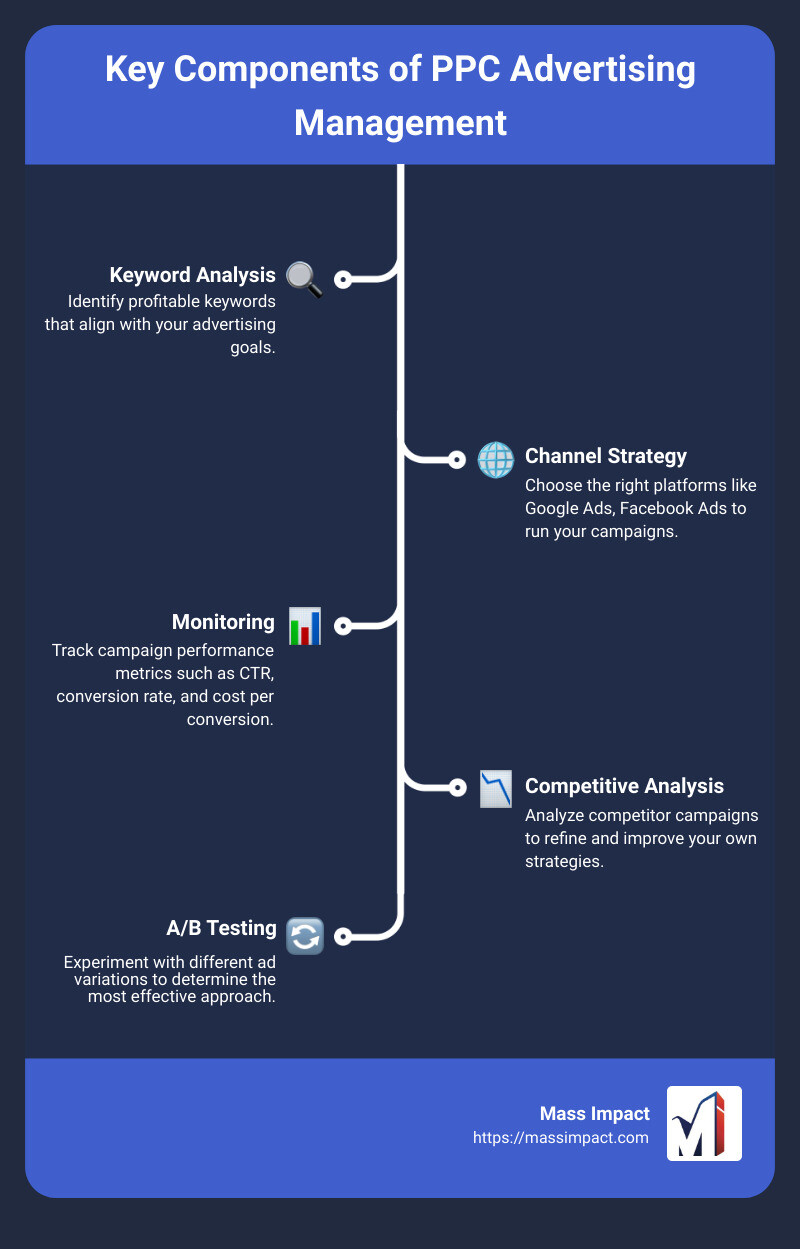
Managing a successful PPC campaign involves multiple moving parts. Let’s break down the key components of PPC advertising management to help you understand the essentials.
PPC Ad Spend and Strategies
PPC ad spend refers to the budget you allocate for your pay-per-click campaigns. It’s crucial to set a realistic budget to ensure you’re not overspending while still getting enough clicks to generate meaningful data.
To maximize your ROI, you need to develop strategies that align with your business goals. This includes selecting the right keywords, crafting compelling ad copy, and setting appropriate bids.
Ad Buys and Minimizing Expenditure
Ad buys involve allocating your budget smartly across different keywords and platforms. The goal is to bid smartly on keywords so that you’re not overspending for a position on the search engine results page but also not underspending to the point where your ads don’t show up at all.
Minimizing expenditure is about spending your budget wisely. This means constantly tweaking and adjusting bids, testing ad copies, and refining targeting to ensure that every dollar spent is an investment towards achieving higher returns.
Keyword Analysis
Keyword analysis is the backbone of any PPC campaign. It involves researching and selecting the right keywords that your potential customers are using. Tools like Google Keyword Planner can help you find keywords with high search volume and low competition, ensuring you get the most bang for your buck.
Channel Strategy
Your channel strategy determines where your ads will appear. Whether it’s Google Ads, Bing Ads, Facebook Ads, or Instagram Ads, each platform has its unique audience and advantages. Selecting the right channels ensures your ads reach the most relevant audience.
Monitoring and Competitive Analysis
Monitoring your campaigns is crucial for ongoing success. Regularly check metrics like click-through rate (CTR), conversion rate, and cost per conversion to see how well your ads are performing.
Competitive analysis involves keeping an eye on what your competitors are doing. Tools like SEMrush can help you understand their strategies, allowing you to adjust your campaigns to stay ahead.
Negative Match and A/B Testing
Negative match is a technique used to exclude certain keywords that are not relevant to your business. This helps in preventing your ads from showing up in irrelevant searches, saving you money.
A/B testing is essential for optimizing your campaigns. By testing different versions of your ads, you can identify which elements perform best and refine your strategy accordingly. For example, you might test different headlines, descriptions, or call-to-actions to see which combination drives the most conversions.
Real-World Example: Pruning Ineffective Keywords
Imagine you’re running a PPC campaign for a sushi restaurant. You notice that the keyword “sushi recipes” is generating clicks but not conversions. By pruning this ineffective keyword, you can allocate more budget to high-performing keywords like “sushi restaurant near me” or “best sushi in New York.”
Next, we’ll dive into setting up your PPC campaign, starting with choosing the right keywords.
Setting Up Your PPC Campaign
Choosing the Right Keywords
Choosing the right keywords is the foundation of a successful PPC campaign. Start by using tools like Google Keyword Planner to identify keywords that are relevant to your products or services. Focus on keywords with high search volume but low competition to get the most value for your budget.
Long-tail keywords are also essential. They account for 70% of all search traffic and tend to be more cost-effective. For example, instead of just targeting “bike rentals,” you might target “affordable bike rentals in San Diego.” This approach not only reduces competition but also attracts users with specific intent, increasing the likelihood of conversions.
Crafting Compelling Ad Copy
Once you have your keywords, the next step is to craft compelling ad copy. Your ad copy should include a unique selling proposition (USP) that makes your offer stand out. It should also have a clear call-to-action (CTA) to guide users on what to do next.
For example, if you’re advertising a sushi restaurant, your ad could say, “Best Sushi in New York – Order Now & Get 10% Off!” This ad highlights a unique benefit (best sushi) and includes a CTA (order now).
Make sure your ad copy is concise, relevant, and optimized for mobile devices. A well-crafted ad can significantly improve your click-through rate (CTR) and overall campaign performance.
Selecting Targeting Options
Effective targeting ensures your ads reach the right audience. Platforms like Google Ads, Bing Ads, Facebook Ads, and Instagram Ads offer various targeting options.
Demographics: Target users based on age, gender, and income level. For instance, a luxury brand might target users with higher income levels.
Location: Use geo-targeting to show ads to users in specific locations. If you own a local business, targeting users within your city or neighborhood can be highly effective.
Interests and Behaviors: Platforms like Facebook and Instagram allow you to target users based on their interests and online behaviors. For example, if you’re selling fitness equipment, you can target users who have shown interest in fitness and wellness.
By combining these targeting options, you can create highly focused campaigns that reach users who are most likely to convert.
Next, we’ll dive into optimizing your PPC campaign, starting with bid optimization.
Optimizing Your PPC Campaign
Monitoring and Adjusting Campaigns
Effective PPC advertising management requires constant monitoring and adjustments. Here’s what you need to keep an eye on:
- Click-through rate (CTR): This measures how often people click on your ad after seeing it. A high CTR indicates that your ad is relevant and engaging.
- Conversion rate: This tells you how many clicks lead to a desired action, like a sale or sign-up. It helps you understand if your landing page and offer are compelling.
- Cost per conversion: This metric shows how much you’re spending to acquire a new customer. Keeping this cost low while maintaining high conversion rates is key to profitability.
Regularly review these metrics and adjust your campaigns accordingly. For example, if your CTR is high but your conversion rate is low, you may need to improve your landing page or offer.
Pruning Ineffective Keywords
Just like a gardener prunes a plant, you need to prune your keywords to remove those that aren’t performing well. Here’s how:
- Low-quality scores: Start by removing keywords with Quality Scores of 3 or lower. A low Quality Score means your ad is not relevant to the search queries.
- Unprofitable keywords: Identify keywords that generate clicks but don’t convert into sales. These can drain your budget without providing value.
- Search terms subtab: Use this feature in your Ads account to see which search terms triggered your ads. Remove any irrelevant terms that are costing you money.
By focusing on high-performing keywords, you can allocate more budget to what works and improve your overall campaign performance.
Bid Optimization Strategies
Bid optimization is about finding the sweet spot for your bids to maximize profitability. Here’s what to consider:
- Customer lifetime value (CLV): This is the total revenue you can expect from a customer over their lifetime. Knowing your CLV helps you determine how much you can afford to spend on acquiring a new customer.
- Conversion rate: Measure how often clicks turn into conversions. A high conversion rate means you can afford to bid more for clicks.
- Maximum bid: Calculate the maximum amount you can pay for a click while still making a profit. This involves balancing your CLV and conversion rate.
As you gather more data, adjust your bids to optimize for the best-performing keywords. For example, if a keyword has a high conversion rate and a low cost per conversion, consider increasing your bid to drive more traffic.
By continually monitoring, pruning ineffective keywords, and optimizing your bids, you can significantly improve your PPC campaign’s performance.
Next, we’ll explore advanced PPC strategies like retargeting, geo-targeting, and mobile optimization.
Advanced PPC Strategies
Leveraging Retargeting
Retargeting is a powerful tool in PPC advertising management. It allows you to re-engage users who have previously interacted with your site but didn’t convert. Think of it as a gentle reminder to potential customers who need multiple touchpoints before making a purchase decision.
Example: A study showed that retargeted ads can lead to a 70% higher chance of conversion. By showing custom ads to users who visited your site, you increase the likelihood of them returning and completing a purchase.
To implement retargeting:
- Segment your audience: Create different retargeting lists based on user behavior, like pages visited or products viewed.
- Tailor your ads: Customize your ads to address the specific interests or needs of these users. For example, if a user viewed a particular product, show them an ad with a special offer on that product.
- Multiple touchpoints: Use various channels like display ads, social media, and email to reach your audience multiple times.
Geo-Targeting Techniques
Geo-targeting involves showing ads to users based on their geographical location. This strategy ensures your ads are relevant to the audience’s specific region, which can significantly improve your campaign’s performance.
Statistic: According to Google, location-specific ads can increase click-through rates by up to 30%.
To optimize geo-targeting:
- Analyze performance by location: Use data to identify which regions generate the most conversions. Focus your budget on high-performing areas.
- Create location-specific ads: Tailor your ad copy to include local references or offers. For instance, a restaurant in New York might highlight a special menu item for New Yorkers.
- Exclude non-converting areas: If certain regions consistently show low conversion rates, consider excluding them from your campaign to save on ad spend.
Mobile Optimization
With more users accessing the internet via mobile devices, ensuring your ads and landing pages are mobile-friendly is crucial. Mobile optimization provides a seamless user experience, which can lead to higher conversion rates.
Fact: 76% of American adults make online purchases using their phones.
To optimize for mobile:
- Mobile-friendly ads: Design your ads to be easily viewable on smaller screens. Use concise copy and clear calls-to-action.
- Landing page optimization: Ensure your landing pages load quickly and are easy to steer on mobile devices. A well-optimized landing page can significantly increase your conversion rate.
- Seamless user experience: Make the entire user journey—from clicking the ad to completing a purchase—smooth and intuitive on mobile devices.
By leveraging retargeting, geo-targeting, and mobile optimization in your PPC advertising management strategy, you can significantly improve your campaign’s effectiveness and drive more conversions.
Next, we’ll answer some frequently asked questions about PPC advertising management to help you further understand and implement these strategies.
Frequently Asked Questions about PPC Advertising Management
What is PPC ad management?
PPC ad management involves overseeing and optimizing pay-per-click advertising campaigns to ensure they are effective and cost-efficient. This process includes:
- Keyword Analysis: Identifying the best keywords to target for your ads.
- Ad Creation: Crafting compelling ad copy that resonates with your audience.
- Bid Management: Setting and adjusting bids to maximize ROI.
- Monitoring: Continuously tracking ad performance to identify what works and what doesn’t.
- Optimization: Making data-driven adjustments to improve ad performance and reduce costs.
Effective PPC ad management helps businesses reach their target audience, increase website traffic, and boost conversions while minimizing ad spend.
What does PPC advertising stand for?
PPC stands for Pay-Per-Click advertising. In this model, advertisers pay a fee each time someone clicks on their ad. It’s a way of buying visits to your site rather than earning them organically. PPC ads can appear on search engines like Google, social media platforms like Facebook, and other websites that participate in ad networks.
Example: If you run a PPC campaign on Google Ads, your ad might appear at the top of search results when someone searches for a keyword you’ve targeted. You only pay when someone clicks on your ad and visits your website.
What are examples of PPC advertising?
PPC advertising comes in various forms, each suited to different marketing goals and platforms:
- Search Ads: These appear at the top of search engine results pages (SERPs) when users search for specific keywords. For example, Google Ads.
- Display Ads: These are banner ads shown on websites within a display network. They can include images, text, and videos.
- Social Media Ads: Platforms like Facebook, Instagram, and LinkedIn offer PPC advertising options. These ads appear in users’ feeds or sidebars.
- Shopping Ads: These are product-specific ads that appear in search results, often with an image, price, and link to the product page. Google Shopping Ads are a common example.
- Video Ads: These appear before, during, or after videos on platforms like YouTube. They can be skippable or non-skippable.
- Remarketing Ads: These target users who have previously visited your site but didn’t convert. They appear on various websites and social media platforms to encourage users to return and complete a purchase.
By understanding and utilizing different types of PPC advertising, businesses can effectively reach their target audience and achieve their marketing goals.
Next, we’ll dive into the conclusion, summarizing how Mass Impact can help you master your PPC campaigns and achieve a strong online presence.
Conclusion
At Mass Impact, we specialize in digital marketing expertise that helps businesses like yours thrive in the competitive online landscape. Our creative solutions are custom to meet your specific needs, ensuring that your PPC campaigns are not just effective but also memorable.
A strong online presence is crucial in today’s digital age. We focus on comprehensive strategies that improve your visibility and drive meaningful engagement. Whether it’s through captivating content or dynamic social media campaigns, our goal is to make your brand stand out.
By leveraging our expertise, you can transform your PPC advertising management into a powerful tool for business growth. We help you:
- Optimize Keywords: Using advanced keyword research to target the most relevant and cost-effective terms.
- Craft Compelling Ads: Creating ad copy that resonates with your audience and drives conversions.
- Monitor and Adjust: Continuously tracking performance metrics to make data-driven adjustments for maximum ROI.
- Use Advanced Strategies: Implementing retargeting, geo-targeting, and mobile optimization to reach and convert your audience effectively.
We understand the complexities of PPC management and offer full-service solutions to help you achieve your business goals. From setup to optimization, our dedicated team is here to support you every step of the way.
Ready to lift your PPC campaigns and drive substantial growth? Contact us at Mass Impact today and let’s start your journey to a stronger online presence and higher ROI.