Introduction
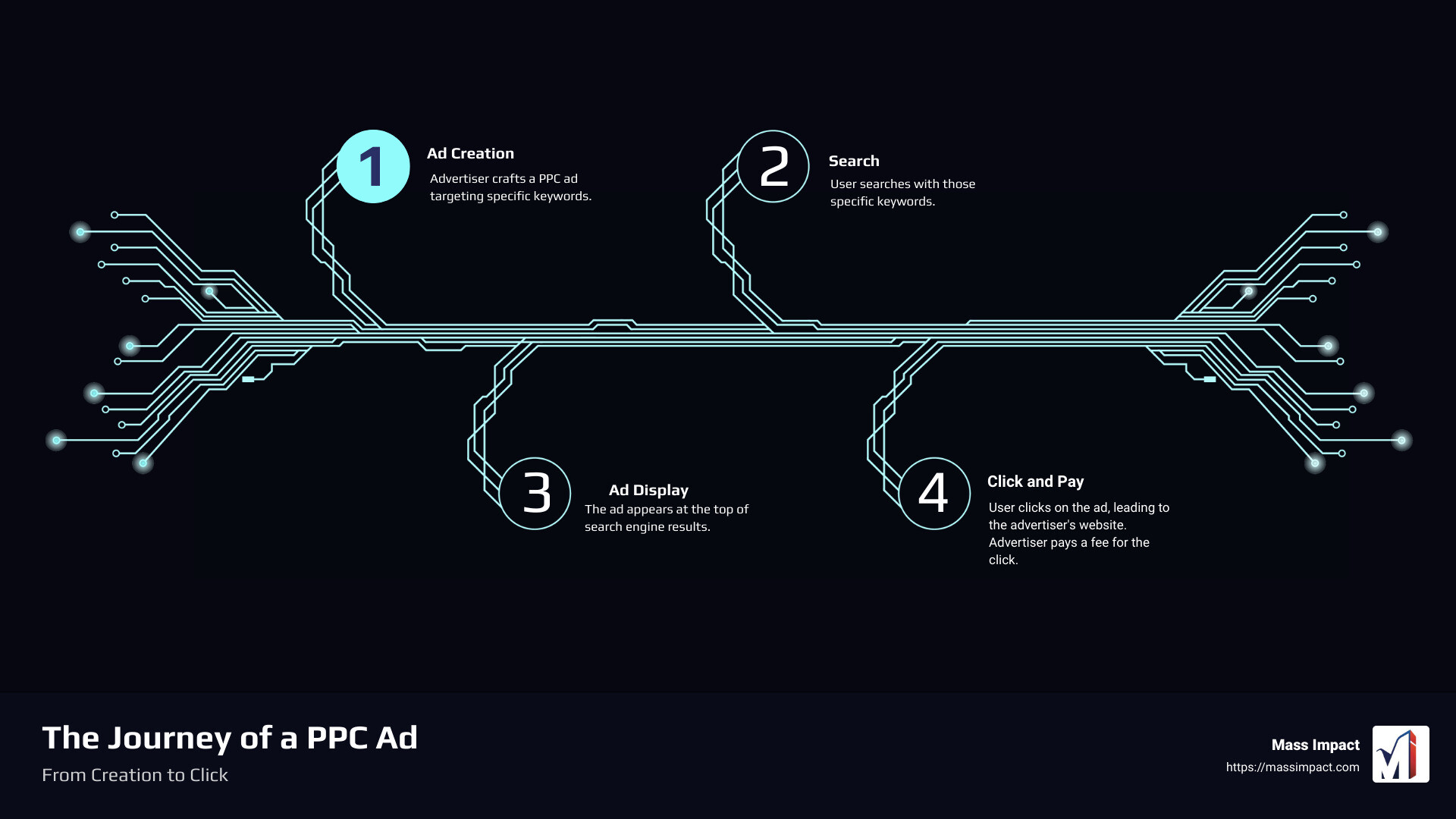
What is Pay-Per-Click (PPC) Marketing? At its core, PPC is a digital marketing strategy where advertisers pay a fee each time one of their ads is clicked. Think of it as buying visits to your site, rather than waiting for those visits to happen organically.
PPC is critical for businesses today. Why? It allows you to reach your target audience at the right moment, with the right message. When getting noticed online is increasingly challenging, PPC offers a direct path to visibility and customer engagement.
- Quick Reach: PPC ads can put you at the top of search results almost instantly.
- Targeted Advertising: You can tailor your ads to the exact audience you want to reach.
- Cost Control: You have the power to set your budget and only pay when someone clicks on your ad.
- Data-Driven Decisions: With PPC, every click is trackable. You know exactly how your campaign is performing.
For the busy business owner diving into the digital marketing sea, PPC marketing stands out as a beacon. It’s a method that doesn’t just shout into the void. Instead, it speaks directly to those who are already looking for what you have to offer. Whether you’re aiming to increase sales, boost your brand’s visibility, or gain a competitive edge, PPC can be a powerful tool in your marketing toolbox.
Understanding PPC
When diving into pay per click marketing, grasp a few core concepts that make it tick. These include Search Engine Marketing (SEM), Ad Auction, Keywords, Ad Rank, and Quality Score. Let’s break these down in simple terms.
Search Engine Marketing (SEM)
Think of SEM as the big umbrella that keeps you dry in the rain. Under this umbrella, you have PPC. SEM involves strategies to make your website more visible on search engine results pages (SERPs). It includes paid advertising (like PPC) and organic strategies (SEO).
Ad Auction
Imagine you’re at an auction, but instead of bidding for antiques, you’re bidding for keywords. This is what happens every time someone searches online. Businesses bid on keywords they believe their target audience will use when looking for their products or services. The ad auction determines which ads get displayed and in what order.
Keywords
Keywords are the words or phrases that people type into search engines. In PPC, advertisers choose relevant keywords to trigger their ads. It’s like setting a trap for a mouse, but in this case, you’re trying to catch clicks.
Fun Fact: Long-tail keywords, which are longer and more specific phrases, make up 70% of all search traffic. They’re often less competitive and more affordable.
Ad Rank
Ad Rank decides where your ad shows up on the search results page. Think of it as a leaderboard where the ads compete against each other. Your position on this leaderboard isn’t just about how much you’re willing to spend. Google also considers the quality of your ads and website.
Quality Score
Quality Score is like a report card for your PPC ads, keywords, and landing pages. Google rates them on a scale from 1 to 10. A high score can lead to lower costs and better ad positions. Your score is based on factors like click-through rate (CTR), ad relevance, and the landing page experience.
Important to Remember: A good Quality Score is like having a VIP pass. It helps you get better ad placements and can save you money.
By understanding these core components of PPC, you’re better equipped to navigate pay per click marketing. Each element plays a crucial role in the success of your campaigns. Next, we’ll explore how to craft a successful PPC campaign, focusing on keyword research, ad groups, and creating compelling ad text.
Types of PPC Ads
Navigating pay per click marketing can feel like stepping into a bustling market, each stall offering a different form of advertising to catch the eye of your potential customers. Let’s break down the various types of PPC ads you can use to attract the right audience.
Search Ads
Imagine someone typing a question into Google, looking for the best coffee shops in town. If you run a coffee shop, you’d want your ad to pop up at the top of those search results. That’s exactly what Search Ads do. They’re the billboards of the digital highway, appearing when specific keywords are searched. The beauty of Search Ads is their relevance; they show up precisely when someone is looking for what you offer.
Display Ads
Now, think about browsing your favorite website and seeing a banner ad for a product that piques your interest. That’s a Display Ad. These visual banners can appear on various websites across the internet, catching users’ attention through images, videos, or animations. Display Ads are fantastic for building brand awareness, as they put your brand in front of people who might not be actively searching for it but are likely interested.
Social Ads
Scrolling through your social media feed, you’ve likely encountered ads that blend almost seamlessly with the posts from your friends and the pages you follow. These are Social Ads, and they’re tailored to fit the style and function of each social platform, whether it’s Facebook, Instagram, Twitter, or LinkedIn. The targeting options here are incredibly detailed, allowing you to reach specific demographics, interests, and behaviors.
Remarketing
Ever visited a website, then noticed ads for that website following you around the internet? That’s Remarketing in action. It’s a powerful way to re-engage people who have visited your site but didn’t make a purchase or sign up. Remarketing ads remind them of what they’re missing, nudging them back towards your site.
Google Shopping
For e-commerce businesses, Google Shopping Ads are like showcasing your products in the window of a busy street. These ads appear when someone searches for a product and feature a photo of your item, its price, and your store name. It’s a direct line from your product to the customer, perfect for increasing sales.
Each type of PPC ad serves a different purpose, from sparking initial interest with Display Ads to capturing intent with Search Ads and nurturing that interest with Remarketing. By understanding and utilizing these various ad types, you can create a comprehensive pay per click marketing strategy that covers all stages of the customer journey.
Next, we’ll dive into the intricacies of how PPC works, from the ad auction process to understanding bidding and CPC. This knowledge will empower you to craft and refine your PPC campaigns for maximum impact.
How PPC Works
Understanding how pay per click marketing operates is like learning the rules of a game. Once you know how it works, you can play to win. Let’s break down the core components: the ad auction process, bidding, cost-per-click (CPC), cost per mille (CPM), and the overall campaign structure.
Ad Auction Process
Imagine you’re in a marketplace where the highest bidder gets the best spot. That’s essentially what the ad auction is. But there’s a twist. It’s not just about how much you’re willing to pay. Google, or any other PPC platform, also looks at how relevant and helpful your ad is to the user. They use a special formula that considers your bid amount and your ad’s quality score, which is a measure of relevance and quality.
Bidding
Bidding is where you set the maximum amount you’re willing to pay for a click on your ad. Think of it as telling the platform, “This is the highest price I’m comfortable with.” But here’s the kicker: you often end up paying less than your bid. The final amount you pay is just a penny more than the next highest bid below you. It’s a system designed to ensure you only pay what’s needed to outbid the competition, not your maximum bid.
Cost-Per-Click (CPC)
CPC is the price you pay each time someone clicks on your ad. It’s like buying a ticket for each visitor to your website. The price of the ticket varies based on how competitive your chosen keywords are and how well your ad performs. A higher quality score can lead to a lower CPC because the platform sees your ad as more valuable to users.
Cost Per Mille (CPM)
CPM stands for cost per thousand impressions. This is where you pay based on how many times your ad is shown, not clicked. It’s like paying for a billboard where the price is based on how many cars drive by, whether they notice your billboard or not. CPM is typically used for brand awareness campaigns where the goal is visibility, not necessarily immediate clicks.
Campaign Structure
Your campaign structure is how you organize your PPC efforts. It’s the foundation of your strategy. A well-structured campaign includes:
– Campaigns: The highest level, often organized by goal or theme.
– Ad Groups: Within each campaign, ad groups contain a set of similar ads and keywords.
– Ads: The individual messages you’re sending out.
– Keywords: The terms you’re bidding on to trigger your ads.
Think of it as building a house. Your campaigns are the overall plan, ad groups are the rooms, ads are the furniture, and keywords are the decorations that make each room unique.
To sum up, pay per click marketing works by putting your ads in front of people actively searching for what you offer. But it’s not just about paying the most. It’s about being smart with your bids, understanding the importance of quality, and structuring your campaign for success. Armed with this knowledge, you’re ready to dive deeper into crafting a successful PPC campaign that reaches your target audience effectively.
Crafting a Successful PPC Campaign
Crafting a successful PPC campaign is like building a house. You need a solid foundation, the right materials, and a clear plan. Let’s break down the essential steps: Keyword Research, Ad Groups, Ad Text, Landing Page, and Campaign Type Selection. Each one plays a crucial role in reaching your goals.
Keyword Research: The Foundation
Think of keyword research as laying the groundwork for your campaign. It’s all about finding the words or phrases your potential customers use when they’re searching for what you offer. Here’s how to nail it:
- Start Broad, Then Narrow Down: Begin with a wide net of terms related to your products or services. Use tools like Google’s Keyword Planner to find variations and see search volumes.
- Consider Intent: Not all keywords are equal. Some people search to buy, while others just want information. Focus on keywords that indicate a readiness to purchase.
- Long-Tail is Your Friend: These are longer, more specific phrases. They might have lower search volumes, but they’re less competitive and often lead to higher conversion rates.
Ad Groups: Organizing Your Blueprint
Ad groups help keep your campaign organized. Each ad group should focus on a single theme or product category. This structure makes your ads more relevant to your target audience. Here’s what to remember:
- Tight Themes: Keep the focus narrow. If you sell shoes, you might have one ad group for running shoes and another for hiking boots.
- Match Your Keywords: The keywords in each ad group should directly relate to that group’s theme. This alignment helps improve your Quality Score, which can lower costs.
Ad Text: Crafting Your Message
Your ad text is your chance to speak directly to your potential customers. Make it count by:
- Highlighting Benefits: Tell users what’s in it for them. Focus on how your product or service solves their problem or improves their life.