
Marketing Tactics Examples: Top 12 Proven Success
Marketing tactics examples are specific actions businesses take to achieve their marketing strategy and goals. Imagine steps on a staircase—the goal is the top, the strategy is the staircase, and tactics are each step that propels you upwards. These tactics, like optimizing a website for SEO or launching an email campaign, are crucial for reaching your audience and maximizing sales.
Marketing tactics differ from strategies. A strategy is your overarching plan, like increasing brand awareness or generating leads, while tactics are the specific actions you implement to achieve these plans. For instance, if your strategy is to boost engagement on social media, your tactics might include posting daily updates or hosting online contests.
I’m Haiko de Poel Jr. With a background in digital marketing and innovation, I’ve helped numerous companies steer marketing tactics examples. From SEO to eCommerce strategies, my approach is all about crafting plans that drive growth. Next, we’ll explore more on how marketing tactics work and examples you can implement.
Marketing tactics examples vocab explained:
– marketing strategy examples
– digital marketing strategies
– how to do digital marketing
Understanding Marketing Tactics
Marketing tactics are the specific actions you take to bring your marketing strategy to life. Think of them as the individual steps you need to climb to reach your marketing goals. While strategies outline the “what” and “why,” tactics focus on the “how” and “when.”
What Are Marketing Tactics?
Marketing tactics are the practical actions businesses use to connect with their audience, improve brand visibility, and drive sales. They are the nuts and bolts of your marketing plan, designed to achieve specific goals within the broader strategy.
For example, if your strategy is to increase website traffic, some marketing tactics examples might include:
-
SEO Optimization: Improving your website’s load speed to keep visitors engaged. A Deloitte study found that a 0.1-second improvement in load time can boost conversions by 8% for retail sites.
-
Content Creation: Publishing keyword-optimized blog posts or designing engaging infographics to attract organic traffic.
-
Email Campaigns: Sending targeted newsletters to nurture leads and retain customers.
Goals of Marketing Tactics
The primary goal of marketing tactics is to execute the strategy effectively and achieve specific outcomes. Here are some common goals:
-
Increase Brand Awareness: Use social media posts, influencer partnerships, or giveaways to get your brand noticed.
-
Generate Leads: Implement referral programs or host webinars to attract potential customers.
-
Boost Engagement: Encourage user-generated content or run interactive campaigns to keep your audience engaged.
-
Drive Sales: Use paid ads or personalized offers to convert leads into customers.
Examples in Action
To better understand how tactics work, consider these real-world examples:
-
Instagram Giveaways: Brands often run contests where followers like, share, and tag friends for a chance to win a prize. This tactic not only increases engagement but also expands reach.
-
Affiliate Marketing: Companies partner with affiliates who promote their products in exchange for a commission. This approach can drive traffic and sales by leveraging the affiliate’s audience.
-
User-Generated Content: Encouraging customers to share photos or reviews of your product can establish trust and reduce content creation costs.

Marketing tactics are the actionable steps that bring your strategy to life. By understanding and implementing the right tactics, you can effectively reach your marketing goals and propel your business forward. Next, we’ll dig into the top 12 marketing tactics examples that can drive success.
Top 12 Marketing Tactics Examples for Success
In marketing, success hinges on the tactics you choose to implement. Here, we’ll explore 12 powerful marketing tactics examples that can lift your brand and drive results.
1. Content Marketing
Content marketing is all about creating valuable, relevant content to attract and engage your audience. It could be in the form of blog posts, videos, or infographics. This tactic helps establish your brand as an authority in your industry. For instance, a company that regularly publishes how-to guides can position itself as a go-to resource for solutions.
2. Social Media
Social media platforms like Instagram, Facebook, and Twitter are perfect for connecting with your audience. By sharing engaging content, running contests, or leveraging trending hashtags, you can increase brand awareness and foster community engagement. Remember the viral success of the ALS Ice Bucket Challenge? It leveraged social media to raise awareness and funds.
3. SEO (Search Engine Optimization)
SEO is the practice of optimizing your website to rank higher on search engines. This involves using the right keywords, improving site speed, and earning backlinks. A well-optimized site can drive organic traffic, as shown by companies like Moz, which have mastered the art of SEO to boost visibility and attract more visitors.
4. Email Marketing
Email marketing involves sending targeted messages to your audience’s inbox. Whether it’s a newsletter or a promotional offer, the goal is to nurture leads and retain customers. A personalized email campaign can significantly boost engagement, as seen in the success of brands like Amazon, which use custom recommendations to increase sales.
5. Influencer Marketing
Influencer marketing taps into the reach of individuals with a large social media following. By partnering with influencers who align with your brand, you can access their audience and build trust. For example, a beauty brand might collaborate with a makeup artist to showcase its products through tutorials.
6. Paid Ads
Paid advertising, like Google Ads or Facebook Ads, allows you to reach a targeted audience quickly. This tactic can drive immediate traffic and conversions. For instance, a startup might use paid ads to promote a product launch and generate buzz.
7. Direct Mail
Despite the digital age, direct mail remains effective. Sending personalized letters or postcards can capture attention and drive action. A local restaurant might use direct mail to send out coupons, enticing nearby residents to visit.
8. Webinars
Webinars are online seminars that allow brands to educate and engage their audience. They are excellent for generating leads and showcasing expertise. A software company might host a webinar to demonstrate its product’s features and answer questions live.
9. User-Generated Content
Encouraging customers to create content about your brand can boost credibility and engagement. Think of Starbucks’ #RedCupContest, where customers shared photos of their holiday-themed cups, creating buzz and promoting the brand organically.
10. Referral Programs
Referral programs incentivize existing customers to bring in new ones. By offering discounts or rewards, you can expand your customer base. Dropbox famously grew its user base through a referral program that offered extra storage space.
11. Loyalty Programs
Loyalty programs reward repeat customers, encouraging them to continue buying from you. These programs can increase customer retention and lifetime value. For example, airlines often use loyalty programs to reward frequent flyers with miles or upgrades.
12. Interactive Content
Interactive content, like quizzes or polls, engages users and encourages participation. This tactic can improve user experience and gather valuable insights. BuzzFeed’s quizzes are a prime example of how interactive content can capture attention and drive traffic.
By leveraging these marketing tactics examples, you can create a dynamic marketing strategy that aligns with your goals and resonates with your audience. Next, we’ll dive deeper into specific tactics like advertorials and micro-influencer marketing.
Marketing Tactics Examples: Detailed Breakdown
Let’s dive deeper into some specific marketing tactics examples that can lift your brand’s strategy and drive success.
Advertorials
Advertorials are a blend of advertising and editorial content. They appear as articles, providing valuable information while subtly promoting a product or service. This tactic builds brand awareness and authority, making it a powerful tool for reaching a wider audience.
- Example: Forbes Council posts often feature advertorials that highlight industry insights while promoting a brand’s expertise.
Pro Tip: Collaborate with publications that align with your target audience to maximize impact.
Micro-Influencer Marketing
Micro-influencer marketing involves partnering with influencers who have a smaller, yet highly engaged following. This approach can boost brand credibility and reach niche markets effectively.
- Success Story: Back Market’s campaign with paid influencers resulted in a 33% increase in conversions.
Pro Tip: Use hashtags to identify influencers with high engagement rates among your target audience.
Interactive Content
Interactive content includes tools like quizzes, calculators, or clickable infographics. This type of content encourages user participation, increasing engagement and lead generation.
- Example: Budget calculators and style quizzes can captivate audiences while providing valuable insights.
Pro Tip: Repurpose existing content into interactive formats to save time and resources.
Customer Loyalty Programs
Customer loyalty programs reward repeat customers with perks, fostering long-term relationships and increasing sales. These programs can also enrich customer data, offering insights for personalized marketing.
- Example: Tiered loyalty programs, like those used by airlines, reward frequent flyers with miles or upgrades.
Pro Tip: Invest in digital-first loyalty programs to collect data and personalize engagement.
Original Research
Original research involves conducting and publishing studies that support your brand’s value proposition. This tactic can establish authority, drive traffic, and generate leads.
- Example: Orbit Media Studios’ observational studies underscore brand authority and attract backlinks.
Pro Tip: Design research projects that can be repeated annually and share findings across multiple formats.
By incorporating these marketing tactics examples into your strategy, you can effectively engage your audience and achieve your marketing goals. Next, we’ll explore how these tactics align with broader marketing strategies to create a cohesive approach.
How Marketing Tactics and Strategies Work Together
Understanding the difference between strategy and tactics is crucial for any successful marketing plan. Strategy is the overarching plan that defines your goals and the direction you want to take. It answers the “why” and “what” of your marketing efforts. In contrast, tactics are the specific actions you take to execute the strategy. They answer the “how.”
Strategy vs. Tactics
Think of strategy as the blueprint of a house and tactics as the bricks and tools you use to build it. While the strategy provides the vision and objectives, tactics are the practical steps to achieve those objectives.
For example, if your strategy is to increase brand awareness, your tactics might include running social media ads, hosting webinars, or launching a blog series.
Marketing Goals
Every marketing strategy should be aligned with your business goals. Whether you aim to increase sales, improve customer engagement, or improve brand reputation, your tactics should be chosen to support these goals.
For instance, if your goal is to reduce the cost per lead, focusing on inbound marketing tactics like SEO and content creation can be effective. These methods attract potential customers organically, which can be more cost-efficient over time.
Digital Rebrand
A digital rebrand is a comprehensive strategy that involves updating your brand’s digital presence to better align with your target audience. This might include redesigning your website, updating your logo, and refreshing your social media profiles.
- Example Tactics: Launching a new website, creating a consistent visual identity across all platforms, and enhancing user experience (UX) design.
The goal here is to appeal to a modern audience and ensure your brand remains relevant in a digital world.
Inbound Marketing
Inbound marketing focuses on attracting customers through valuable content and experiences custom to them. Unlike outbound marketing, which interrupts your audience with ads, inbound marketing forms connections they are looking for and solves problems they already have.
- Example Tactics: Creating blog posts that target relevant keywords, offering lead magnets like eBooks to capture emails, and nurturing leads with email drip campaigns.
These tactics work together to draw in potential customers, making them more likely to convert at a lower cost.
Multichannel Campaigns
Multichannel campaigns use various platforms to reach and engage your audience. This approach ensures that your message is consistent and reaches people wherever they are, whether it’s on social media, through email, or even on TV.
- Example Tactics: Running synchronized online ads, using TV commercials to boost reach, and engaging audiences through social media beyond the ads’ lifespan.
While managing multichannel campaigns can be challenging, having the right tools to track and optimize your efforts can lead to successful product launches and increased brand awareness.
By aligning your marketing tactics examples with your strategic goals, you create a cohesive plan that can drive success and achieve your business objectives. Now, let’s address some frequently asked questions about marketing tactics to clarify any lingering doubts.
Frequently Asked Questions about Marketing Tactics
What are marketing tactics examples?
Marketing tactics are the specific actions you take to implement your marketing strategy. They are the steps that help you reach your marketing goals. Here are some marketing tactics examples that can drive success:
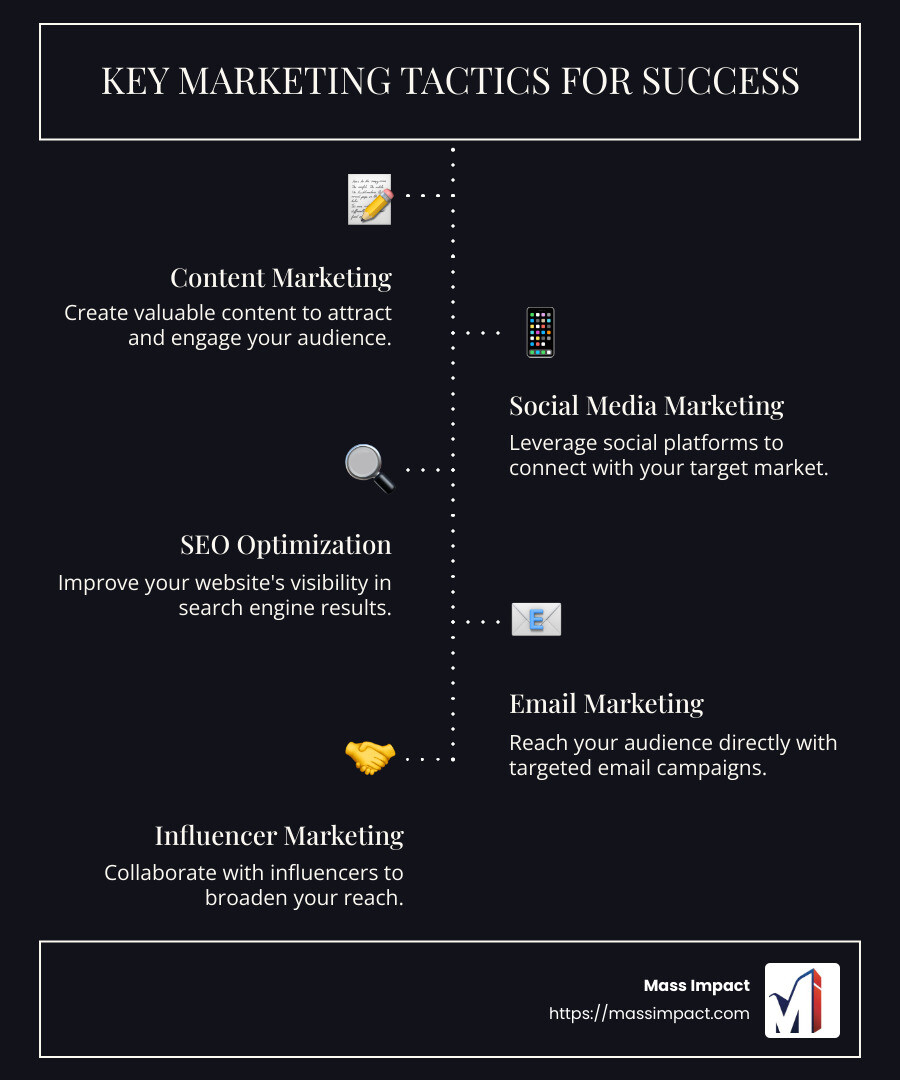
- Content Marketing: Creating valuable content, like blog posts or videos, to attract and engage your audience.
- Social Media: Using platforms like Instagram or Facebook to connect with your audience and promote your brand.
- SEO: Optimizing your website to rank higher on search engines, making it easier for potential customers to find you.
- Email Marketing: Sending targeted emails to your subscribers to nurture leads and encourage repeat business.
- Influencer Marketing: Collaborating with influencers who can promote your products to their followers.
- Paid Ads: Running ads on platforms like Google or social media to reach a broader audience.
- Direct Mail: Sending physical mail to potential customers with offers or information about your products.
- Webinars: Hosting online seminars to educate your audience and showcase your expertise.
- User-Generated Content: Encouraging your customers to create content about your brand, which you can then share.
- Referral Programs: Incentivizing your current customers to refer new customers.
- Loyalty Programs: Rewarding repeat customers to encourage continued business.
- Interactive Content: Creating engaging content like quizzes or polls that encourage interaction.
How do marketing tactics differ from strategies?
Marketing tactics and strategies are often confused, but they serve different purposes. Strategies are the overarching plans that define your marketing goals and the direction you want to take. They answer the “why” and “what” of your marketing efforts. In contrast, tactics are the specific actions you take to execute the strategy. They answer the “how.”
For example, if your strategy is to increase brand awareness, your tactics might include running social media ads, hosting webinars, or launching a blog series. Strategies provide the big picture, while tactics are the day-to-day actions that bring the strategy to life.
Which marketing tactic is most successful?
The success of a marketing tactic often depends on your business goals, target audience, and industry. However, some tactics have proven to be consistently effective across various sectors:
-
SEO: By improving your website’s visibility in search engines, you can attract more organic traffic over time. According to research, improving load speed can increase conversions by 8% for retail sites and 10% for travel sites.
-
Influencer Marketing: Collaborating with influencers can help you reach a wider audience and build trust. The Influencer Marketing Benchmark Report 2023 estimates this market to be worth $21.1 billion by the end of 2023.
-
Content Marketing: Providing valuable and relevant content can position your brand as an authority in your industry and help attract and retain customers.
The most successful tactic is the one that aligns with your strategy and resonates with your audience. It’s essential to test different tactics and measure their effectiveness to determine what works best for your business.
By understanding and implementing the right marketing tactics, you can improve your strategy and achieve your business goals.
Conclusion
In the changing landscape of digital marketing, the right tactics can make all the difference. At Mass Impact, a leading digital marketing agency based in Jacksonville, Florida, we pride ourselves on delivering creative solutions that set businesses apart. Our expertise spans across various digital marketing services, including SEO web design, social media management, and graphic design.
Creative Solutions for Success
We believe that creativity is at the heart of successful marketing. It’s about finding unique ways to connect with your audience and leave a lasting impression. Whether it’s through captivating content marketing or engaging social media campaigns, we tailor our strategies to meet your specific needs. Our goal is to not just reach your target audience but to deeply connect with them, ensuring your brand is not just seen but remembered.
Building a Strong Online Presence
Having a robust online presence is crucial. Our team focuses on comprehensive SEO strategies and user-friendly web designs to ensure your business stands out in search engine results. By enhancing your visibility, we help you attract more visitors, which is essential for conversion and customer retention.
Setting Your Business Apart
What truly distinguishes your business in a crowded market is the ability to resonate with your audience. We employ sophisticated analytics tools and platforms like Google Ads to fine-tune our strategies. This ensures that your marketing messages are personalized and impactful, helping you achieve remarkable success and sustainable growth.
At Mass Impact, we’re committed to changing your digital marketing strategies into measurable success. By embracing our comprehensive digital marketing solutions, your business will not only witness improved online visibility but also experience substantial growth.
Ready to set new benchmarks in digital marketing? Explore our services and let’s achieve remarkable success together.