
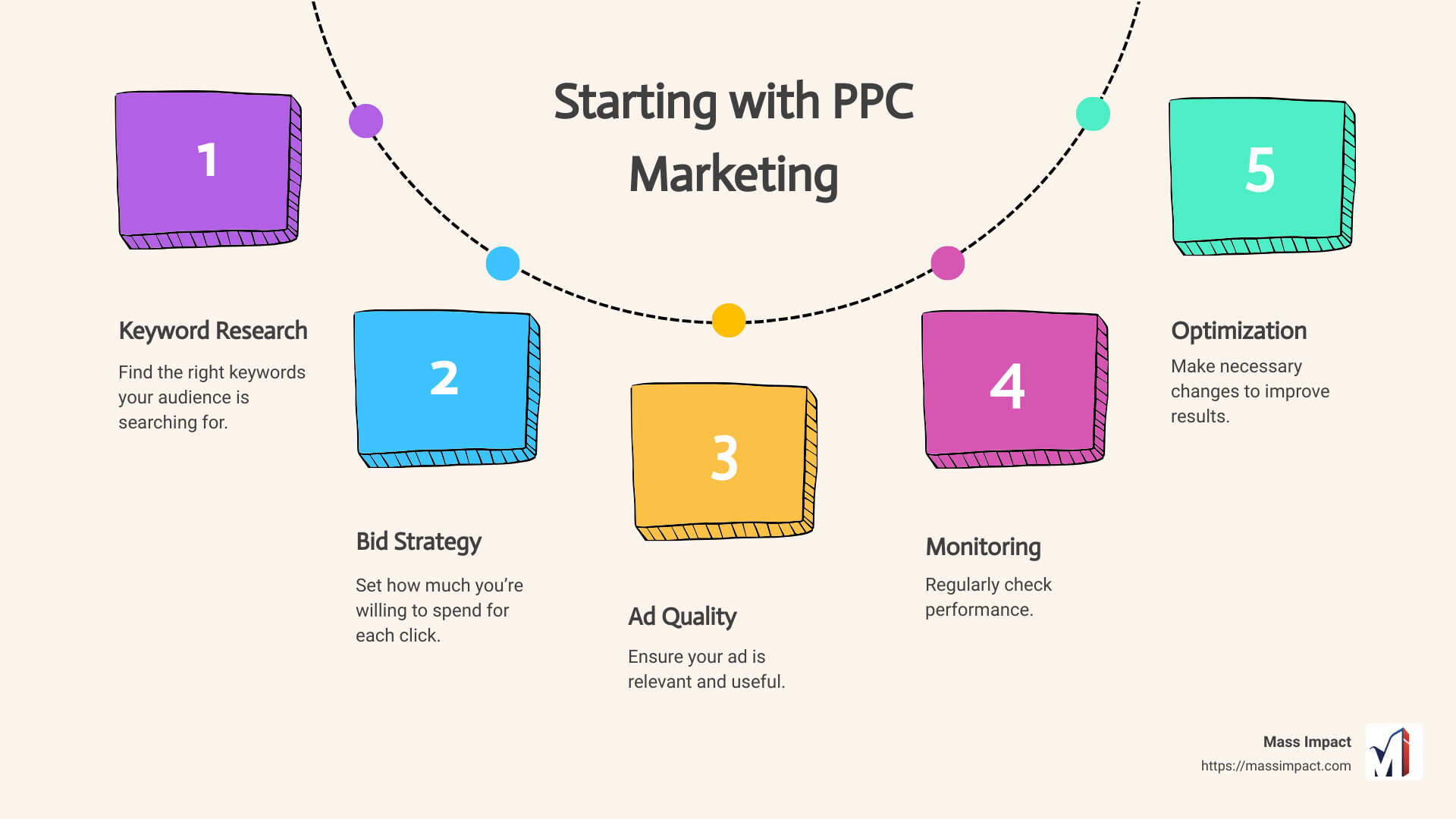
If you’re looking to start marketing PPC, here’s what you need to know:
- Keyword Research: Find the right keywords your audience is searching for.
- Bid Strategy: Set how much you’re willing to spend for each click.
- Ad Quality: Ensure your ad is relevant and useful.
- Monitoring and Optimization: Regularly check performance and make necessary changes.
When it comes to digital marketing, navigating the complex world of paid advertising can be daunting. Marketing PPC (Pay-Per-Click) is a powerful tool that allows businesses to promote their products and services by paying a fee each time their ad is clicked. PPC ads can appear on search engines, social media platforms, and other websites, driving targeted traffic almost instantly.
Why is marketing PPC important? It’s quick, measurable, and can be very cost-effective. PPC campaigns can be fine-tuned to target specific audiences and generate immediate traffic, making it an essential component of any digital marketing strategy.
My name is Haiko de Poel Jr, and I have experience in marketing ppc, including paid search, social, and display advertising. With a blend of creativity and strategy, I help businesses craft their unique digital identity and maximize ROI.
Important marketing ppc terms:
– click ppc
– google ppc support
– pay per click advertising agency
What is PPC Marketing?
How PPC Works
Marketing PPC (Pay-Per-Click) is a type of online advertising where businesses pay a fee each time their ad is clicked. This model ensures that advertisers only pay for actual engagement, making it a cost-effective way to drive traffic to their websites.
Here’s a simple breakdown of how PPC works:
- Bidding on Keywords: Advertisers bid on specific keywords that their target audience might use in search queries. For example, a shoe store might bid on the keyword “buy running shoes.”
- Ad Placement: When someone searches for these keywords, the search engine runs an auction to determine which ads will appear and in what order. The auction considers the bid amount, ad relevance, and quality.
- Cost-Per-Click (CPC): The advertiser pays a fee every time their ad is clicked. The cost can vary based on competition and keyword popularity.
- Algorithms: Search engines use complex algorithms to evaluate ads. Factors like the ad’s relevance to the keyword, the quality of the landing page, and the advertiser’s bid influence the ad’s placement.
Types of PPC Ads
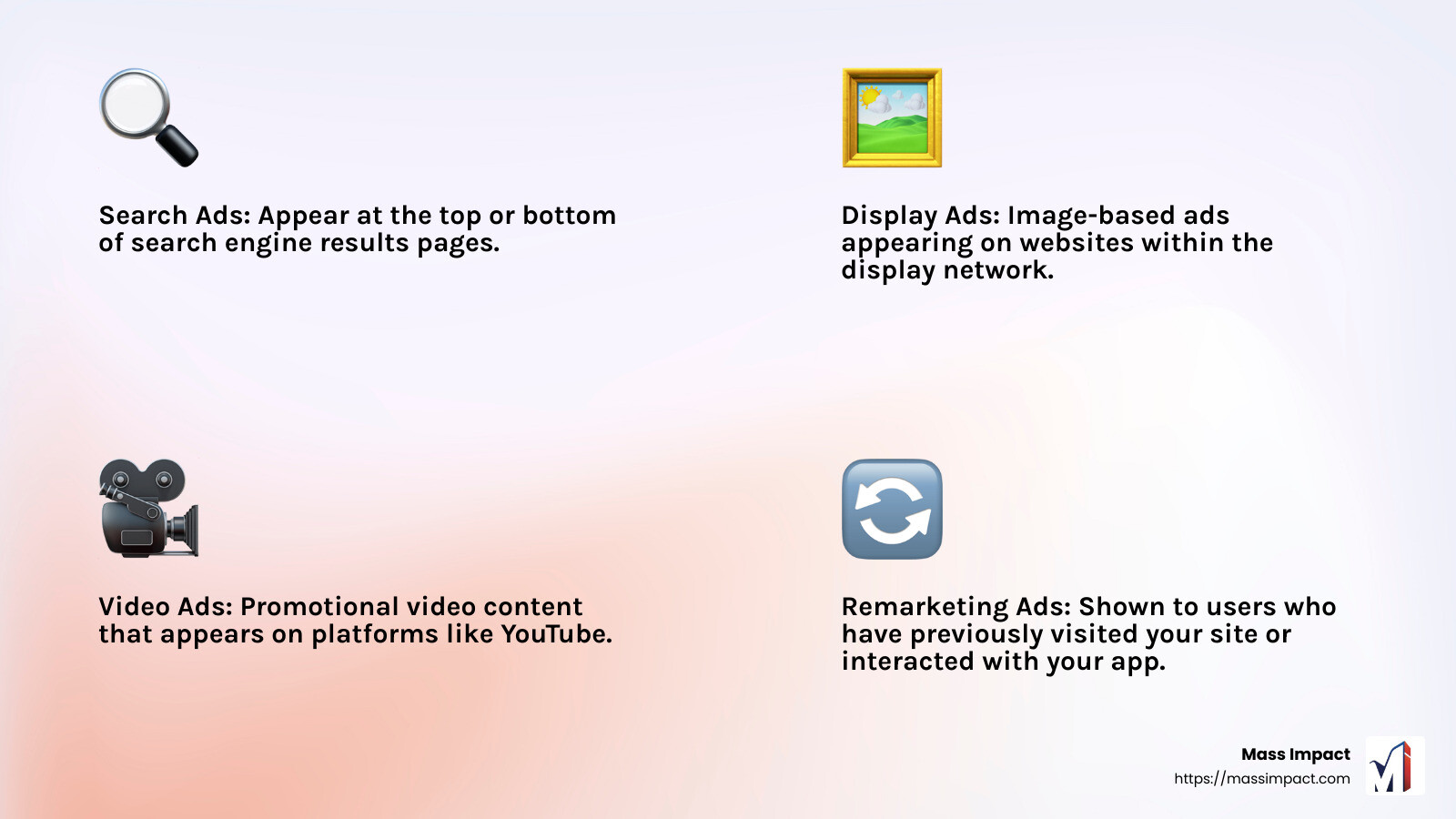
PPC advertising isn’t limited to search engines. There are several types of PPC ads, each serving different purposes and appearing on various platforms:
1. Search Ads:
These are the most common type of PPC ads. They appear at the top or bottom of search engine results pages (SERPs) when users search for specific keywords. For instance, if you search for “best running shoes,” the top results labeled “Ad” are search ads.
2. Display Ads:
Display ads are image-based and appear on websites within the display network. They can include images, videos, or interactive elements designed to catch the viewer’s attention as they browse the web.
3. Video Ads:
Video ads use video content to promote products or services. They can appear on platforms like YouTube, either before, during, or after a video. Video ads can be skippable or non-skippable and often include clickable elements like calls-to-action.
4. Remarketing Ads:
Also known as retargeting ads, these are shown to users who have previously visited your website or interacted with your app. They aim to remind users of your brand and encourage them to return and convert.
Each type of PPC ad has its own strengths and can be used to reach different segments of your target audience. By understanding how PPC works and the types of ads available, you can create a well-rounded marketing strategy that drives results.
In the next section, we’ll dive into the benefits of PPC marketing and why it’s an essential tool for your digital marketing strategy.
Benefits of PPC Marketing
Quick Results
One of the most significant benefits of marketing PPC is the speed at which it delivers results. Unlike SEO, which can take months to show progress, PPC ads can start driving traffic to your website almost immediately after launching a campaign. Stewart Dunlop, founder of PPC.io, highlights this advantage: “With optimized PPC ads, you can shoot yourself to the top of the SERP within hours of launching your campaign.”
Targeted Audience
PPC advertising allows for precision targeting. You can focus your ads on specific demographics, locations, interests, and even behaviors. For example, platforms like Facebook enable you to target users based on their interests and past online activities. This ensures your ads are seen by the most relevant audience, increasing the likelihood of conversions.
Measurable
PPC campaigns provide detailed metrics that allow you to measure and track performance. You can monitor key performance indicators (KPIs) like click-through rates (CTR), conversions, and return on investment (ROI). Platforms like Google Ads offer analytics tools that help you understand how your ads are performing, enabling you to make informed decisions and optimize your campaigns.
Cost-Effective
PPC is a cost-effective advertising method because you only pay when someone clicks on your ad. This ensures your budget is spent efficiently. You can also set a maximum budget and bid amount, giving you complete control over your ad spend. This makes PPC more affordable than traditional advertising methods like TV or print ads.
Branding
Even if users don’t click on your PPC ads, they still see them. This exposure helps in building brand awareness and familiarity. Over time, repeated exposure can increase the likelihood of future engagement and conversions. In this way, PPC not only drives immediate traffic but also contributes to long-term branding efforts.
Complementing SEO
PPC can effectively complement your SEO efforts. While SEO focuses on increasing organic traffic, PPC can drive immediate traffic to your site. This dual approach can be particularly beneficial for new websites that need to build organic rankings over time. PPC can provide the initial visibility and traffic boost while your SEO strategy takes effect.
In the next section, we’ll explore PPC strategy and campaign planning, covering essential steps like defining your target audience, setting goals, and conducting keyword research.
Crafting a successful PPC marketing campaign requires strategic planning and continuous optimization. Let’s explore the key elements that will help you create an effective PPC strategy.
Target Audience
Identifying your target audience is the first step in any PPC campaign. You need to know who your ads are for—consider factors like age, gender, location, interests, and online behaviors. For example, if you’re selling fitness equipment, your target audience might include health-conscious individuals aged 25-45 who live in urban areas and follow fitness influencers on social media.
Goals
Set clear, measurable goals for your PPC campaign. Are you aiming to increase website traffic, generate leads, or drive online sales? Defining your objectives will guide your strategy and help you measure success. For instance, if your goal is to generate leads, you might focus on optimizing your landing pages to capture visitor information.
Keyword Research
Keywords are the backbone of any PPC campaign. Use keyword research tools to find terms and phrases your target audience is searching for. Aim for a mix of high-volume keywords and long-tail keywords that are highly relevant but less competitive. This balance will help you capture both broad and specific search intents.
Ad Copy
Your ad copy should be compelling and relevant to the search intent of your audience. Write attention-grabbing headlines and include a clear call-to-action (CTA). For example, if you’re advertising a new software tool, your ad copy might highlight its unique features and include a CTA like “Try it Free Today.”
Ad Platforms
Choose the right platforms for your ads based on your audience and goals. Here are some of the top PPC platforms:
- Google Ads: Ideal for targeting users actively searching for products or services.
- Facebook Ads: Great for targeting specific demographics and interests.
- Instagram Ads: Effective for visually appealing ads aimed at younger audiences.
- Microsoft Advertising: Often less competitive than Google Ads, useful for reaching a different audience segment.
- TikTok Ads: Perfect for engaging younger, trend-savvy users.
- LinkedIn Ads: Best for B2B marketing and targeting professionals.
- Twitter Ads: Useful for reaching users who engage with trending topics.
Budget
Determine your budget and stick to it. PPC allows you to set daily or monthly spending limits, ensuring you don’t exceed your budget. It’s crucial to allocate your budget wisely across different campaigns and platforms to maximize ROI.
Monitoring and Optimization
PPC is not a “set it and forget it” strategy. Regularly monitor your campaign performance and make adjustments as needed. Use analytics tools to track metrics like click-through rates (CTR), conversions, and return on investment (ROI).
Creating Effective PPC Campaigns
Campaign Structure
Organize your campaigns into well-defined structures. Each campaign should focus on a specific goal, and within each campaign, create ad groups that house related keywords and ads.
Ad Groups
Ad groups should contain closely related keywords and ads. This ensures that your ads are relevant to the search queries they appear for, improving your Quality Score and ad performance.
Match Types
Use different keyword match types to control which searches trigger your ads:
– Broad Match: Reaches a wide audience but may include irrelevant searches.
– Phrase Match: Shows your ad for searches that include the exact phrase.
– Exact Match: Provides the most control by showing your ad only for searches that match your keyword exactly.
Negative Keywords
Add negative keywords to exclude terms that are not relevant to your campaign. This helps you avoid wasting budget on irrelevant clicks.
Audiences
Target specific audience segments based on demographics, interests, and behaviors. For example, you can create custom audiences on Facebook to target users who have visited your website or engaged with your content.
Ad Extensions
Use ad extensions to provide additional information and improve your ad’s visibility. Common extensions include site links, call buttons, and location information.
In the next section, we’ll explore the top PPC platforms and how to leverage them for your campaigns.
Key Metrics to Measure PPC Success
When it comes to marketing PPC, measuring the success of your campaigns is crucial. By tracking key metrics, you can understand what’s working and what needs improvement. Here are the essential metrics you need to keep an eye on:
Quality Score
Quality Score is Google’s rating of the relevance and quality of your ads, keywords, and landing pages. A higher Quality Score means your ads are more relevant to users, which can lead to lower costs and better ad positions. Factors affecting Quality Score include:
- Ad Relevance: How closely your ad matches the search intent.
- Expected Click-Through Rate (