

Is Shopify a website builder? The simple answer is yes, but it’s also so much more. Shopify is known as a leading e-commerce platform but it doubles as a robust website builder with a suite of tools for both online selling and content management. It’s designed for business owners, especially those in e-commerce, looking for a platform that can handle everything from product listings to blog posts, all without needing a deep dive into coding.
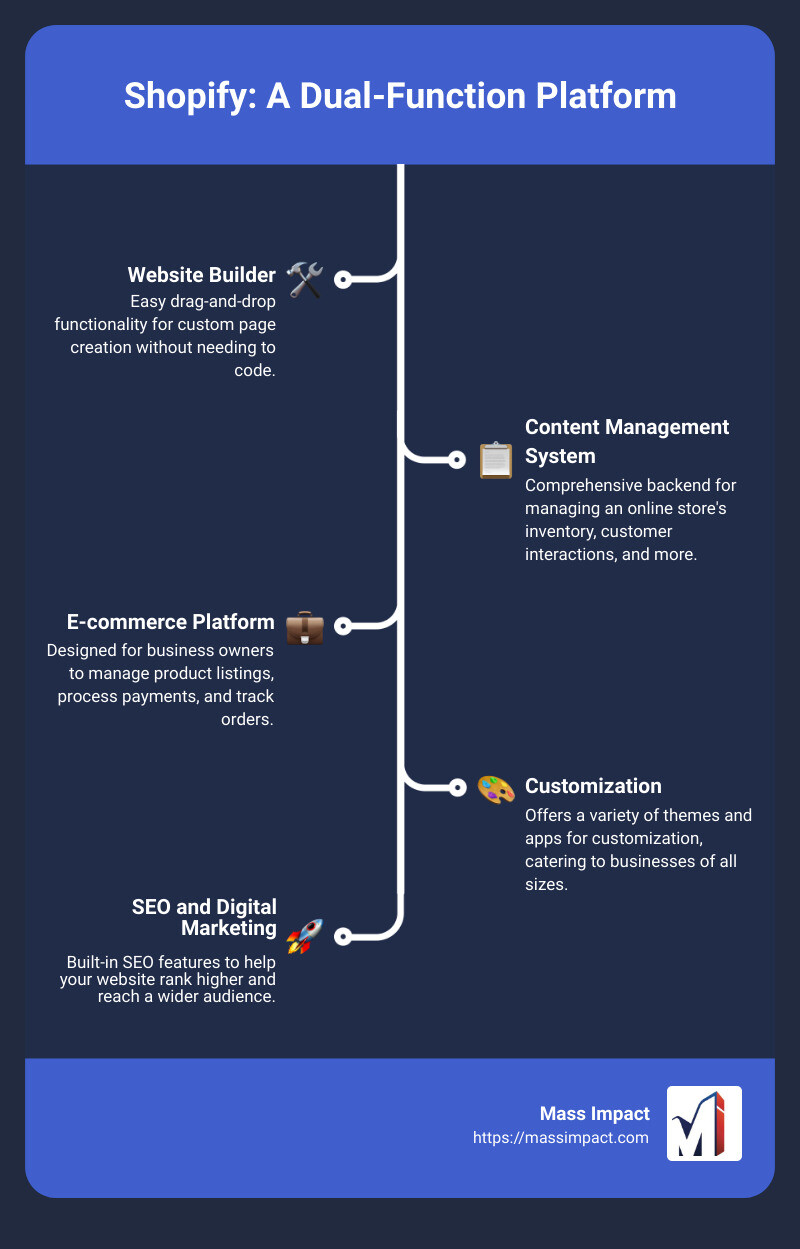
Shopify blurs the lines between a website builder and a Content Management System (CMS). Traditionally, website builders offer tools for creating web pages with minimal effort, while CMS platforms provide more in-depth features for managing a variety of content. Shopify serves both roles. With its easy drag-and-drop functionality, it allows users to create custom pages. At the same time, its comprehensive backend manages an online store’s complex needs—from inventory to customer interactions.
For the busy business owner venturing into the digital marketing realm, understanding Shopify’s dual nature is crucial. It’s not just a tool for building an online storefront; it’s a gateway to creating a dynamic website that serves various purposes—informing, engaging, and ultimately converting your audience.
In this introduction, we’ve quickly captured the essence of what makes Shopify a unique and versatile platform for building your business’s online presence. As we dive deeper into the capabilities of Shopify, keep in mind that it’s designed to be approachable for users of all skill levels, from the tech-savvy to those less familiar with digital tools. Whether you’re selling products, sharing your brand’s story, or both, Shopify provides a platform that adapts to your business’s evolving needs.
Shopify as a Dual Function Platform
When exploring the question, “Is Shopify a website builder?”, understand that Shopify serves as a dual-function platform, blending the features of a traditional website builder with those of a comprehensive Content Management System (CMS). This unique combination allows users to not only create visually appealing websites but also manage intricate ecommerce functionalities with ease.
Website Builder and CMS
At its core, Shopify offers a straightforward website building experience, thanks to its drag-and-drop functionality. This means you can select elements you want on your website—like images, text, or videos—and simply drag them to where you need them. It’s as easy as moving files around on your desktop. This simplicity is a cornerstone of Shopify’s appeal, making it accessible for business owners who might not have any coding knowledge.
However, Shopify goes beyond basic website building. It incorporates robust CMS features, allowing users to manage their website’s content effectively. From blog posts to product descriptions, Shopify’s CMS capabilities ensure that your site remains up-to-date and relevant, which is crucial for engaging visitors and improving SEO rankings.
Drag-and-Drop Functionality
One of Shopify’s standout features is its drag-and-drop interface. This tool democratizes website design, enabling users to customize their online stores and information-based websites without needing to dive into the complexities of HTML or CSS. Whether you’re rearranging the layout of your homepage or adding new products to your store, Shopify’s intuitive design tools make the process seamless and straightforward.
Content Management Tools
Shopify’s content management tools are designed to help you create, manage, and publish content without hassle. Whether you’re running a blog alongside your store or using content marketing to attract more visitors, Shopify provides the tools you need to keep your content organized and accessible. These tools include scheduling features to publish content at optimal times, SEO settings to help your site rank better in search engines, and analytics to track the performance of your content.

Shopify embodies a dual-function platform that caters to a wide range of needs. Whether you’re building a purely informational site or a full-fledged online store, Shopify’s blend of website builder and CMS functionalities offers a versatile solution. Its drag-and-drop interface and content management tools simplify the web design process, making it possible for anyone to create a professional-looking website. The goal of Shopify is to empower business owners to focus more on their passion and less on the technicalities of managing an online presence.
We’ll delve deeper into the specific features that make Shopify an excellent choice for businesses of all sizes, highlighting how its ecommerce specialization sets it apart from other website builders.
Building Your Website on Shopify
Building a website on Shopify might seem daunting at first, but it’s simpler than you think. Let’s break it down into manageable chunks: costs, website hosting, professionally written content, and average functionality. This way, you can see how Shopify stands as a robust platform for both newcomers and seasoned web developers.
Costs
First up, costs. Shopify isn’t free, but it offers a range of plans to fit different budgets and needs. Starting at $29 a month for the Basic plan, businesses can get up and running with all the essential tools. This includes access to a secure and reliable ecommerce platform, website hosting, and a slew of features to help manage and grow your online presence. Investing in your website is investing in your business’s future.
Website Hosting
Next, let’s talk about website hosting. Shopify takes the headache out of hosting. With every plan, hosting is included, meaning you don’t have to deal with third-party providers or technical setup. Shopify’s hosting is robust and reliable, ensuring your site stays up and running smoothly, even during traffic spikes. This reliability is crucial for maintaining a professional online presence and ensuring customer satisfaction.
Professionally Written Content
Now, onto professionally written content. While Shopify doesn’t write content for you, it provides the tools to make adding your content straightforward. The platform supports blogs and allows you to easily add pages with content that reflects your brand’s voice. For those seeking professional-grade content, Shopify’s App Store includes access to apps and services that can connect you with professional writers and content creators.
Average Functionality
Lastly, we’ll touch on average functionality. Shopify might be known for its ecommerce prowess, but its functionality extends beyond just selling products online. It provides a suite of tools for SEO, marketing, and analytics, helping you understand your audience and grow your business. The drag-and-drop interface makes customizing your site’s look and feel easy, without needing to dive into code. However, if you’re looking to add complex functionalities outside of the ecommerce realm, you might find Shopify’s capabilities a bit average compared to specialized website builders focused solely on content management or blogging.
In conclusion, building your website on Shopify is a straightforward process that balances costs, ease of use, and functionality. It’s designed to let business owners focus on what they do best — running their business — while providing a reliable, scalable platform to support their online presence. As we move into exploring Shopify beyond ecommerce, you’ll see how its features and templates offer the flexibility to create various types of websites, not just online stores.
Shopify Beyond E-commerce
When people ask, “Is Shopify a website builder?” they’re often surprised to learn that Shopify’s capabilities extend far beyond e-commerce. It’s a robust platform that supports a variety of website types, including information-based sites. Let’s dive into how Shopify serves as a versatile tool for creating different kinds of websites.
Information-based Websites
Shopify isn’t just for selling products. It’s also a powerful platform for building websites that focus on delivering content. Whether you’re looking to create a blog, a portfolio, or a company website that showcases your services, Shopify can handle it. With its easy-to-use content management tools, you can publish articles, images, and videos to engage your audience.
Features
Shopify comes packed with features that make it a great choice for both e-commerce and informational websites. Some notable features include:
- SEO Tools: Shopify provides built-in SEO features to help your website rank higher in search engine results, making it easier for people to find you online.
- Mobile Responsiveness: All Shopify themes are designed to look great on both desktop and mobile devices, ensuring a seamless experience for your visitors.
- Social Media Integration: Easily link your website to your social media profiles and incorporate social sharing buttons to increase engagement.
Templates
One of Shopify’s strengths is its wide selection of professionally designed templates. Whether you’re building an online store or an informational site, there’s a template that fits your style and needs. Each template is customizable, allowing you to align the design with your brand identity. You can change colors, fonts, and layout elements to create a unique look and feel for your website.
Customization
Shopify stands out for its customization capabilities. You don’t need to be a tech expert to make your website look exactly how you want it. The platform offers an intuitive drag-and-drop interface, making it easy to add, remove, or rearrange elements on your pages. For those who want even more control, Shopify allows access to the HTML and CSS of your website, so you can fine-tune every detail.
In conclusion, Shopify is more than just an e-commerce platform; it’s a versatile website builder that caters to a wide range of website types. From online stores to informational blogs, Shopify provides the tools and flexibility needed to create a professional-looking website. Its rich array of features, customizable templates, and user-friendly interface make it a suitable choice for businesses and individuals looking to establish a strong online presence without the complexity.
As we delve into the specifics of identifying Shopify websites in the next section, keep in mind the platform’s broad capabilities and how they can be leveraged to meet diverse online needs.
Identifying Shopify Websites
Curious about how to spot a Shopify website in the wild? It’s simpler than you might think. Below, we’ll explore the key indicators that can help you identify a website powered by Shopify, including hints hidden in the page source code, specific Shopify-related tags, and unique elements of the site’s URL structure.
Page Source Code
One of the first places to look is the website’s page source code. Here’s how: right-click on a webpage and select “View Page Source” or “View Source.” Once there, press Ctrl+F (or ⌘-F on a Mac) and search for phrases like “Shopify” or “.myshopify.com”. If you find these, chances are you’re looking at a Shopify-powered website. This method might seem a bit technical, but it’s a straightforward way to peek behind the curtain.
Shopify-related Tags
Shopify websites often include specific Shopify-related tags within their HTML. These tags can include Shopify-specific JavaScript libraries or CSS stylesheets. By inspecting the elements of a webpage (right-click and select “Inspect” or “Inspect Element”), you can look for these tags. If you spot any, you’re likely viewing a website built on Shopify.
URL Structure
The structure of a website’s URL can also give away its Shopify roots, especially in the paths used to organize content and products. Here are two common patterns:
-
“/collections/”: Shopify uses this path to group products into collections. For example, a URL like “examplestore.com/collections/summer-sale” likely indicates a Shopify-powered site organizing its products into a summer sale collection.
-
“/products/”: Similarly, Shopify websites use this path for individual product pages. A URL structured as “examplestore.com/products/blue-widget” points to a Shopify site showcasing a specific product.
Recognizing these patterns in a website’s URL is a quick and easy way to identify it as running on Shopify. It’s especially handy for those who prefer not to dive into the technical details of page source codes and HTML tags.
By understanding these key identifiers, you can start to notice the widespread use of Shopify across the internet. Whether it’s the explicit mention in the source code, the presence of Shopify-related tags, or the distinct structure of the URLs, these signs reveal the platform’s role in powering a diverse range of online stores and websites.
We’ll explore the vast array of features Shopify offers as a website builder, further showcasing why it’s a popular choice for both e-commerce and informational websites alike.
Key Features of Shopify as a Website Builder
When diving into the question of whether is Shopify a website builder, it’s clear that Shopify stands out with a suite of features designed to empower anyone to create a stunning online presence. Let’s break down these features to understand how Shopify caters to a wide range of needs, from small businesses to large enterprises.
Themes
Shopify offers a rich library of themes, both free and premium, crafted by professional designers. These themes are not just visually appealing but are also optimized for a seamless user experience. Whether you’re in retail, services, or any other industry, there’s a theme that fits your brand’s personality and goals.
Apps and Integrations
With over 8,000 apps available, Shopify’s App Store is a treasure trove that extends the functionality of your website. From marketing tools to inventory management, and customer support to shipping and fulfillment, these apps integrate seamlessly to enhance your website’s capabilities.
Customizable Website
Shopify’s platform is incredibly flexible, allowing you to edit your website’s look and feel to match your brand perfectly. You can adjust everything from the layout and color scheme to the font styles without needing to touch a line of code. This level of customization ensures that your website stands out and resonates with your target audience.
No Code
One of Shopify’s most appealing features is its no-code website builder. This drag-and-drop interface makes it easy for anyone to design and launch a website, regardless of their technical skill level. However, if you do have coding skills, Shopify also gives you the option to dive into the HTML and CSS for more advanced customizations.
Small Business to Large Enterprises
Shopify scales with your business. It offers a range of plans designed to meet the needs of small businesses just starting out, all the way up to large enterprises with complex requirements. This scalability means that as your business grows, Shopify can continue to support your evolving needs without skipping a beat.
Custom Domain
Having a custom domain is crucial for building a professional online presence. Shopify simplifies this process by allowing you to purchase and manage your custom domain directly through the platform. This integration streamlines the setup and ensures your brand maintains consistency across your digital footprint.
Free Trial
For those still on the fence, Shopify offers a free 3-day trial, giving you the opportunity to explore its features and capabilities without commitment. This trial period is a great way to get a feel for the platform, experiment with different themes, and start building your website.
In conclusion, Shopify’s robust set of features as a website builder makes it a compelling choice for anyone looking to create an online presence. From its wide selection of themes and extensive app integrations to its customizable no-code platform and scalability, Shopify empowers you to build a website that not only looks professional but also functions seamlessly. Whether you’re a small startup or a large corporation, Shopify provides the tools you need to succeed online.
Shopify’s E-commerce Specialization
When exploring the question, “is Shopify a website builder?” it’s crucial to highlight Shopify’s roots and strengths in e-commerce. Unlike traditional website builders that may offer e-commerce as an afterthought, Shopify was built from the ground up with the sole purpose of enabling businesses to launch, manage, and scale online stores with ease. Let’s dive into what makes Shopify stand out in the e-commerce realm.
Ecommerce Store Builder
Shopify simplifies the process of building an online store. With its intuitive drag-and-drop interface, users can create a fully operational e-commerce site without needing any coding knowledge. This ease of use doesn’t come at the cost of functionality. Shopify stores are robust, capable of handling a wide range of e-commerce needs from product listings to inventory management.
Secure Checkout
Security is paramount in e-commerce, and Shopify excels here. It offers a secure checkout process, ensuring that customer data is protected through encryption and compliance with PCI standards. This peace of mind is crucial for building trust with your customers.
SEO Features
Visibility is key to e-commerce success. Shopify comes with built-in SEO features that help your store rank higher in search results. This includes customizable headlines, titles, meta tags, and automatically generated sitemaps. Shopify understands that a store’s online visibility directly impacts its sales and provides the tools to improve it.
Sales Channels
Shopify’s versatility extends to how and where you can sell your products. Beyond the online store, Shopify allows you to sell through various channels including social media platforms, online marketplaces like Amazon and eBay, and even in-person with Shopify POS. This multi-channel approach maximizes your reach and opportunities to make sales.
Unlimited Products
Whether you’re selling a single product or thousands, Shopify can handle it. There are no limits to the number of products you can list on your Shopify store. This scalability is a significant advantage for growing businesses.
Hosting Included
Every Shopify plan includes web hosting, removing the need to find and manage a separate hosting provider. This hosting solution is not only convenient but also powerful, offering unlimited bandwidth to handle traffic spikes without your site slowing down or crashing.
Tiered Pricing
Shopify’s pricing plans are designed to grow with your business. Starting with a basic plan for new businesses, all the way to advanced plans for high-volume sellers and large enterprises. This tiered pricing ensures that you only pay for the features you need at each stage of your business’s growth.
In conclusion, Shopify’s e-commerce specialization is evident in every aspect of its platform. From secure transactions and SEO optimization to its versatile sales channels and scalable product listings, Shopify provides a comprehensive toolkit for anyone looking to start or grow their online store. Its commitment to e-commerce excellence, combined with the ease of use of a traditional website builder, makes Shopify a standout choice for businesses of all sizes.
We’ll address some frequently asked questions about Shopify, including its suitability for non-e-commerce websites, typical costs, and how to identify Shopify-built websites. These insights will further illuminate Shopify’s capabilities and versatility as a website builder and e-commerce platform.
Frequently Asked Questions about Shopify
In the journey of understanding Shopify’s multifaceted role in the digital world, several questions often emerge. Let’s dive into some of the most common inquiries about Shopify to shed light on its capabilities and how it stands as a website builder.
Is Shopify suitable for non-e-commerce websites?
Absolutely. While Shopify shines as an e-commerce platform, its utility extends far beyond online stores. If you’re considering a website to showcase your services, host a blog, or even just to create an online presence for your brand, Shopify can cater to your needs. With its array of customizable themes and the ability to integrate various functionalities through apps, Shopify supports a broad spectrum of website types. For instance, service providers, educational platforms, and portfolio sites can all thrive on Shopify. Its robust hosting and security features ensure that your site remains fast and safe for all users, making it a solid choice even if e-commerce isn’t your primary focus.
How much does it typically cost to build a website on Shopify?
Let’s break it down. Shopify offers tiered pricing plans to accommodate the diverse needs of its users, from small startups to large enterprises. The Starter plan begins at just $5 USD/month, designed for those just getting their feet wet. For more comprehensive features, the Basic plan is $29.00 USD/month, the Shopify plan is $79.00 USD/month, and the Advanced Shopify plan is $299.00 USD/month. For businesses requiring the highest level of functionality, Shopify Plus starts at $2,000 USD/month. These costs include hosting, which saves you the hassle and expense of finding a separate provider. The plan you choose should align with your business needs, factoring in the number of products you plan to sell, the level of customization you desire, and the scale at which you’re operating.
How can I tell if a website is built using Shopify?
There are a few tell-tale signs. Firstly, you might notice specific URL structures such as “/collections/” and “/products/” in the web address, which are characteristic of Shopify sites. Additionally, by inspecting the page source code (right-click on the webpage, then select “View Page Source” or “Inspect”), you can search for Shopify-related tags or the “.myshopify.com” domain in script links. Some tools and browser extensions are designed to detect the platform a website is built on, offering a straightforward way to identify Shopify sites. While these methods aren’t foolproof, they can often give you a good indication of whether a website runs on Shopify.
As we’ve explored, Shopify serves as a powerful and versatile platform capable of supporting a wide range of website types, not just e-commerce stores. Whether you’re looking to sell products, showcase your portfolio, or simply create an online presence for your brand, Shopify offers the tools and features necessary to build a professional and effective website. With flexible pricing plans and the ability to identify Shopify-built sites easily, it’s clear why many choose Shopify as their go-to website builder.
In the next section, we’ll delve into how Mass Impact leverages digital marketing services to amplify your online presence, making Shopify a standout choice for businesses of all sizes.
Conclusion
As we wrap up our comprehensive guide on “Is Shopify a Website Builder?”, it’s evident that Shopify stands out not just for its e-commerce prowess but also as a robust platform for building and managing websites across various industries. With its user-friendly interface, extensive customization options, and powerful integrations, Shopify empowers businesses to create a compelling online presence.
At Mass Impact, we understand the critical role of digital marketing in amplifying your online presence. Our expertise in digital marketing services complements Shopify’s capabilities, ensuring that your website not only looks great but also reaches your target audience effectively. We specialize in SEO, content marketing, social media strategies, and more, all designed to drive traffic, engage visitors, and convert leads.
Building a strong online presence is more than just launching a website. It’s about creating a digital footprint that embodies your brand, communicates with your audience, and achieves your business goals. With Shopify as your website builder and Mass Impact as your digital marketing partner, you have a powerful combination to make your online venture a success.
Whether you’re just starting out or looking to enhance your existing online store, Shopify offers the tools and flexibility needed to create an engaging and functional website. And when paired with our digital marketing expertise, the potential for growth and success is limitless.
Your website is often the first point of contact between your business and potential customers. Making a strong impression is crucial, and with Shopify and Mass Impact, you’re well-equipped to do just that.
Let’s work together to build a website that not only meets but exceeds your expectations. Explore how our digital marketing services can complement your Shopify website and take your online presence to new heights. Visit us at Mass Impact and discover the difference we can make for your business.
In conclusion, Shopify is more than just an e-commerce platform; it’s a comprehensive website builder that caters to businesses of all sizes. And with Mass Impact’s digital marketing services, you have everything you need to launch, grow, and sustain a strong online presence.