
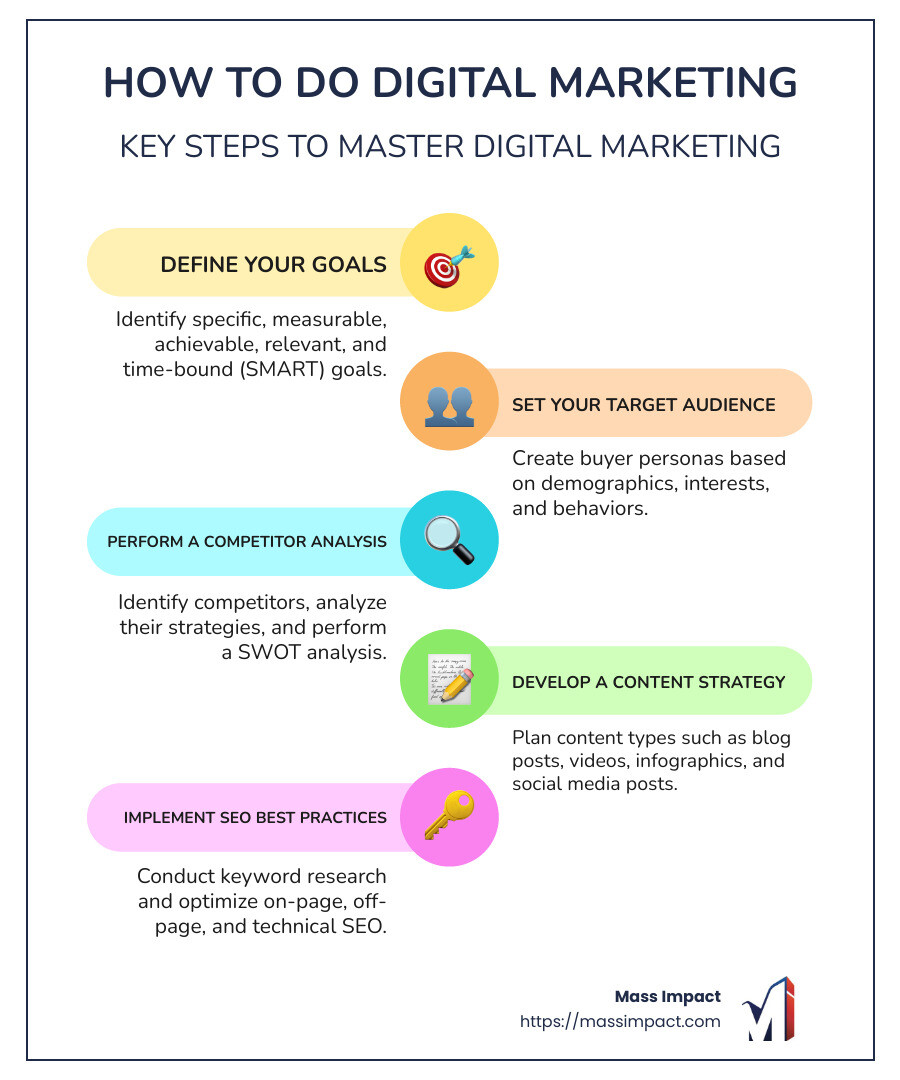
How to do digital marketing might seem like a daunting question, but it’s actually quite straightforward when you break it down into manageable steps:
- Define your goals
- Identify your target audience
- Establish a budget for each digital channel
- Create engaging content
- Optimize for mobile and SEO
- Analyze and adapt
What Is Digital Marketing?
Digital marketing refers to all marketing activities that use the internet. This includes strategies like social media marketing, email campaigns, search engine optimization (SEO), and online advertising.
Why Digital Marketing Is Crucial
Digital marketing is essential for reaching your audience where they spend a lot of time, online. With 2.71 billion online shoppers in 2024, having a robust digital presence is not just beneficial; it’s essential.
An Overview of Digital Channels
Digital marketing uses a variety of channels:
– Websites
– Search Engines
– Social Media
– Emails
– Mobile Apps
Understanding and effectively using these channels will help you connect with your customers more effectively.
I’m Haiko de Poel Jr., an expert in how to do digital marketing. With years of experience in branding and digital strategy, I’ve helped numerous businesses achieve their marketing goals. Let’s get started on your journey to mastering digital marketing!
Learn more about how to do digital marketing:
– digital marketing strategies
– digital marketing campaign
– seo strategy in digital marketing
What is Digital Marketing?
Digital marketing refers to all marketing activities that use the internet. This includes strategies like social media marketing, email campaigns, search engine optimization (SEO), and online advertising.
Why Digital Marketing Is Crucial
Digital marketing is essential for reaching your audience where they spend a lot of time, online. With 2.71 billion online shoppers in 2024, having a robust digital presence is not just beneficial; it’s essential.
An Overview of Digital Channels
Digital marketing uses a variety of channels:
- Websites
- Search Engines
- Social Media
- Emails
- Mobile Apps
Understanding and effectively using these channels will help you connect with your customers more effectively.
Websites
Your website is often the first impression people have of your business. It’s your digital storefront. Make sure it’s user-friendly, mobile-optimized, and provides valuable content.
Search Engines
SEO (Search Engine Optimization) helps your website rank higher on search engines like Google. This makes it easier for potential customers to find you when they search for relevant keywords.
Social Media
Social media platforms like Facebook, Instagram, and LinkedIn offer a way to engage directly with your audience. Share valuable content, respond to comments, and use targeted ads to reach a broader audience.
Emails
Email marketing is a powerful tool for nurturing leads and maintaining relationships with your customers. Use personalized email campaigns to keep your audience engaged.
Mobile Apps
Mobile apps provide a direct channel to your customers. They can shop, interact with your brand, and receive updates all from their mobile devices. Ensure your app is easy to steer and adds value to the user experience.
I’m Haiko de Poel Jr., an expert in how to do digital marketing. With years of experience in branding and digital strategy, I’ve helped numerous businesses achieve their marketing goals. Let’s get started on your journey to mastering digital marketing!
Benefits of Digital Marketing
Digital marketing offers numerous advantages that can significantly improve your business. Let’s explore some of the key benefits:
Cost Efficiency
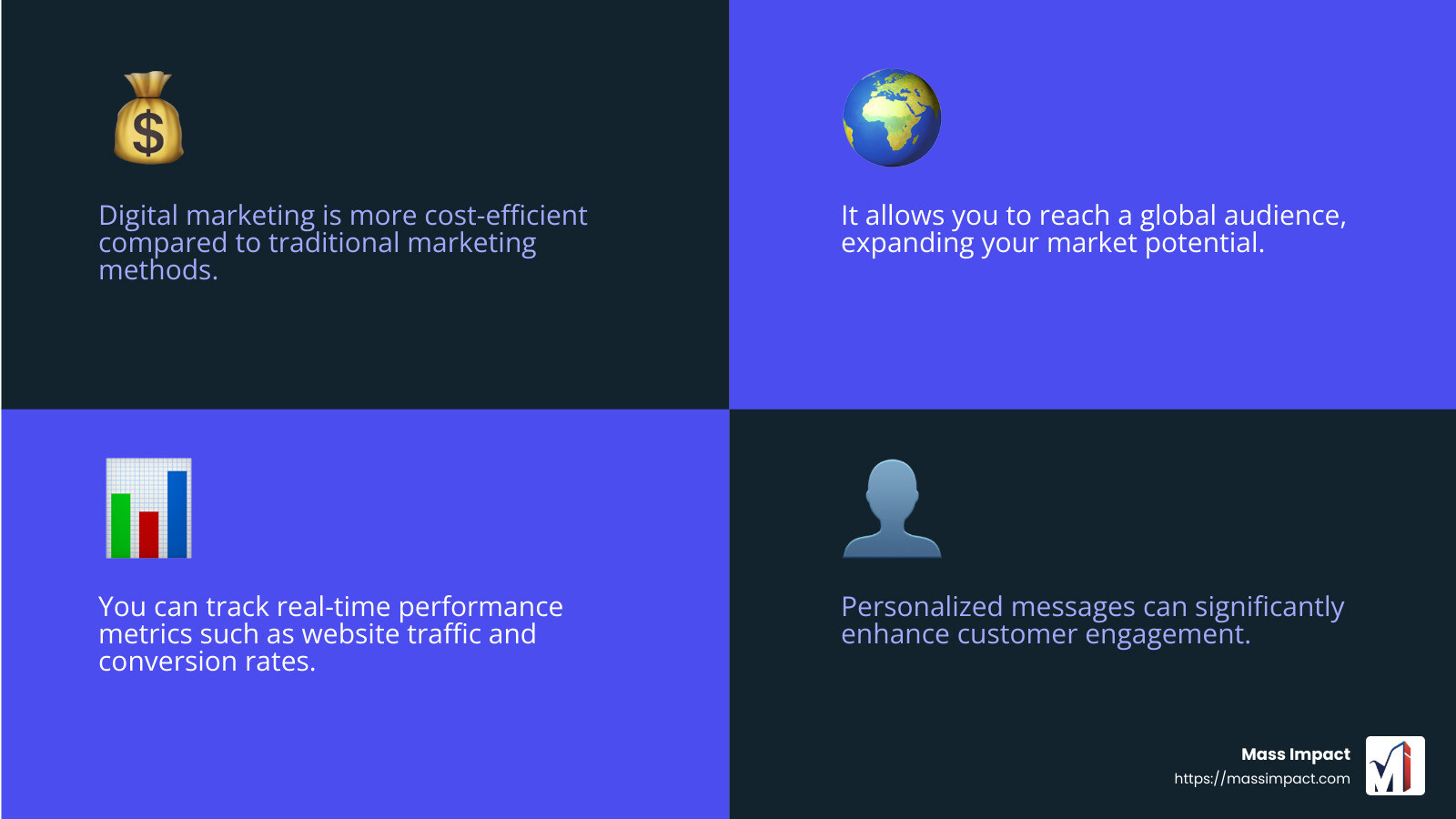
Digital marketing is often more affordable than traditional marketing methods. Whether you’re a small business or a large corporation, you can run effective campaigns without breaking the bank. For instance, social media advertising and email marketing are cost-effective ways to reach a large audience compared to TV or print ads.
Global Reach
One of the most compelling benefits of digital marketing is its ability to reach a global audience. Unlike traditional marketing methods that may be limited by geography, digital marketing allows you to connect with customers worldwide. This global reach can help you expand your business beyond local markets and tap into new customer bases.
Measurable Results
Digital marketing provides measurable results, enabling you to track the performance of your campaigns in real-time. You can monitor metrics like website traffic, conversion rates, and social media engagement. Tools like Google Analytics offer detailed insights, allowing you to adjust your strategies for better results.
Personalization
With digital marketing, you can tailor your messages to individual customers based on their preferences and behaviors. Personalization improves the customer experience and can lead to higher conversion rates. For example, personalized email campaigns addressing customers by their names and recommending products based on previous purchases can significantly boost engagement.
Customer Engagement
Digital marketing facilitates direct interaction with customers through various online platforms like social media, emails, and live chat. This direct engagement helps build stronger relationships and fosters customer loyalty. You can respond to customer inquiries, gather feedback, and provide support, all in real-time.
Real-Time Data Analytics
One of the standout features of digital marketing is the ability to access real-time data analytics. This allows you to make informed decisions quickly. For example, if a particular ad campaign is underperforming, you can adjust it on the fly to improve its effectiveness. Real-time data helps you stay agile and responsive to market changes.
Next, we will dig into Types of Digital Marketing, where we’ll explore various strategies like content marketing, SEO, and social media marketing.
Types of Digital Marketing
Digital marketing encompasses a variety of strategies to reach and engage your audience. Let’s break down how to do digital marketing effectively by exploring the different types of digital marketing:
Content Marketing
Content marketing involves creating and sharing valuable content to attract and engage your target audience. This can include blog posts, ebooks, newsletters, guides, and infographics. Content marketing is not only affordable but also effective. In 2022, 80% of marketers reported success with their content marketing strategies. The goal is to provide useful information that encourages readers to take action, such as subscribing to a newsletter or making a purchase.
Search Engine Optimization (SEO)
SEO is the process of optimizing your website to rank higher on search engine results pages (SERPs). This involves:
- On-page SEO: Optimizing content and HTML source code on your website.
- Off-page SEO: Building backlinks from other reputable sites.
- Technical SEO: Improving backend elements like site speed and mobile-friendliness.
SEO is crucial because 67.6% of organic traffic clicks come from the first five results on the SERP.
Search Engine Marketing (SEM)
SEM involves using paid advertising to appear on SERPs. The most popular platforms are Google Ads and Bing Ads. When users search for specific keywords, your ad appears at the top or side of the search results. SEM is effective because 68% of online experiences begin with a search engine.
Social Media Marketing
Social media marketing leverages platforms like Facebook, Twitter, Instagram, LinkedIn, and TikTok to promote your brand. This type of marketing allows for direct interaction with your audience, fostering engagement and building relationships. Companies often use social media to share content, run ads, and engage in conversations with followers.
Pay-Per-Click (PPC)
PPC is a model where you pay each time someone clicks on your ad. Common PPC platforms include Google Ads and social media channels like Facebook and Instagram. PPC can drive immediate traffic to your website and is highly measurable, allowing you to track ROI effectively.
Email Marketing
Email marketing involves sending targeted emails to your audience. These emails can promote products, share news, or offer discounts. Email marketing is effective because it allows for personalized communication and can yield high conversion rates. Types of emails include:
- Newsletters
- Promotional emails
- Transactional emails
Affiliate Marketing
Affiliate marketing is performance-based, where you earn a commission for promoting another company’s products. This can be done through blog posts, social media, or video content. It’s a win-win situation: affiliates earn a commission, and companies get more exposure.
Video Marketing
Video marketing uses video content to promote products or services. Platforms like YouTube, TikTok, and Instagram are popular for video marketing. For example, Dollar Shave Club’s viral video helped them gain over 1 million subscribers and led to a $1 billion acquisition by Unilever.
Mobile Marketing
Mobile marketing targets users on their smartphones or tablets. This can include SMS marketing, in-app advertising, and mobile-friendly websites. Given that more people are using mobile devices to browse the internet, optimizing for mobile is essential.
Native Advertising
Native advertising blends in with the content on the platform where it appears, making it less intrusive. Examples include sponsored posts on social media or recommended content on news websites. Native ads are effective because they match the look and feel of the platform, making them more engaging.
Marketing Automation
Marketing automation uses software to automate repetitive marketing tasks. This can include:
- Email marketing automation: Automatically sending emails based on user behavior.
- Social media scheduling: Planning and posting content automatically.
- Lead nurturing workflows: Sending targeted content to leads based on their actions.
Marketing automation helps streamline your efforts and ensures that your marketing is consistent and timely.
By understanding and leveraging these types of digital marketing, you can create a comprehensive strategy that reaches your target audience effectively.
Next, we’ll dive into How to Do Digital Marketing, starting with defining your goals and setting your target audience.
How to Do Digital Marketing
Define Your Goals
The first step in any digital marketing campaign is to define your goals. Clear goals help you shape your strategy and measure success. Use the SMART criteria to set goals that are:
- Specific: Clear and well-defined.
- Measurable: Quantifiable with metrics.
- Achievable: Realistic and attainable.
- Relevant: Aligned with your business objectives.
- Time-bound: Set within a specific timeframe.
For example, if you want to increase brand awareness, your goal might be to gain 1,000 new social media follow