Open up Your Potential: The University of North Florida’s Graphic Design & Digital Media Program
For anyone wondering about graphic design UNF, here’s a quick snapshot:
- Program Highlights: Nationally accredited, industry-standard training, hands-on learning.
- Mission: Prepare students for dynamic digital media and design careers.
- Unique Benefits: Real-world projects, faculty expertise, study abroad options.
The graphic design UNF program is a prestigious, selective curriculum focusing on creating innovative design solutions for a global market. The program balances fundamental design principles, historical contexts, and cutting-edge technology. Students learn to create impactful visual communication across web, print, and digital media.
This NASAD-accredited program emphasizes experiential learning, preparing students for careers in publication, web, advertising, corporate identity, and motion graphics. With opportunities for internships, real-world design projects, and study abroad programs, students are well-equipped to thrive in various design professions.
I’m Haiko de Poel Jr, and with experience in helping brands steer the digital landscape, I’m passionate about graphic design UNF and its potential to shape future leaders in the design industry.
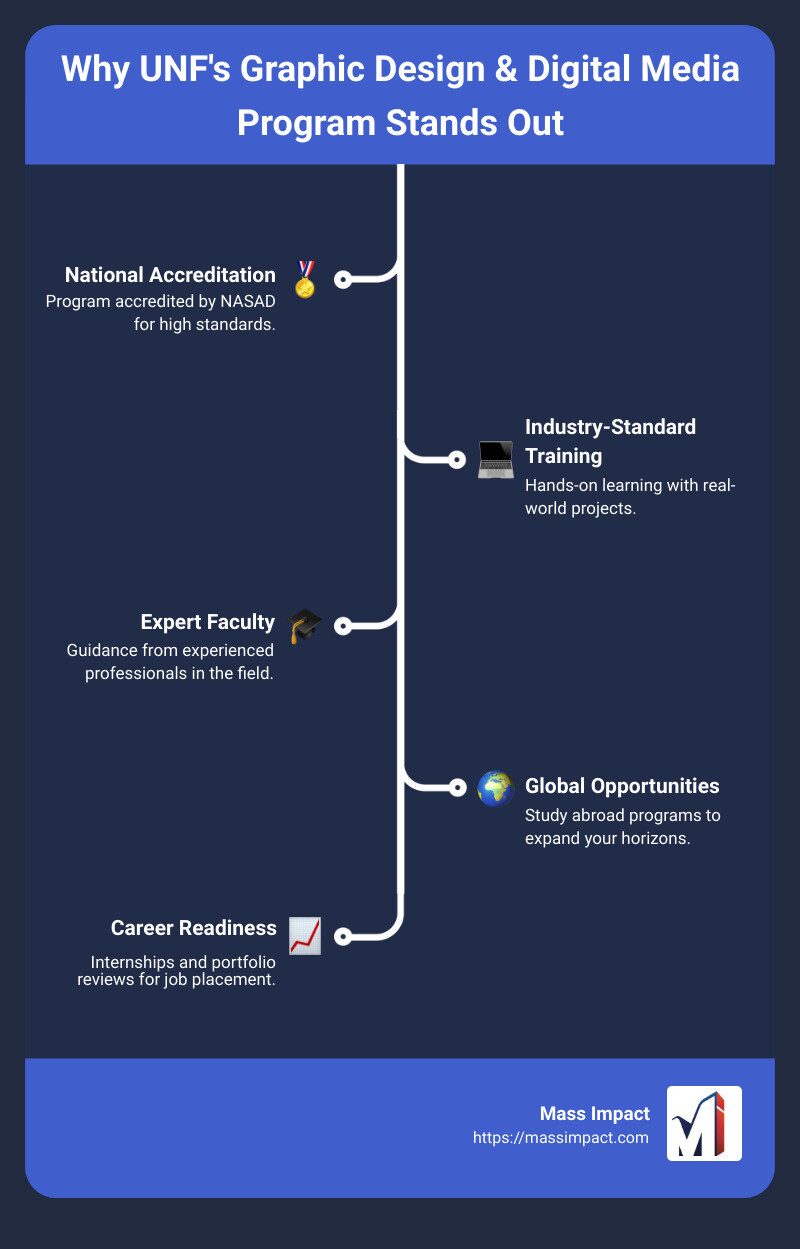
Stay tuned to explore why UNF’s Graphic Design & Digital Media program stands out.
Why Choose UNF for Graphic Design?
NASAD Accreditation
The University of North Florida’s Graphic Design & Digital Media program is accredited by the National Association of Schools of Art and Design (NASAD). This prestigious accreditation signals excellence in faculty, programs, and curriculum. It means the program meets high standards, ensuring you receive a top-notch education.
Faculty Expertise
UNF’s faculty are not just educators; they are practicing professionals in various design specializations. From web design and product design to animation and corporate branding, the faculty bring real-world experience to the classroom. They regularly present and publish their work, both nationally and internationally.
Our faculty’s expertise and active engagement in the industry provide students with invaluable insights and mentorship,” says Jenny K. Hager, MFA, a faculty member at UNF.
Hands-On Learning
The program emphasizes practical, hands-on learning. Students work on real-world design projects for local businesses and participate in internships at area design agencies. This approach ensures you gain practical experience and build a professional portfolio before graduation.

Industry Connections
Being located in Jacksonville, Florida, UNF leverages its vibrant arts community and numerous exhibition venues. The program has strong ties with local cultural institutions like MOCA Jacksonville and the Cummer Museum of Art and Gardens. These connections provide students with opportunities for exhibitions, internships, and networking with industry professionals.
Study Abroad Opportunities
UNF offers study abroad programs that allow students to explore design in global contexts. These programs broaden your understanding of design principles and practices, making you a more versatile designer. Imagine studying corporate branding in Japan or animation techniques in France!
Conclusion
Choosing UNF for Graphic Design means joining a program that combines rigorous academic standards with practical, real-world experience. With NASAD accreditation, experienced faculty, hands-on learning, strong industry connections, and exciting study abroad opportunities, UNF prepares you to excel in the dynamic field of graphic design.
Stay tuned to learn about the program structure and curriculum in our next section.
Program Structure and Curriculum
Prerequisites
Before diving into the core of UNF’s Graphic Design & Digital Media program, you need to complete a few essential prerequisites. These courses lay the foundation for your future studies:
- Drawing: Develop basic drawing skills to visually communicate ideas.
- Two-Dimensional Design: Learn the fundamentals of 2D design, including composition and color theory.
- Digital Imaging Methods: Gain proficiency in digital tools and techniques for creating and manipulating images.
- Art History Survey: Understand the historical context and evolution of art and design.
Core Requirements
Once you’ve completed the prerequisites, you’ll move on to the core requirements. These courses are designed to deepen your understanding of graphic design principles and practices:
- Art History Survey II: Continue exploring art history, focusing on movements and developments that influence modern design.
- Graphic Design Process: Learn the step-by-step process of creating effective graphic designs, from concept to execution.
- Creativity and Critique: Improve your creative thinking and learn how to critique your work and others’ constructively.
- Graphic Design History: Study the history of graphic design, understanding key movements, designers, and their impact on the field.
Major Requirements
The major requirements are the heart of the program. These courses cover advanced topics and specialized skills in graphic design:
- User Interface Design: Learn to create intuitive and engaging interfaces for websites and apps.
- Graphic Symbols: Study the creation and use of symbols in visual communication.
- Type Communication: Master the art of typography and its role in effective design.
- Visual Identity: Develop skills in creating cohesive visual identities for brands.
- Time-Based Media: Explore motion graphics and animation techniques.
- Visual Systems: Understand the design of complex visual systems and information architecture.
- Professional Practices: Prepare for a professional career with insights into industry standards and practices.
- Graphic Design Portfolio: Create a comprehensive portfolio showcasing your best work, a crucial tool for job applications.
Electives and Free Electives
In addition to the required courses, you’ll have the opportunity to choose from various electives to tailor your education to your interests and career goals. These can include:
- Upper-Level Courses: Advanced courses in specialized areas of graphic design.
- Free Electives: Courses outside the graphic design program to broaden your skills and knowledge.
Portfolio Review Process
A key component of the graphic design UNF program is the portfolio review process. This involves presenting your work to faculty and peers for feedback, helping you refine your skills and prepare for a successful career. Your portfolio will be a collection of your best projects, demonstrating your creativity, technical proficiency, and design thinking.
By following this structured curriculum, you’ll gain a solid foundation in graphic design principles, advanced skills in various design disciplines, and a professional portfolio that showcases your talents. This comprehensive approach ensures you’re well-prepared for a dynamic and rewarding career in graphic design.
Unique Learning Opportunities
Internships and Community Engagement
Internships are a key part of the graphic design UNF program. Students can gain hands-on experience by working with local businesses and design agencies. Some notable places for internships include:
- MOCA Jacksonville
- Cummer Museum of Art and Gardens
- Various graphic design firms
- Photography studios
- Area hospitals with art therapy programs
These internships provide real-world experience, helping students build their professional networks and improve their resumes.
Community engagement is also emphasized. Students can participate in projects that benefit the local community, such as the “Empty Bowls” initiative, which combines art with social impact. This hands-on approach not only hones students’ skills but also fosters a sense of social responsibility.
Exhibitions and Portfolio Development
Student exhibitions are an integral part of the program. The Department maintains a regular exhibition schedule at:
- UNF Gallery at MOCA
- Lufrano Gallery in the Student Union
- UNF Gallery
These exhibitions give students the chance to showcase their work to the public, receive feedback, and learn how to present their art professionally.
Portfolio building is another crucial element. Throughout the program, students are guided on how to compile a professional portfolio. This includes:
- Practical projects: Real-world assignments that demonstrate creativity and technical skills.
- Professional practices: Courses that teach students how to market themselves, network, and prepare for job interviews.
By the end of the program, students will have a polished portfolio that highlights their best work and prepares them for a successful career in graphic design.
Study abroad programs offer another unique learning opportunity. For instance, the annual six-week study abroad program in Italy allows students to study art history and studio courses while experiencing Western civilization’s masterpieces firsthand. This immersive experience broadens their artistic perspectives and enriches their educational journey.
These unique learning opportunities ensure that students in the graphic design UNF program are well-rounded, industry-ready professionals.
Career Prospects and Alumni Success
Career Options
Graduates of the Graphic Design and Digital Media program at UNF have a wide array of career options. The skills learned in this program open doors to roles in:
- Web Design: Creating visually appealing and user-friendly websites.
- Advertising: Developing compelling ads that capture attention.
- Corporate Identity: Crafting logos and branding materials for businesses.
- Motion Graphics: Designing animated visuals for various media.
- Publication Design: Laying out and designing magazines, books, and other printed materials.
These career paths leverage the comprehensive training in design principles, software proficiency, and critical thinking that the program provides.
Alumni Success Stories
UNF alumni have made significant strides in the graphic design industry. Many graduates have landed impressive roles, showcasing the effectiveness of the program.
One notable example is a group of alumni who joined the Jaguars Design/Marketing team. Their work in sports branding and marketing demonstrates the program’s ability to prepare students for high-profile positions.
Internship placements have also been a strong point. Students often secure internships at prestigious firms and organizations like MOCA Jacksonville and the Cummer Museum of Art and Gardens. These internships provide real-world experience and valuable industry connections.
Alumni achievements include:
- High-profile projects: Working on national advertising campaigns.
- Entrepreneurship: Starting successful design firms.
- Industry recognition: Winning awards for innovative design solutions.
These successes highlight the program’s emphasis on practical skills and professional readiness. UNF graduates are not just prepared for the job market; they are equipped to excel and lead in their chosen fields.
Frequently Asked Questions about Graphic Design at UNF
Does UNF have a graphic design program?
Yes, UNF offers a Graphic Design & Digital Media program. It’s a Bachelor of Fine Arts (BFA) degree and is NASAD accredited. This means the program meets high standards in art and design education. Students learn to create effective design solutions for a global culture and economy.
Is graphic design hard?
Graphic design can be challenging but also very rewarding. It requires creative thinking and dedication. You need to learn various tools and apply design principles. The program at UNF helps students develop these skills through:
- Learning tools: Industry-standard software and hardware.
- Applying principles: Understanding design theories, processes, and techniques.
What does a graphic designer do?
A graphic designer combines art and technology to communicate ideas. They use design elements like typography, color, and imagery to create visual content. This can include:
- Web design
- Advertising
- Corporate identity
- Motion graphics
- Publication design
Graphic designers at UNF learn to create visual solutions that are both functional and aesthetically pleasing. They work on projects that help businesses and organizations convey their message effectively.
Next, let’s dive into the specifics of the program’s structure and curriculum.
Conclusion
At Mass Impact, we understand the power of digital marketing expertise and creative solutions in today’s competitive landscape. Our goal is to help businesses open up their full potential by leveraging innovative strategies that resonate with their unique needs.
A strong online presence is crucial for any business aiming to stand out. Our team focuses on comprehensive SEO strategies, user-friendly web designs, and captivating content to ensure your brand is not just visible, but memorable. We use sophisticated analytics tools to fine-tune our strategies, ensuring your marketing messages are personalized and impactful.
Whether you’re looking to improve your brand identity or boost your online engagement, Mass Impact has the tools and expertise to help you achieve your business goals. Let’s create something amazing together!
Find out how Mass Impact can help you achieve your business goals.