
Why Local SEO Matters for Florida Businesses
If you’re looking to improve your business’s online presence in Florida, florida local seo is the key. Here’s a quick answer for the essentials:
- Improve visibility in local searches to attract more customers.
- Improve online presence by optimizing your website and Google Business Profile.
- Drive targeted traffic from local searches to convert more leads.
In Florida’s busy and competitive marketplace, having a strong online presence is not just an option; it’s a necessity. Digital marketing, especially focused on local SEO, can significantly boost your visibility on search engine results pages (SERPs), driving more potential customers to your doorstep—whether that’s a physical store or an online platform.
Here’s why this is important:
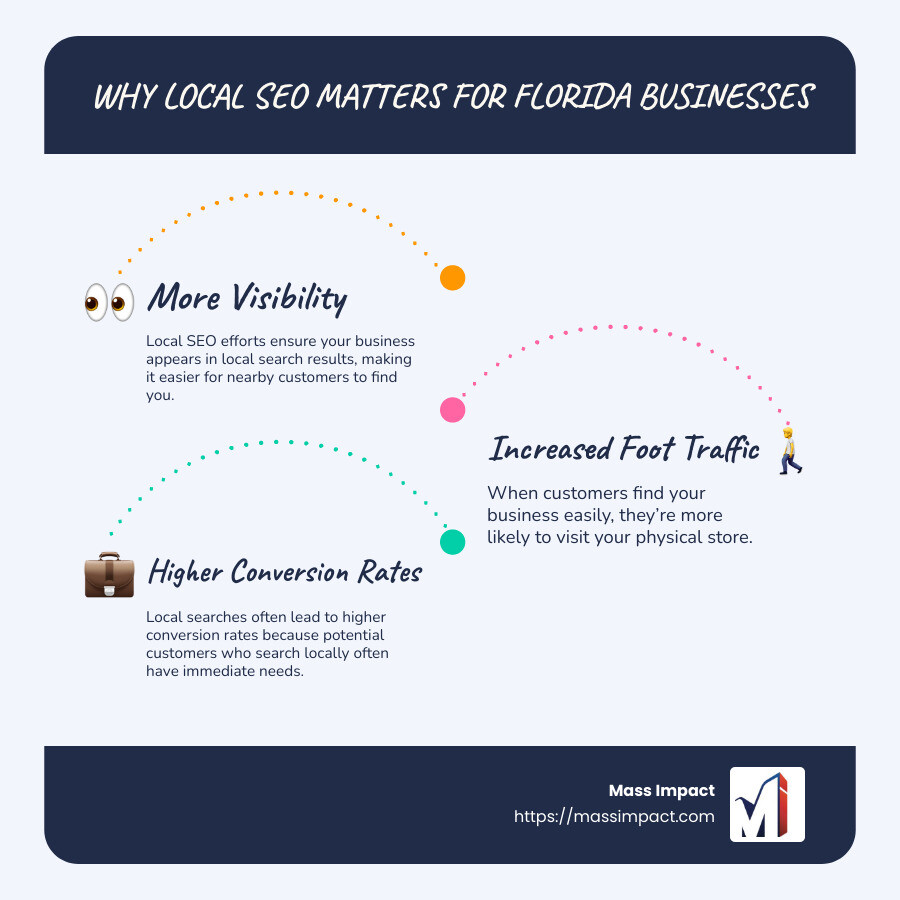
- More Visibility: Local SEO efforts ensure your business appears in local search results, making it easier for nearby customers to find you.
- Increased Foot Traffic: When customers find your business easily, they’re more likely to visit your physical store.
- Higher Conversion Rates: Local searches often lead to higher conversion rates because potential customers who search locally often have immediate needs.
I’m Haiko de Poel Jr, an expert in helping businesses steer the digital landscape. With years of experience in florida local seo, I’ve honed strategies that effectively improve online visibility and drive business growth.
Quick look at florida local seo:
– local SEO Jacksonville
– local seo companies near me
Understanding Local SEO
Local SEO is all about making your business visible to customers in your area. When someone searches for a service or product “near me” or in a specific city, local SEO helps your business show up. Here’s how it works:
What is Local SEO?
Local SEO focuses on optimizing your online presence to attract more business from relevant local searches. These searches take place on Google and other search engines. Over 50% of Google searches include local intent, like “pizza near me” or “dentist in Orlando.”
Why is Local SEO Important?
Local SEO is crucial because it connects your business with people who are looking for services or products in your area. Here are some key benefits:
- Improved Visibility: Local SEO ensures your business appears in local search results, making it easier for potential customers to find you.
- Boosted Foot Traffic: Optimizing for local searches can result in more visitors to your store.
- Improved Conversion Rates: Local searches tend to have higher intent, leading to qualified leads and improved conversion rates.
Google Maps and Google Business Profile
Two critical tools for local SEO are Google Maps and Google Business Profile.
Google Maps: Ranking high on Google Maps can significantly boost your visibility. When people search for local businesses, Google Maps listings often appear at the top of the search results.
Google Business Profile (GBP): This free tool lets you manage how your business appears on Google Search and Maps. An optimized GBP is essential for local SEO success.
Steps to Optimize Your Google Business Profile:
- Complete Your Profile: Ensure all business information, including name, address, phone number, website, and hours of operation, is accurate and up-to-date.
- Add High-Quality Photos: Upload high-resolution images of your business premises, products, and services to attract potential customers.
- Collect and Respond to Reviews: Encourage satisfied customers to leave positive reviews and respond promptly to feedback.
- Use Relevant Keywords: Incorporate local keywords and phrases in your business description to improve search visibility.
Local Searches and User Intent
Understanding what your potential customers are searching for is crucial. Local search intent refers to the purpose behind a search query, such as finding a nearby service or getting directions.
“Near Me” Searches: These are common and indicate a strong intent to visit or contact a business soon.
City-Specific Searches: People often include city names in their queries, like “plumber in Miami.” Make sure your content and keywords reflect this.
Facts and Statistics
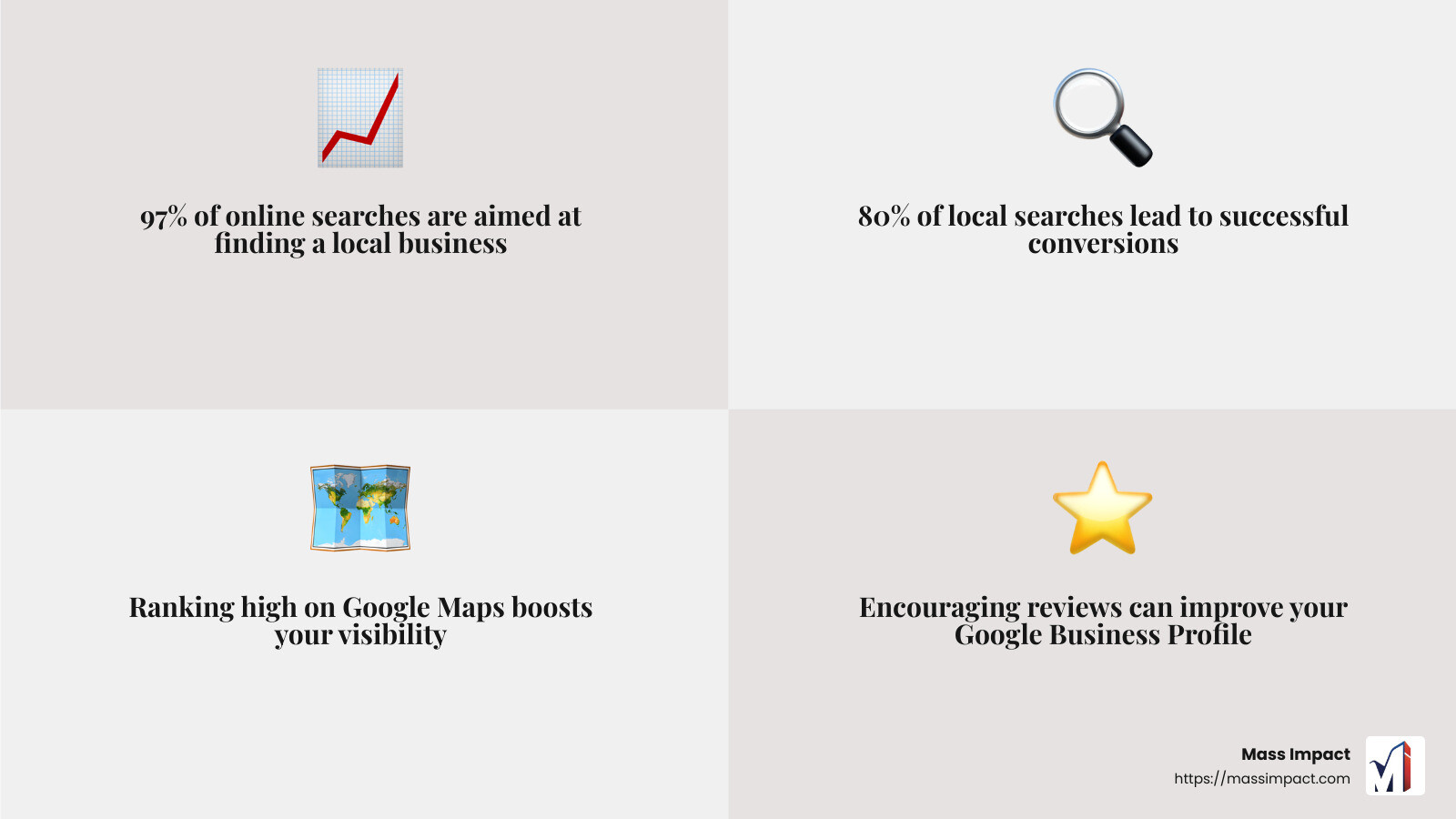
- According to SEO Tribunal, about 97% of online searches are based on a user’s goal to find a local business.
- A whopping 80% of local searches will result in successful conversions.
By focusing on local SEO, businesses can significantly improve their online presence and attract more local customers. This is especially important in a competitive market like Florida, where standing out can make all the difference.
Next, let’s dive into the key strategies for optimizing your local SEO efforts in Florida.
Key Strategies for Florida Local SEO
Optimize Your Google Business Profile
Your Google Business Profile (GBP) is a cornerstone of local SEO. An optimized GBP can significantly boost your visibility in local searches.
Steps to Optimize Your Google Business Profile:
- Complete Your Profile: Make sure all business information—name, address, phone number, website, and hours of operation—is accurate and up-to-date.
- Add High-Quality Photos: Upload high-resolution images of your business premises, products, and services. This attracts potential customers and gives them a better idea of what to expect.
- Collect and Respond to Reviews: Encourage satisfied customers to leave positive reviews and respond promptly to feedback. This not only boosts your credibility but also improves your local search ranking.
- Use Relevant Keywords: Incorporate local keywords and phrases in your business description to improve search visibility.
Leverage Local Keywords
Using local keywords is essential for improving your visibility in local searches.
How to Use Local Keywords:
- Conduct Keyword Research: Use tools like Google Keyword Planner or Ahrefs to identify local keywords relevant to your business.
- Integrate Keywords Naturally: Include local keywords in your website content, meta descriptions, headings, and image alt text. Make sure they fit naturally within the text.
- Create Location-Specific Pages: Develop dedicated pages for each location you serve. Use specific local keywords to target those areas effectively.
Optimize for Mobile
Many local searches are conducted on mobile devices. Ensuring your website is mobile-friendly is crucial for capturing local traffic.
Tips for Mobile Optimization:
- Responsive Design: Ensure your website adapts seamlessly to different screen sizes and devices.
- Fast Loading Speed: Optimize images and reduce unnecessary code to improve your site’s loading speed on mobile devices.
- Easy Navigation: Simplify navigation with clear menus and easily accessible contact information.
Create Local Content
Content that resonates with your local audience can significantly improve your local SEO efforts.
Ideas for Local Content:
- Write About Local Events: Cover local events, news, and activities that are relevant to your business and audience.
- Highlight Local Partnerships: Showcase collaborations with other local businesses or community organizations.
- Address Local Issues: Create content that provides solutions or insights into common local problems or needs.
Build Local Citations and Backlinks
Local citations are online mentions of your business’s name, address, and phone number (NAP) across various platforms. Backlinks from reputable local websites can also boost your local SEO.
Strategies for Building Citations and Backlinks:
- List Your Business in Online Directories: Ensure your business is listed in local directories such as Yelp, Yellow Pages, and industry-specific directories.
- Collaborate with Local Influencers: Partner with local bloggers, influencers, and news outlets to gain backlinks and mentions.
- Engage in Community Events: Participate in local events and sponsorships to build relationships and acquire backlinks from local websites.
By implementing these Florida local SEO strategies, you can significantly improve your online presence and attract more local customers.
Next, let’s explore the technical aspects of local SEO optimization.
Technical SEO for Local Optimization
Technical SEO ensures that your website is easy for search engines to crawl, index, and understand. This is crucial for improving your local search rankings in Florida. Let’s explore some key aspects of technical SEO for local optimization.
Website Performance
Your website’s performance is critical for both user experience and search engine rankings. A slow-loading site can frustrate visitors and cause them to leave, increasing your bounce rate.
Tips to Improve Website Performance:
- Optimize Images: Compress images to reduce their size without sacrificing quality.
- Minimize HTTP Requests: Reduce the number of elements on a page to speed up loading times.
- Enable Browser Caching: Store static files in the user’s browser to avoid reloading them.
Tools to Use:
- Google PageSpeed Insights: Evaluate your site’s speed and get recommendations for improvement.
- Semrush Site Audit: Identify and fix performance issues regularly.
Local Schema Markup
Local schema markup helps search engines understand your business’s location and services. It can improve your visibility in local search results.
How to Implement Local Schema Markup:
- Use JSON-LD Format: This is the most recommended format by Google.
- Include NAP Information: Ensure your business name, address, and phone number are included in the markup.
- Add Opening Hours: Include your business hours to provide more information to search engines.
Example of Local Schema Markup:
json

{

  "@context": "https://schema.org",

  "@type": "LocalBusiness",

  "name": "Your Business Name",

  "address": {

    "@type": "PostalAddress",

    "streetAddress": "123 Main Street",

    "addressLocality": "Orlando",

    "addressRegion": "FL",

    "postalCode": "32801"

  },

  "telephone": "+14075550123",

  "openingHours": "Mo,Tu,We,Th,Fr 09:00-18:00"

}
NAP Information
Consistency in your NAP (Name, Address, Phone number) information across all online platforms is crucial for local SEO.
Ensure NAP Consistency:
- On Your Website: Display your NAP information prominently, preferably in the footer.
- Across Directories: Make sure your NAP details are consistent in all online directories and listings.
- On Social Media: Update your NAP information on all social media profiles.