Search Engine Marketing: Top 3 Powerful Positive Tips 2024
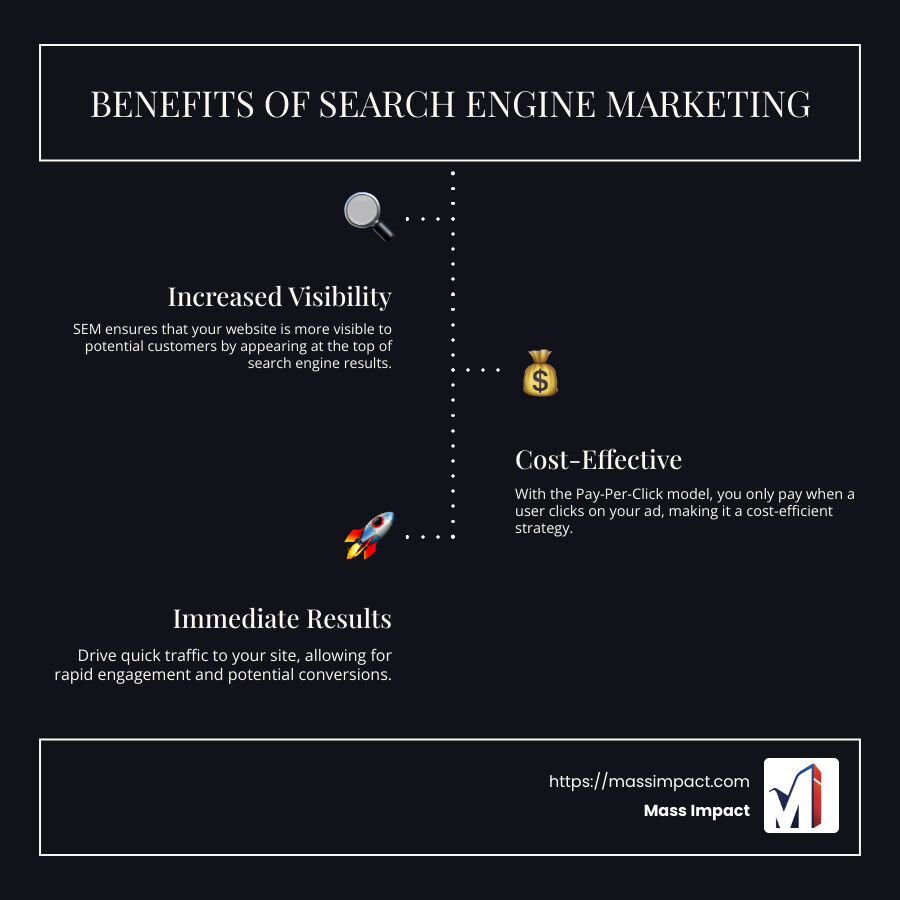
Search engine marketing is a vital tool for businesses striving to boost their online visibility. In the world of digital marketing, standing out can be challenging. Here’s what you need to know about search engine marketing at a glance:
- Purpose: Increases visibility of your website on search engines.
- Method: Uses paid advertisements to appear in search engine results.
- Efficiency: Only incurs costs when ads are clicked, making it cost-effective.
- Impact: Quickly drives traffic to your site for immediate results.
I’m Haiko de Poel Jr, a Fractional Chief Marketing Officer with expertise in digital marketing strategies, including search engine marketing. My approach blends creativity with strategic insight, steering brands through the digital landscape. Next, I’ll guide you on how SEM can bring your business immense visibility and success.
Search engine marketing vocab to learn:
– pay per click advertising
– pay per click marketing
– ppc management services
What is Search Engine Marketing?
Search engine marketing (SEM) is a powerful digital marketing strategy that focuses on increasing a website’s visibility in search engine results pages (SERPs). Unlike traditional advertising methods, SEM specifically targets users who are actively searching for information, products, or services online.
SEM: The Basics
At its core, SEM involves using paid search strategies to promote websites. This typically includes pay-per-click (PPC) advertising, where businesses pay a fee each time someone clicks on their ad. These ads appear prominently on search engines like Google, Bing, and Yahoo, often at the top or bottom of search results.
Understanding Paid Search
Paid search is a key component of search engine marketing. It allows businesses to bid on specific keywords that potential customers might use when searching for related products or services. This bidding process takes place in an ad auction, where search engines determine the relevance and placement of ads based on factors like bid amount and ad quality.
How PPC Works
Here’s a simple breakdown of the PPC model:
- Keyword Selection: Businesses choose relevant keywords they want to target.
- Ad Creation: Compelling ad copy is written to attract clicks.
- Bidding: A bid amount is set for each keyword, determining how much the advertiser is willing to pay per click.
- Ad Auction: Search engines use an auction system to decide which ads to display and in what order, based on factors like bid amount and ad quality.
- Cost: Advertisers pay only when someone clicks on their ad.
The Role of Search Engines
Search engines like Google and Bing play a crucial role in search engine marketing. They provide the platforms where these ads are displayed and use complex algorithms to ensure that the most relevant ads appear to users. This means that businesses can reach a highly targeted audience, often leading to higher conversion rates.
In summary, search engine marketing is a strategic approach to digital advertising that leverages paid search to increase visibility and drive traffic to your website. By understanding the fundamentals of PPC and how search engines operate, businesses can effectively use SEM to achieve their marketing goals.
Importance of SEM
Search engine marketing (SEM) is essential in today’s digital world. It helps businesses expand their online reach and connect with potential customers at the exact moment they’re searching for products or services. This targeted approach means that SEM can be more effective than other forms of digital marketing.
Expanding Online Reach
With more than 70% of shoppers using their phones for online purchases, it’s crucial for businesses to be visible where these searches happen. SEM ensures that your business appears prominently on search engine results pages, increasing the chances of being seen by those looking for what you offer.
Understanding Consumer Behavior
Consumers today are more informed and deliberate in their purchasing decisions. They conduct thorough research online before making a purchase. With SEM, businesses can target consumers who are already in the mindset to buy, which often results in higher conversion rates. By strategically placing ads, businesses can reach consumers when they are most open to making purchasing decisions.
A Strategic Marketing Approach
SEM is a strategic tool that aligns with the overall marketing strategy of a business. It offers immediate results, unlike SEO, which can take time to build momentum. This speed is especially beneficial for new businesses or those running time-sensitive promotions. The PPC model also allows businesses to control their budget and spending effectively, ensuring cost-effectiveness.
Furthermore, SEM provides measurable results through tools like Google Analytics. This allows businesses to track performance, analyze consumer behavior, and make data-driven decisions to optimize their campaigns.
Search engine marketing is not just about visibility; it’s about strategically reaching the right audience at the right time. By understanding consumer behavior and leveraging the power of SEM, businesses can significantly improve their online presence and drive growth.
How SEM Works
Search engine marketing (SEM) is a powerful way to boost your online presence. It involves several key components that work together to make your ads stand out and attract the right audience.
Keyword Research
The foundation of any successful SEM campaign is keyword research. It involves finding the words or phrases your potential customers use when searching for products or services like yours. Tools like Google Ads Keyword Planner and Semrush can help you identify these keywords. Start with broad terms related to your business, then narrow down to more specific phrases, known as long-tail keywords. These are often less competitive and can lead to higher conversion rates.
Ad Auctions
Once you’ve identified your keywords, it’s time to enter the ad auction. On platforms like Google Ads, every ad goes through an auction before it appears on the search results page. But it’s not just about who pays the most. Google considers two main factors: your bid amount and your ad’s Quality Score. A higher Quality Score, which reflects the relevance and quality of your ad and landing page, can help you win a better ad position even with a lower bid.
The PPC Model
The pay-per-click (PPC) model is central to SEM. In this model, you pay each time someone clicks on your ad. This ensures you’re only spending money when there’s potential interest in your offer. The PPC model allows for budget control, letting you set a maximum bid for each keyword. This way, you can manage your spending and focus on the most profitable keywords.
Ad Networks
There are several ad networks where you can run your SEM campaigns, with Google Ads being the most popular. But don’t overlook other platforms like Bing Ads or social media networks that also offer paid advertising opportunities. Each network has its unique audience and benefits, so consider where your potential customers are most likely to be searching.
In summary, search engine marketing combines thoughtful keyword research, strategic bidding in ad auctions, and the efficient use of the PPC model across various ad networks. These elements work together to ensure your ads are seen by the right people at the right time, maximizing your online visibility and driving targeted traffic to your site.
Creating an Effective SEM Strategy
Creating a successful search engine marketing (SEM) strategy involves several key steps. Let’s break it down into manageable parts: keyword analysis, ad copy, landing pages, bid strategy, and budget allocation.
Keyword Analysis
The first step is to perform thorough keyword analysis. This means identifying the terms your potential customers are searching for. Use tools like Google Keyword Planner to find keywords with high search volume and low competition. Keywords with high search volumes can be competitive, but they offer visibility. On the other hand, lower-volume keywords might attract highly motivated buyers.
Ad Copy
Next, focus on crafting compelling ad copy. Your ad should be clear and engaging. It consists of four main parts: the headline, display URL, description, and ad assets.
- Headline: This is the first thing users see. Use simple language, include keywords naturally, and keep it under 30 characters.
- Display URL: Make it relevant to the ad, giving users an idea of where they’ll land.
- Description: Write persuasive descriptions with a call to action, like “shop now” or “learn more.”
- Ad Assets: These are optional but can include call buttons or location info to improve your ad.
Landing Pages
Every ad should lead to a well-designed landing page. This page needs to be fast, user-friendly, and relevant to the ad. Use A/B testing to try different layouts or messages to see what works best. The goal is to keep improving your conversion rates by optimizing both the copy and visuals.
Bid Strategy
A smart bid strategy is crucial to SEM success. Decide how much you’re willing to pay for each click. Consider the “CPC” (cost-per-click) for each keyword to set a competitive bid without overspending. A higher Quality Score can help you secure better ad positions even with lower bids.
Budget Allocation
Finally, allocate your budget wisely. Determine how much you’re willing to spend overall and set a maximum bid for each keyword. This helps you control costs and ensures you’re investing in the most promising opportunities. Regular monitoring is essential to adjust your budget and bids based on performance.
By carefully analyzing keywords, crafting effective ad copy, optimizing landing pages, and managing bids and budgets, you can create a winning SEM strategy. This approach ensures your ads reach the right audience, driving more traffic and conversions.
Frequently Asked Questions about Search Engine Marketing
What is the difference between SEM and SEO?
Search Engine Marketing (SEM) and Search Engine Optimization (SEO) are two sides of the same coin, both aiming to boost a website’s visibility on search engines. However, they take different routes to achieve this goal.
-
SEM involves paid advertising to appear at the top of search results. It’s like buying a fast pass to the front of the line. You pay for visibility, which can bring immediate results. Think of it as renting a billboard on a busy highway.
-
SEO, on the other hand, focuses on organic search results. This means optimizing your website to rank higher naturally over time. It’s a slower process but doesn’t require paying for each click. It’s like planting a tree that grows and bears fruit over the long term.
Both strategies are essential for a well-rounded digital marketing plan, but they serve different purposes and timelines.
How does SEM benefit businesses?
Search Engine Marketing offers several advantages for businesses looking to boost their online presence:
-
Immediate Results: With SEM, your ads can appear right away, placing your products or services in front of potential customers quickly. This is perfect for time-sensitive promotions or new product launches.
-
High Conversion Rates: SEM targets users who are actively searching for specific keywords. This means they’re more likely to be interested in what you’re offering, leading to higher conversion rates.
-
Cost-Effectiveness: The PPC model ensures you only pay when someone clicks on your ad. This allows businesses to control their spending and focus on the most profitable keywords.
What are examples of SEM platforms?
There are several platforms available for businesses to run their search engine marketing campaigns:
-
Google Ads: The most popular platform, Google Ads allows businesses to create ads that appear in Google search results and across the Google Display Network. It’s known for its broad reach and powerful targeting options.
-
Bing Ads: Although not as widely used as Google Ads, Bing Ads can be a valuable platform, especially for reaching specific demographics. It allows ads to appear on Bing, Yahoo, and associated networks.
-
Ad Networks: Beyond Google and Bing, there are various ad networks that offer SEM opportunities. These networks can place your ads on a wide range of websites, expanding your reach beyond traditional search engines.
By understanding the differences between SEM and SEO, recognizing the benefits of SEM, and knowing the platforms available, businesses can make informed decisions to improve their online visibility and drive growth.
Conclusion
At Mass Impact, we believe digital marketing is more than just a series of tactics; it’s a strategic approach that brings real-world results. Our expertise in search engine marketing (SEM) is designed to help businesses like yours stand out in the crowded digital landscape.
Why Choose Mass Impact for SEM?
Our team in Jacksonville, Florida, is dedicated to crafting SEM strategies that not only increase your online visibility but also optimize your marketing budget. We understand that effective SEM requires a balance of creativity and technical know-how. That’s why we focus on:
-
Keyword Mastery: We identify the most profitable keywords to drive targeted traffic to your site. Our approach ensures that your ads reach the right audience at the right time.
-
Compelling Ad Copy: Our experienced team creates ads that engage and convert. We know how to capture attention and inspire action, leading to higher conversion rates.
-
Data-Driven Decisions: Using tools like Google Analytics, we provide deep insights into your SEM campaigns. This allows us to continually refine and improve your strategy for maximum impact.
By leveraging our expertise, we help businesses achieve a strong online presence and drive growth through effective SEM.
Ready to boost your online visibility with Mass Impact? Find how our custom digital marketing solutions can set your business apart. Let’s work together to create something amazing!