Why Pay-Per-Click Advertising Services Matter
Pay-per-click advertising services can be a game-changer for any business wanting to boost their online presence quickly. Many digital marketing strategies take time to show results, but PPC offers immediate visibility and traffic. Whether you’re a small business or an established company, pay-per-click advertising services can make your brand stand out in search engines and on social media.
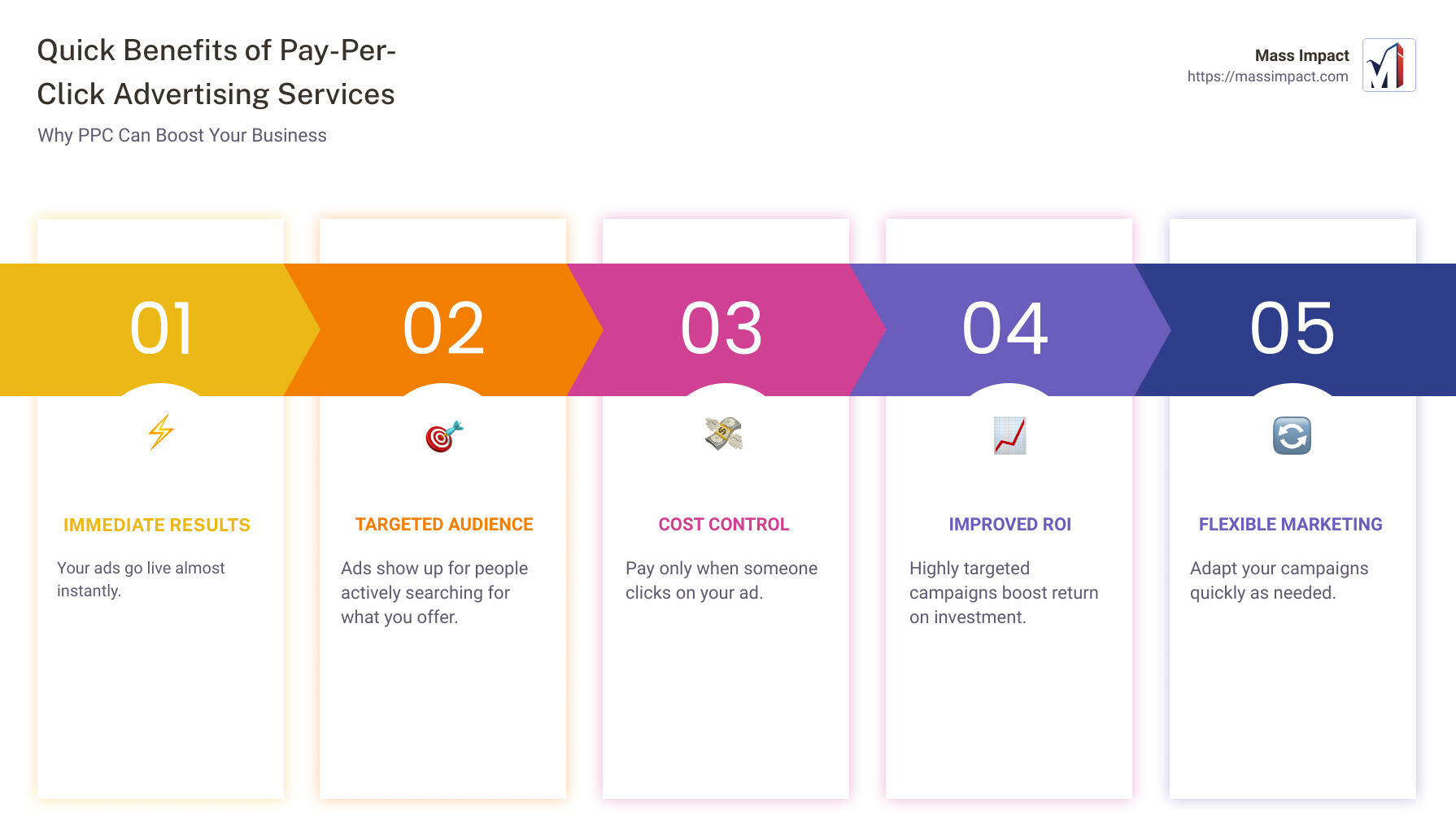
Quick Benefits of Pay-Per-Click Advertising Services:
- Immediate Results: Your ads go live almost instantly.
- Targeted Audience: Ads show up for people actively searching for what you offer.
- Cost Control: Pay only when someone clicks on your ad.
- Improved ROI: Highly targeted campaigns boost return on investment.
Pay-per-click advertising services ensure you reach the right people at the right time. Unlike SEO, which can take months to yield results, PPC offers a faster, more flexible way to achieve your marketing goals.
My name is Haiko de Poel Jr, and with years of experience in digital marketing, I’ve seen how effective pay-per-click advertising services can drive growth and visibility. Stay tuned as we dive deeper into how these services can work for you.
What is Pay-Per-Click Advertising?
Pay-per-click (PPC) advertising is a form of online marketing where advertisers pay a fee each time their ad is clicked. Essentially, it’s a way of buying visits to your site rather than attempting to “earn” those visits organically.
How Does PPC Work?
In PPC advertising, businesses bid on specific keywords relevant to their products or services. When users search for these keywords, the ads appear at the top or bottom of search engine results pages (SERPs) or on social networks. The advertiser is charged a fee whenever someone clicks on their ad, hence the term cost-per-click (CPC).
Key Platforms for PPC Advertising
PPC ads can be displayed on various platforms, including:
- Search Engines: Google Ads and Microsoft Advertising are the most common. These platforms allow businesses to display ads on search results pages.
- Social Networks: Sites like Facebook, Instagram, LinkedIn, and Twitter offer PPC options. These ads can target users based on demographics, interests, and behaviors.
The Benefits of PPC
- Immediate Results: Unlike SEO, which can take months to show results, PPC ads start driving traffic as soon as they go live.
- Targeted Audience: PPC allows for precise targeting. Ads can be shown to users based on their search queries, online behavior, and demographic information.
- Measurable ROI: PPC campaigns are highly trackable. You can see exactly which ads are driving clicks and conversions, allowing for data-driven decisions.
Types of PPC Ads
There are various types of PPC ads to consider:
- Search Ads: These appear on search engine results pages.
- Display Ads: These are banner ads that appear on various websites.
- Social Media Ads: These ads appear on social networking sites.
- Shopping Ads: These are product-based ads that appear in search results.
- Remarketing Ads: These target users who have previously visited your site but did not convert.
Real-World Impact
A Hanapin Marketing report shows that 79 percent of marketers find paid search marketing beneficial to their business. Moreover, approximately 62 percent of industry players plan to increase their PPC ads budget to attract more customers.
In 2017 alone, more than 7 million advertisers spent a total of $10.01 billion on PPC ads, according to Social Media Today. This highlights the growing importance and effectiveness of PPC in the digital marketing landscape.
By investing in pay-per-click advertising services, you can ensure that your brand reaches the right audience at the right time, driving immediate traffic and potential sales.
Next, we’ll explore the various benefits of PPC advertising services and how they can help your business grow.
Benefits of Pay-Per-Click Advertising Services
Investing in pay-per-click advertising services can provide numerous benefits for your business. Let’s explore some of the key advantages:
Immediate Traffic
One of the biggest advantages of PPC is the ability to drive immediate traffic to your website. Unlike SEO, which can take months to show results, PPC ads start working as soon as your campaign is live. According to WordStream, 41% of clicks go to the top three paid ads on the search results page. This means your business can quickly gain visibility and attract potential customers.
Quality Leads
PPC ads are highly targeted, ensuring that your ads are shown to people who are actively searching for your products or services. This translates into quality leads. In fact, paid search visitors are 50% more likely to purchase something than visitors who arrive at your site organically. This targeted approach helps you reach the right audience at the right time.
Increased Sales
Effective PPC campaigns can significantly boost your sales. For instance, companies that use video ads in their marketing grow revenue 49% faster year-over-year than those which don’t. Additionally, one home service company saw a 1,214% return on ad spend by investing in PPC services. These figures demonstrate the potential for substantial revenue growth.
Improved Brand Visibility
PPC ads not only drive traffic and sales but also improve your brand visibility. When your ads appear at the top of search results, they increase brand awareness and credibility. Even if users don’t click on your ad, seeing your brand repeatedly can make them more likely to remember and trust you in the future.
Cost-Effective Investment
PPC is a cost-effective advertising strategy. Unlike traditional advertising methods, you only pay when someone clicks on your ad. Google reports that businesses make an average of $2 in income for every $1 they spend on ads. This makes PPC a highly efficient way to allocate your marketing budget.
Optimization and Tracking
One of the standout features of PPC is the ability to optimize and track your campaigns in real-time. You can easily monitor performance metrics such as clicks, conversions, and cost per acquisition. This allows you to make data-driven decisions and fine-tune your campaigns for better results. A/B testing, for example, helps you identify which ad elements are performing best, enabling continuous improvement.
By leveraging these benefits, your business can achieve greater online visibility, attract more leads, and ultimately drive more sales. Up next, we’ll dive into the costs associated with pay-per-click ads and how to manage your budget effectively.
How Much Do Pay-Per-Click Ads Cost?
When it comes to pay-per-click advertising services, understanding the cost structure is crucial. Costs can vary based on several factors, including the cost per click (CPC), monthly spend, impressions, budget, and competitive keywords.
Cost Per Click (CPC)
CPC is the amount you pay each time someone clicks on your ad. The cost can range from as low as $1 to over $30 per click, depending on the industry. For example, the legal industry can see CPCs as high as $8.67, while real estate might be around $1.36.
Monthly Spend
Your monthly spend will depend on your overall budget and the number of clicks you aim to achieve. On average, businesses might spend anywhere from $100 to $30,000 or more per month on PPC ads. It’s essential to set a realistic budget that aligns with your marketing goals.
Impressions
Impressions refer to how often your ad is shown, whether clicked or not. While impressions themselves don’t cost anything, they are a critical metric for understanding your ad’s visibility. Higher impressions can lead to more clicks, but they also depend on how competitive your keywords are.
Budget
Setting a budget is a balancing act. You need enough funds to compete effectively but also need to manage your costs. A good approach is to start with a smaller budget and gradually increase it as you see positive results. For instance, you might begin with $50 per day and adjust based on your campaign’s performance.
Competitive Keywords
Competitive keywords can significantly impact your costs. The more advertisers vying for the same keywords, the higher the CPC. It’s essential to conduct thorough keyword research to identify less competitive, yet highly relevant keywords for your business. This can help lower your CPC while still driving quality traffic.
By understanding these factors, you can better manage your pay-per-click advertising services and optimize your budget for maximum return on investment. Next, we’ll explore the different types of PPC advertising services available to help you choose the best fit for your business needs.
Types of PPC Advertising Services
When it comes to pay-per-click advertising services, there are several options to consider. Each type has unique benefits and can help you reach your marketing goals. Let’s dive into some of the most popular PPC advertising services.
Google Ads
Google Ads is one of the most widely used PPC platforms. It allows businesses to display ads on Google search results pages, YouTube, and other Google partner sites. Google Ads can help you target users based on their search queries, making it highly effective for reaching potential customers who are actively looking for your products or services.
Microsoft Advertising
Similar to Google Ads, Microsoft Advertising (formerly Bing Ads) allows you to place ads on Bing, Yahoo, and AOL search engines. This platform can be especially useful if you want to reach an audience that may not be as prevalent on Google. Microsoft Advertising often has lower competition, which can result in a lower cost per click (CPC).
Social Media Campaigns
Social media platforms like Facebook, Instagram, LinkedIn, and Twitter offer robust PPC advertising options. These platforms allow you to target users based on demographics, interests, and behaviors. Social media campaigns are excellent for increasing brand awareness and engaging with your audience in a more personal way.
Display Ads
Display ads are visual advertisements that appear on websites within the Google Display Network or other ad networks. These ads can include images, videos, or interactive elements. Display ads are great for reaching a broader audience and increasing brand visibility. They can be particularly effective for remarketing, as they remind users of your brand after they’ve visited your site.
Remarketing
Remarketing ads target users who have previously visited your website but did not convert. These ads can appear on various platforms, including Google Ads, social media, and other display networks. Remarketing is a powerful way to re-engage potential customers and encourage them to return to your site and complete a purchase.
Shopping Ads
Google Shopping ads and similar services on other platforms like Amazon are ideal for eCommerce businesses. These ads appear in a carousel format above or beside the main search results, showcasing your products along with prices and images. Shopping ads are highly effective for reaching customers with clear buying intent and can significantly boost your sales.
By understanding the different types of pay-per-click advertising servic