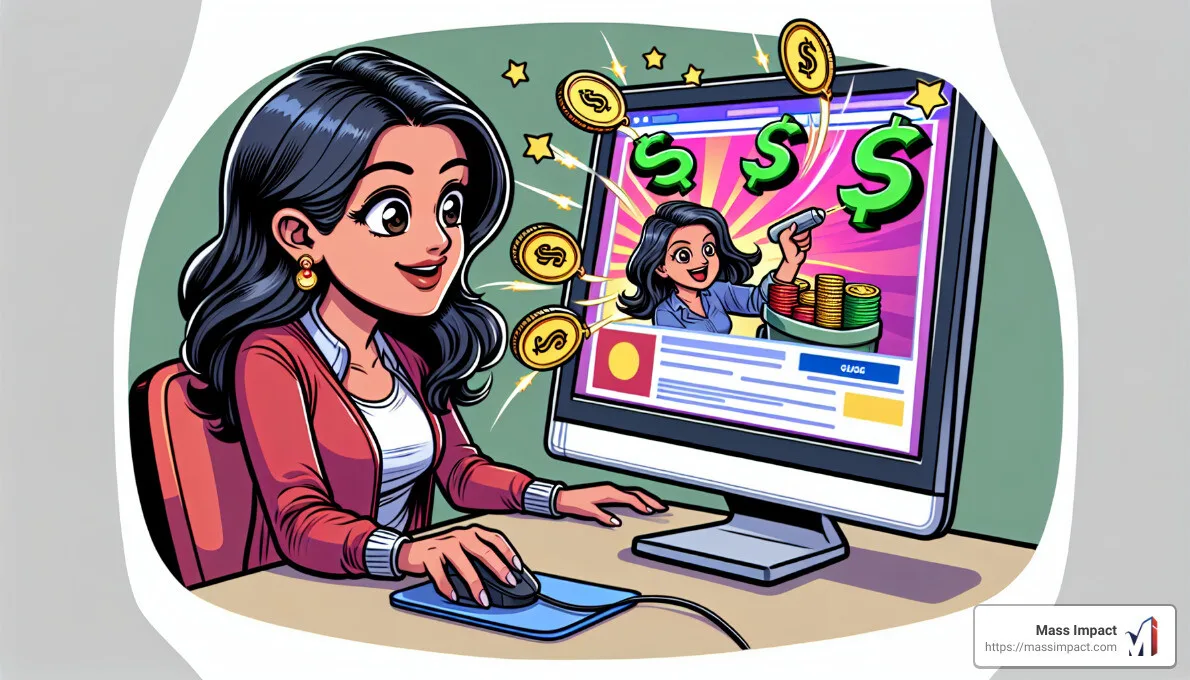
Pay-Per-Click (PPC) advertising is like a shortcut on the internet highway, directly leading potential customers to your business. At its core, PPC is a model where you, the advertiser, pay a fee each click your ad receives. It bridges the gap between your offering and users actively searching for it, or those who might be interested in what you’re selling.
- Quick Definition: Advertisers pay a fee each time their ad is clicked.
- Importance: Fast, targeted, and measurable way to bring traffic to your website.
The beauty of PPC lies in its ability to place your brand in front of the right eyes at the right time. Unlike traditional advertising, where messages are broadcasted to a broad audience, PPC allows for precise targeting. This not only maximizes the efficiency of your advertising dollars but also significantly boosts the likelihood of attracting genuine, interested visitors to your site.
PPC can be a game-changer, especially for businesses struggling to cut through the digital clutter. It’s about being seen by those who matter the most to your business, without the long wait that often comes with organic SEO strategies. When done right, PPC can offer a fast track to growth, making it an indispensable tool in your digital marketing toolbox.
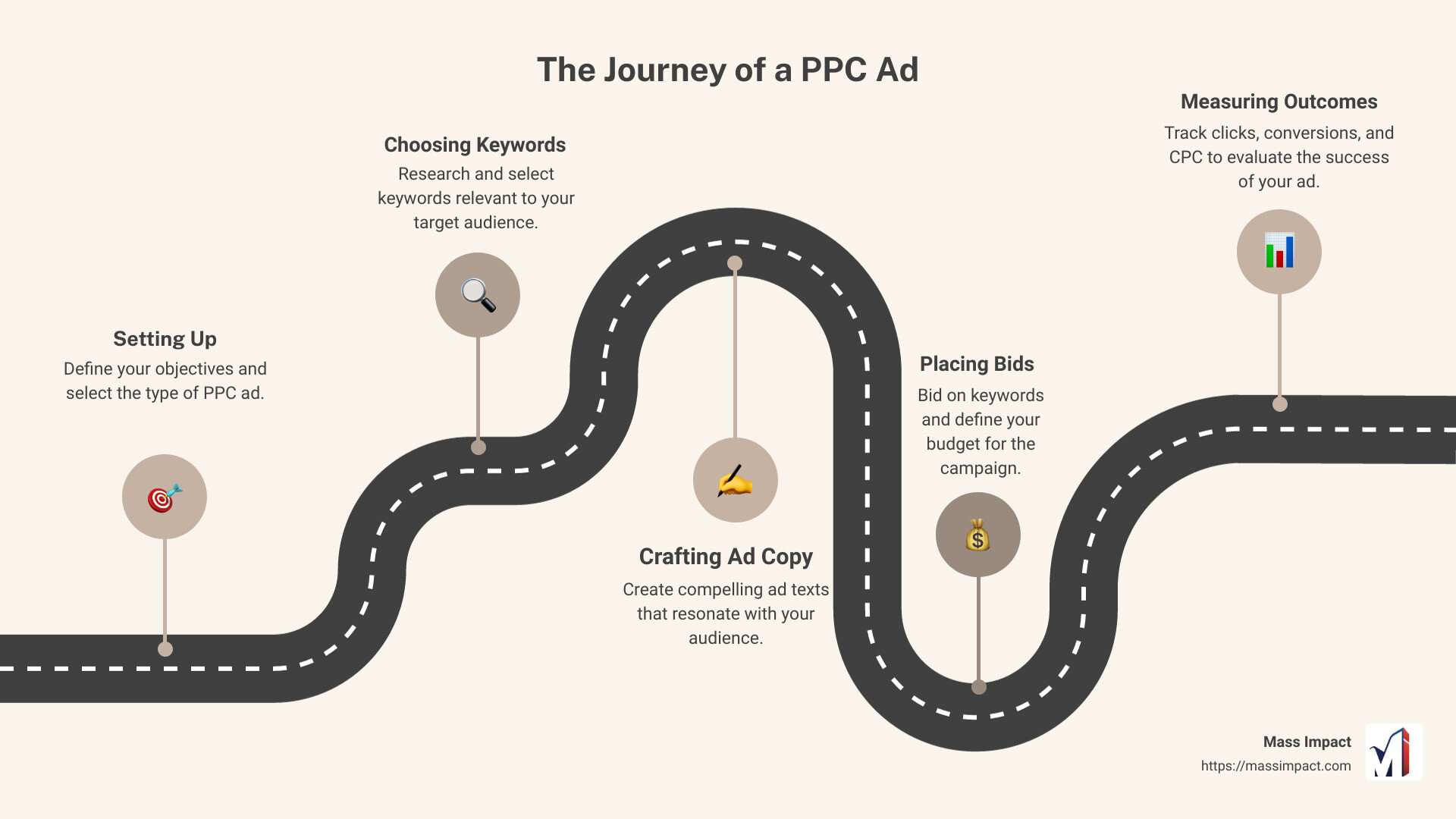
Understanding PPC Advertising
When we dive into pay per click advertising, we’re essentially talking about three big arenas where your ads can play: search engines, social media platforms, and display ads. Each of these arenas offers unique opportunities and requires specific strategies to make the most out of your PPC campaigns. Let’s break them down in simple terms.
Search Engines
Imagine you’re looking for a new bicycle online. You head to a search engine like Google and type in “best bicycles for city riding”. Instantly, you’re presented with ads at the top of your search results. These are PPC ads. Businesses bid on keywords like “city bicycles” to appear in these prime spots. The beauty of search engine ads is that they catch potential customers exactly when they’re searching for something related, making them highly effective.
- Key Fact: Google Ads is a powerhouse for PPC on search engines, offering extensive reach across Google’s search results and partner sites.
Social Media Platforms
Now, think about scrolling through your Facebook or Instagram feed. You come across an ad for a sleek, new city bicycle. That’s PPC at work on social media. Platforms like Facebook, Instagram, and LinkedIn allow businesses to target ads based on detailed demographics, interests, and even behaviors. This means your bicycle ad can specifically target people who’ve shown interest in cycling, city commuting, or outdoor activities.
- Interesting Statistic: Facebook has over 2.8 billion monthly active users, offering a vast audience for PPC campaigns.
Display Ads
Lastly, while reading your favorite blog on city living, a banner ad for a bicycle shop pops up. This is an example of a display ad, part of the Google Display Network or other advertising platforms. Display ads can appear on millions of websites across the internet, targeting users based on their previous online activity or the content of the site they’re currently viewing. These ads are great for building brand awareness and retargeting users who’ve visited your site before.
- Pro Tip: Combining search, social, and display ads can create a comprehensive PPC strategy that covers all stages of the customer journey.
In Summary, PPC advertising offers a versatile and powerful way to reach potential customers wherever they spend their time online. By understanding the unique advantages of search engines, social media platforms, and display ads, businesses can craft targeted, effective campaigns that drive real results.
Now, as we move forward, we’ll delve into the key components of PPC. Understanding these components is crucial for creating campaigns that not only attract attention but convert that attention into action.
Key Components of PPC
When diving into pay per click advertising, it’s like assembling a puzzle. Each piece is vital to see the big picture. Let’s break down these pieces to understand how they fit together.
Keywords
Think of keywords as the foundation of your PPC campaign. They are the words or phrases that users type into search engines when looking for something. Choosing the right keywords means your ad appears to the right people. It’s not just about any traffic, but traffic that converts.
Ad Text
This is your chance to make a first impression. Your ad text should be compelling and clear, telling potential customers exactly what you offer and why they should click on your ad. It’s like a sales pitch in just a few words. Make it count!
Landing Page
Once a user clicks your ad, where do they land? This page is crucial. It should match the promise made in your ad and guide the visitor towards an action, like making a purchase or signing up. A well-designed landing page can make or break your PPC campaign’s success.
CPC (Cost Per Click)
CPC is how much you pay each time someone clicks on your ad. It’s like bidding in an auction; the amount you’re willing to pay can affect your ad’s visibility. But remember, a higher bid doesn’t guarantee success. Your ad’s quality also plays a significant role.
CPM (Cost Per Thousand Impressions)
Unlike CPC, CPM is the cost for 1,000 views of your ad, regardless of clicks. This model is often used for brand awareness campaigns where the focus is on visibility rather than immediate action.
Ad Rank
Ad Rank determines your ad’s position on the search results page. It’s a mix of your bid amount, ad quality, the context of the search, and the expected impact of extensions and other ad formats. Think of it as a scorecard that Google uses to decide which ads to show and where.
Quality Score
Quality Score is like a report card for your PPC campaign. Google rates the quality and relevance of your keywords, landing pages, and ad text. A higher Quality Score can lead to lower costs and better ad positions. It’s proof that not only does Google care about how much you pay, but also the experience you offer to users.
Mastering these key components of PPC allows you to create campaigns that are not just visible but effective. It’s about reaching the right people with the right message at the right time. And with tools and strategies evolving, staying informed and adaptable is the key to PPC success. With a partner like Mass Impact, navigating the complexities of pay per click advertising becomes a guided journey towards achieving your business goals.
How PPC Works
Understanding how pay per click advertising works is like learning the rules of a game. Once you know how to play, you can strategize to win. Let’s dive into the core of PPC: the Ad Auction, Bidding Strategies, and how they play out on platforms like Google Ads, Bing Ads, and Facebook Ads.
Ad Auction
Imagine you’re at an auction, but instead of antiques, you’re bidding for keywords. This is the Ad Auction. Here’s how it works:
- You pick a keyword you want your ad to show up for.
- You place a bid on how much you’re willing to pay each time someone clicks on your ad.
But, there’s a twist. It’s not just about how much you bid. The auction also considers how relevant and useful your ad is to the user. This is where things like your ad’s quality and the landing page experience come into play.
Bidding Strategies
Now, how much should you bid? This is where Bidding Strategies come into the picture. There are a few different ways to approach this:
- Cost-Per-Click (CPC): You pay a set amount each time your ad is clicked.
- Cost-Per-Mille (CPM): You pay a set amount per 1,000 impressions of your ad.
- Cost-Per-Acquisition (CPA): You pay when your ad leads to a conversion, like a sale or sign-up.
Choosing the right strategy depends on your goals. If you’re after visibility, CPM might be your go-to. For driving sales, CPA could be more up your alley.
Google Ads
Google Ads is the big player in the PPC world. It places your ads on Google’s search results page and across its Display Network. The key to success here is understanding the Quality Score. This score affects your ad’s position and your cost per click. Improving your Quality Score can lead to better ad placements at lower costs.
Bing Ads
Bing Ads works similarly to Google Ads but targets users on the Bing search engine. While it might have a smaller audience, the competition is also less fierce, potentially leading to lower costs.
Facebook Ads
Facebook Ads play a different game. Instead of bidding on keywords, you target specific demographics, interests, and behaviors. This platform is all about knowing your audience and crafting ads that resonate with them.
In Practice:
Let’s say you run a pet store. You decide to use Google Ads to promote a new line of dog food.
- Keyword Auction: You bid on the keyword “best dog food.”
- Bidding Strategy: You opt for a CPC strategy, betting on the quality of your ad and landing page to win the auction.
- Ad Creation: You craft an ad that highlights the benefits of your dog food and link it to a landing page with rave reviews.
- Ad Placement: Your ad wins a top spot in Google’s search results. Pet owners searching for “best dog food” see your ad, click on it, and you pay for each click.
Wrapping Up
The essence of PPC is to match your ads to the users’ searches or interests, ensuring that you’re putting your message in front of the right eyes. Whether you’re using Google Ads, Bing Ads, or Facebook Ads, the goal is the same: to drive traffic, generate leads, and increase sales.
Remember that success in PPC isn’t just about spending money. It’s about spending it wisely. Crafting a successful PPC campaign requires understanding your audience, choosing the right keywords, and continuously optimizing your ads and landing pages. With Mass Impact by your side, you’ll have the expertise to navigate these waters and leverage PPC for business growth.
Up next, we’ll explore the benefits of PPC for your business, diving into how it can deliver fast results, targeted advertising, measurable ROI, and enhanced brand visibility.
Benefits of PPC for Your Business
When you’re looking to grow your business, pay per click advertising is like a Swiss Army knife – versatile and effective for various goals. Let’s break down the benefits that make PPC stand out.
Fast Results
Imagine you’re at a race. SEO is like training for a marathon, building endurance over time. PPC? It’s the sprint. You get off the blocks and see results almost immediately. As soon as you launch a PPC campaign, your ads start appearing in search engine results or on chosen websites. This means you can drive traffic to your site right away.
Stewart Dunlop, founder of PPC marketing agency PPC.io, puts it simply: “For businesses who want to accelerate their sales and growth fast, there truly is no better alternative to PPC marketing.”
Targeted Advertising
PPC is like having a billboard that only shows up for people interested in what you’re selling. You can target your ads based on keywords, demographics, interests, and even behaviors. This precision ensures your message gets in front of the right eyes.
For example, if you’re selling eco-friendly water bottles, you can target users searching for sustainable living tips or who have shown interest in eco-friendly products. This targeted approach i